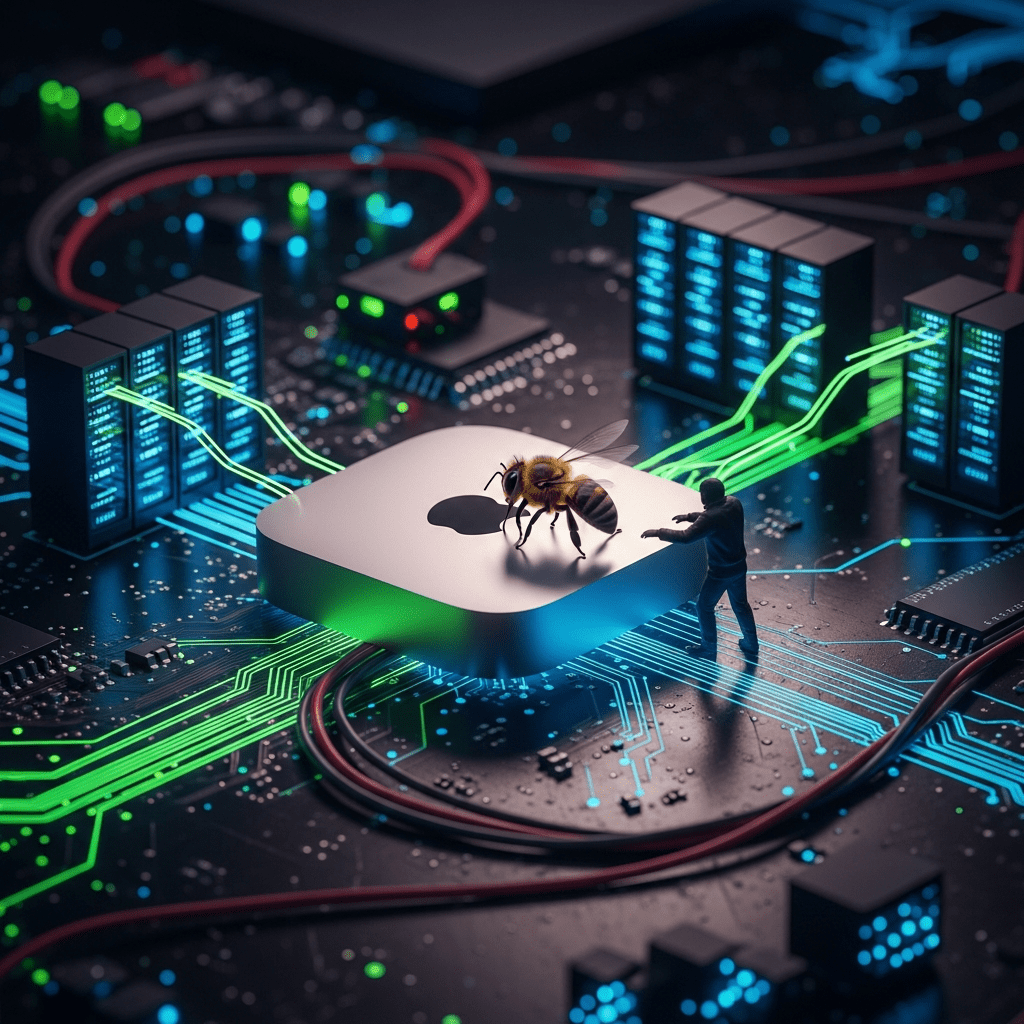
You’ve done the research. You’ve watched the unboxing videos. You’ve even cleared a perfectly square, coaster-sized space on your desk. You’re ready to join the ranks of the smugly efficient, the silent-computing elite. You’re ready to buy a Mac Mini. There’s just one tiny problem: you can’t. They’re sold out. Everywhere. It’s not a temporary glitch; it’s a full-blown technological vanishing act. But the culprit isn’t a shipping container stuck in a canal or a new crypto-mining craze. The culprit is much, much nerdier.
Meet Your Competition: The Algorithm
That’s right. The reason you can’t get your hands on Apple’s mighty little box is because artificial intelligence has gone on a shopping spree. It turns out the same M-series chips that make the Mac Mini a dream for video editors and spreadsheet wizards are also ridiculously efficient for training and running AI models. Developers discovered they could build powerful, low-energy “server farms” by stacking these little silver bricks like futuristic LEGOs. While you were trying to buy one, AI R&D departments were ordering them by the pallet.
A Shopping Cart for the Singularity
Picture a procurement manager somewhere, not adding a dozen laptops to a corporate order, but clicking “Add to Cart” on 5,000 Mac Minis at once. These machines aren’t destined for graphic design interns; they’re being wired together to collectively ponder the secrets of the universe, or more likely, to figure out how to generate a photorealistic image of a platypus wearing a top hat. Your dream of a quiet, minimalist desk setup has been sacrificed so a machine can learn the difference between a croissant and a chihuahua.
The Backorder to the Future
So what does this mean for the rest of us? It means getting used to the “Notify Me” button. The great apple mac mini shortage ai demand 2026 forecast suggests this isn’t a fleeting trend. We’ve officially entered an era where our main competition for consumer electronics isn’t other consumers, but a distributed network of pure, unfeeling logic that needs more processing power. Soon, you might have to prove you’re not a robot to buy a computer, only to find out all the computers were already sold to the robots.
Leave a Reply