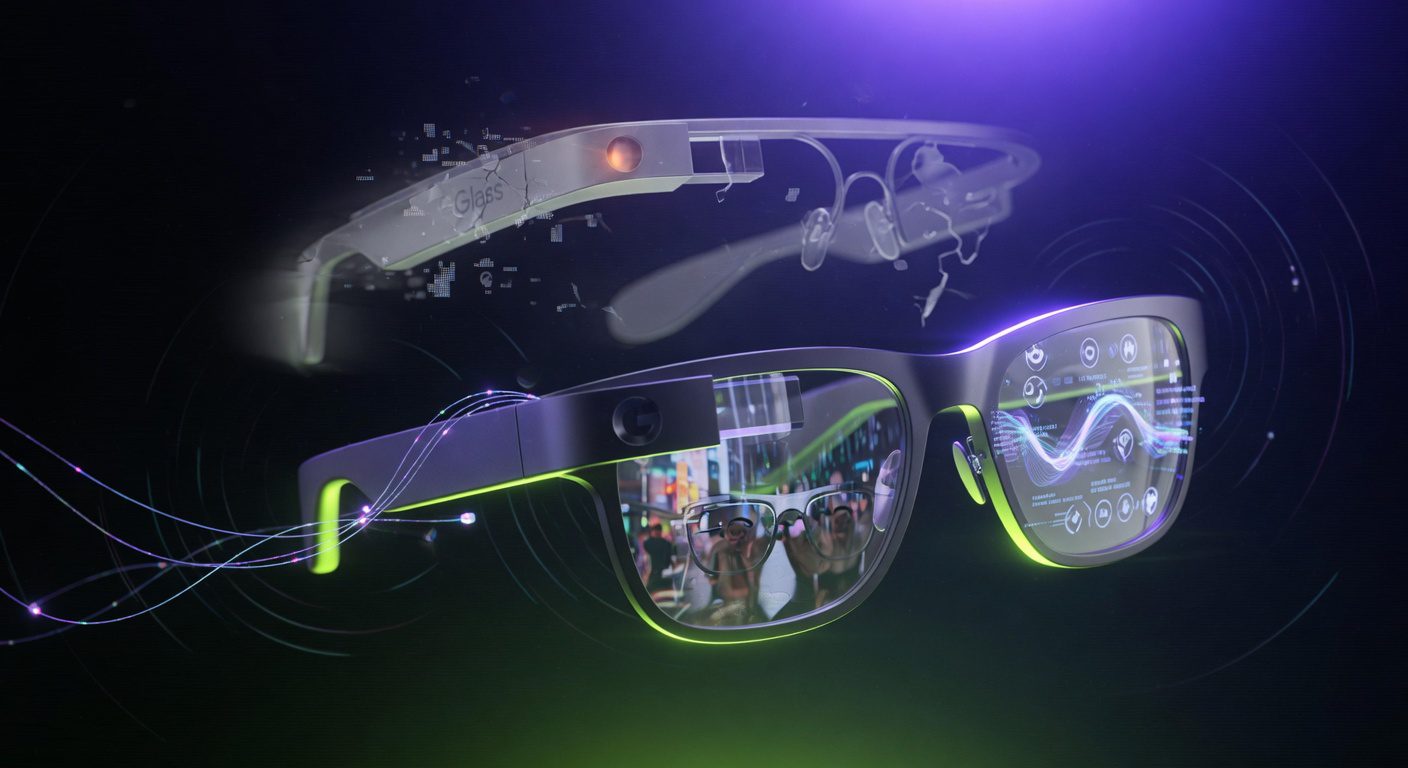
Picture this: you’re rushing through your morning routine, coffee in one hand and phone in the other, when suddenly your glasses start chatting back like an overly eager assistant who just discovered caffeine. That’s the vibe around the Google AI glasses Gemini 3.5 announcement, bringing back echoes of past gadgets but with a shiny AI twist that promises to untangle life’s little messes without turning you into a cyborg. As a friendly tech buddy, I’ve seen these cycles before where Silicon Valley dusts off old ideas, slaps on some fresh algorithms, and declares victory over chaos, only to leave us chuckling at the new quirks that pop up in everyday scenarios.
The Google AI glasses Gemini 3.5 Announcement Explained for Beginners
Let’s break it down simply like explaining a quirky new neighbor. The Google AI glasses Gemini 3.5 announcement is all about smart specs that use advanced AI to see what you see, answer questions on the fly, and handle tasks hands-free. Imagine walking into a grocery store confused about which pasta sauce to pick, and your glasses whisper helpful tips based on your dietary needs without you lifting a finger. In one real-life example from my buddy’s commute, he tried them during a crowded train ride and ended up getting live translation for a tourist’s question, turning a confusing moment into a helpful chat that made everyone smile. The key is starting slow: download the companion app, pair your glasses via Bluetooth, and let the AI learn your routines over a few days for better suggestions, like reminding you of forgotten errands based on past patterns.
Reviving Dead Tech: From Old Glass to Modern AI Magic
Tech revivals often feel like that friend who reappears after years with a new haircut and big promises. Old Google Glass had cameras and basic overlays but stumbled on privacy and style, leading to its quiet exit. Now the Google AI glasses Gemini 3.5 announcement breathes new life with smarter agents that actually understand context, like suggesting a detour around traffic while describing landmarks you pass. Take my neighbor’s story: she wore early prototypes during a family road trip and laughed as the glasses narrated historical facts about roadside attractions, making the drive less boring for the kids and sparking impromptu history lessons that turned a long haul into an adventure. Practical tip: test them in low-stakes spots first, like your backyard, to get used to voice commands without drawing stares from passersby.
AI Agents and the Endless Upgrade Loops We Love to Hate
Here’s the comedy in the absurdity: every new gadget vows to simplify your day but often adds another app to check or battery to charge. With the Google AI glasses Gemini 3.5 announcement, agents can book appointments or summarize emails while you cook dinner, yet they might mishear your grocery list and order pickles instead of pasta. A relatable glitch happened to me during a home office day when the AI tried to ‘help’ by auto-scheduling a nap based on my calendar, leading to a funny mix-up that reminded me to double-check outputs. Tip for beginners: set clear boundaries in the settings menu, like limiting notifications to work hours only, and review AI suggestions daily to train it better, turning potential chaos into smooth sailing over time.
Step-by-Step Guide to Getting Started with These Smart Specs
Ready to dip your toes in? First, unbox and charge the glasses fully overnight while reading the quick-start guide for safety basics. Next, install the official app on your phone and follow the pairing wizard, which walks you through Wi-Fi connection and initial AI calibration by scanning a simple QR code. Then, customize voice preferences in the settings for a friendly tone that matches your vibe. In a personal anecdote, my cousin used this process before a big presentation and had the glasses cue her notes subtly, easing nerves without anyone noticing the tech assist. Always update firmware right away to fix early bugs, and practice basic commands like ‘what’s the weather’ in a quiet room to build confidence before hitting busy streets.
Everyday Scenarios Where AI Glasses Shine or Stumble
Envision a rainy afternoon at the park where your glasses identify a mystery bird call and suggest nearby cafes for shelter, adding a layer of wonder to the ordinary. But then there’s the bureaucratic glitch side, like when location services lag during a hike and you end up with outdated trail info, prompting a laugh as you pull out a paper map backup. My own short story involves using them at a family reunion to recall names via facial cues, which worked wonders until it confused twins and led to hilarious mix-ups that became the highlight of the evening. Practical advice: carry a portable charger and enable offline modes for reliability, ensuring the tech enhances rather than interrupts those spontaneous moments we all cherish.
Balancing Hype with Realistic Expectations as a Beginner
It’s easy to get swept up in promises of solving all daily chaos, but remember these tools evolve through user feedback, much like learning to ride a bike with training wheels. The Google AI glasses Gemini 3.5 announcement shines in controlled environments like home or office but may need tweaks for noisy public spaces. Consider my colleague’s tale of relying on them for recipe guidance during a dinner party disaster, where a quick AI pivot saved the meal and turned potential flop into a fun group story. Tips include joining online forums for user hacks, starting with free trial periods if available, and tracking what features truly save time versus those that add steps, helping you decide if an upgrade fits your lifestyle without regret.
Looking Ahead: What This Means for Future Gadget Cycles
As AI continues its dance with hardware revivals, expect more blends of old concepts with new smarts that make tech feel approachable again. Whether the Google AI glasses Gemini 3.5 announcement marks a true leap or another loop in the upgrade saga, it encourages us to laugh at the glitches while appreciating the conveniences. In conclusion, approach with curiosity, test thoughtfully, and enjoy the stories that emerge from these experiments. Key takeaways: begin small, prioritize privacy settings, and view upgrades as tools for enhancement not perfection. Ready to explore? Check out these related searches: google ai glasses review for beginners, gemini 3.5 ai features explained, tech revival trends 2024, daily ai gadget tips, avoiding upgrade fatigue in silicon valley.
Leave a Reply