Category: Global Protocols

  • Digital Detox Diplomacy: The Awkward Politics of Unfriending a Superpower

    Digital Detox Diplomacy: The Awkward Politics of Unfriending a Superpower

    There’s a special kind of modern despair that comes from trying to ethically boycott a tech company. You delete the app, clear your history, and puff out your chest with righteous pride, only to realize the company you’re protesting also owns the cloud service that hosts your favorite cat video aggregator. It’s a digital whack-a-mole where every mole is just a different subsidiary of the same four companies. This personal, often futile, struggle of the conscientious consumer is now playing out on the world stage, and frankly, it’s just as awkward.

    The Geopolitical Ghosting Attempt

    Nations are waking up with the same hangover we get after reading a privacy policy. They’ve spent decades building their critical infrastructure—telecom networks, power grids, government databases—on technology sourced from other countries. It was all efficiency and globalism until suddenly it felt like giving your new neighbor a key to your house, only to discover their hobbies include international espionage and competitive sanctions.

    This is the essence of the international relations technology boycott. It’s one thing for activists to call for a boycott of tech firms over contracts with, say, ICE. It’s another for an entire country to realize its 5G network is essentially a long-term lease from a geopolitical rival. The conversation in parliament starts to sound a lot like a fraught household discussion about a shared streaming account after a bad breakup. Who gets custody of the fiber optic cables?

    It’s Complicated: A Relationship Status

    The problem is, you can’t just rip out a country’s digital nervous system. The attempt to disentangle these dependencies is a masterclass in bureaucratic absurdity. Imagine trying to perform surgery on a patient who is not only awake but is also the lead surgeon’s landlord. It’s a delicate dance of trying to develop domestic alternatives (the ‘we can make our own cloud services, with blackjack and… servers!’) while not angering the tech titan who can, metaphorically, change the Wi-Fi password for your entire economy.

    These national efforts at a ‘digital detox’ often include:

    • The ‘Sovereign Cloud’ Initiative: The national equivalent of saving all your files to a personal hard drive instead of Google Drive, except the hard drive is the size of Delaware and requires a dedicated power plant.
    • Subsidizing Local Tech: Throwing money at homegrown startups in the hopes one of them becomes the next big thing, which often feels like betting your retirement on a high school garage band.
    • Building Awkward Alliances: Teaming up with other ‘detoxing’ nations to build shared tech, which is basically the geopolitical version of creating a new group chat after dramatically leaving the old one.

    At the end of the day, a nation trying to boycott foreign tech is a lot like us trying to quit Amazon. It’s a noble goal, fraught with inconvenience and the soul-crushing discovery that the alternative is either ten times more expensive or doesn’t exist. So next time you accidentally use a service you’re trying to avoid, don’t feel too bad. Somewhere, a prime minister is doing the exact same thing, just with a national security budget.


  • Global Freeze: When Diplomacy Gets Colder Than a Polar Vortex

    Global Freeze: When Diplomacy Gets Colder Than a Polar Vortex

    It’s official: the world has put on its emergency thermal underwear. As a polar vortex turns doorknobs into instruments of icy torment, we’re all huddled inside, staring at our routers and wondering if the blinking lights are generating enough heat to matter. But there’s another, less literal chill in the air. I’m talking about the great global diplomatic freeze, a phenomenon that makes this weekend’s weather look like a balmy afternoon in July.

    The Handshake Protocol Timed Out

    In the world of networking, a simple three-way handshake establishes a connection. It’s a polite, digital ‘how-do-you-do.’ Lately, international relations feel like a series of SYN packets being sent into the void, with no ACK in return. The connection just… times out. It’s as if the entire diplomatic corps is operating on legacy hardware, running an OS so old it considers a strongly worded letter to be a ‘denial-of-service’ attack. Every negotiation feels like trying to load a high-res video on a dial-up modem; you get a lot of screeching, a frozen screen, and eventually, you just give up and go make a sandwich.

    Symptoms of System-Wide Lag

    • Frozen Summits: Leaders gather for what looks like the world’s most expensive video call where everyone’s connection is lagging. You see mouths moving, but the audio doesn’t sync up for six to eight months.
    • Dropped Packets of Goodwill: Attempts at cooperation are like data packets sent over a faulty network. They’re dispatched with the best intentions but get lost somewhere over the mid-Atlantic, never to be seen again.
    • Firewall of National Interest: Every nation’s firewall seems to be configured to ‘Deny All.’ Trying to pass a simple trade agreement through is like trying to convince your corporate IT department to let you install a video game.

    Searching for the Global Ctrl+Alt+Del

    So what’s the fix? There’s no global help desk to call, no ticket to submit to the universe’s IT department. The user manual is ten thousand pages long and half the chapters contradict the other half. Someone, somewhere, insists the solution is to ‘turn it off and on again,’ but nobody can agree on where the power button is. As we wait for this geopolitical system to thaw, maybe the best we can do is what we’re already doing for the polar vortex: put on another sweater, make some hot chocolate, and hope someone remembers the administrator password soon.

  • When Oil Buddies Break Up: Decoding the Saudi-UAE Relationship Drama

    When Oil Buddies Break Up: Decoding the Saudi-UAE Relationship Drama

    Every long-term relationship has its bumps. One person leaves the cap off the toothpaste, the other keeps changing the shared streaming password. But when your relationship involves controlling a significant chunk of the world’s oil supply, the drama is less “who finished the milk?” and more “who’s tanking the global economy?” Welcome to the increasingly complicated status of the Saudi-UAE partnership, a diplomatic saga that feels suspiciously like watching your two most powerful friends go through a messy breakup.

    The “Our Financial Goals Are No Longer Aligned” Talk

    For years, Saudi Arabia and the UAE were the power couple of the Gulf, finishing each other’s sentences on foreign policy and coordinating their outfits for OPEC meetings. The first public crack in this unified front was the great OPEC+ spat. Think of it as a fight over the household budget. Saudi Arabia, the traditional leader, wanted to keep oil production tight to keep prices high—the fiscally conservative partner saving for a rainy day. The UAE, with its ambitious diversification plans and gleaming skyscrapers, wanted to open the taps and cash in—the partner who wants to install a rooftop infinity pool, like, yesterday. This public disagreement was the geopolitical equivalent of having a screaming match in the middle of a dinner party. Suddenly, everyone knew there was trouble in paradise.

    The Passive-Aggressive Battle for Best Friend Status

    The competition has since moved from the oil fields to the boardroom. The core of the Saudi Arabia UAE relationship breakdown is a classic rivalry. Saudi Arabia launched its “Project HQ” initiative, basically telling international companies, “It’s me or Dubai. If you want our government contracts, you have to move your regional headquarters here by 2024.” This is the ultimate “if you loved me, you’d move in” ultimatum. Meanwhile, the UAE continues to position itself as the region’s hip, liberal hub for business, tech, and tourism—the partner who is suddenly going to brunch every weekend with their cooler, more interesting friends, leaving the other to wonder what happened to their quiet nights in.

    “We Should See Other People (Diplomatically)”

    Like any couple drifting apart, they’ve started pursuing their own interests and making new friends, sometimes without telling the other.

    • Yemen: They entered the conflict as a team, but their exit strategies have diverged. It’s the geopolitical version of one person wanting to leave the party while the other is still deep in conversation.
    • Qatar & Israel: The UAE patched things up with Qatar and normalized relations with Israel (the Abraham Accords) on its own timeline. This was like finding out your partner reconnected with an old rival and made a major new friend on social media without giving you a heads-up. Awkward.

    So, Is It Over?

    It’s not a full-scale divorce, but more of a “conscious uncoupling.” They’re shifting from an exclusive alliance to a more pragmatic, competitive co-existence. The Saudi Arabia UAE relationship breakdown isn’t a system crash but a fundamental recalibration. They still have to live in the same neighborhood and share the same security concerns. It’s a transition from being inseparable besties to being rivals who might occasionally team up when it suits them. The shared password has been changed, but they’re still on the same family plan—for now.

  • Iran’s Nuclear Sites: The Friend Who Never Stops Remodeling

    Iran’s Nuclear Sites: The Friend Who Never Stops Remodeling

    We all have that friend. The one whose house is a perpetual work-in-progress. One month it’s a new deck, the next they’re digging a mysterious, unpermitted basement. You never know what you’ll find. Well, on a global scale, that friend is Iran’s nuclear program, and we have the satellite receipts to prove it. The constant construction, excavation, and reconfiguration at sites like Natanz and Fordow is a fascinating spectacle of geopolitical DIY.

    The Digital Eye in the Sky

    Thanks to a sky full of commercial satellites, we get a front-row seat to the action. Analyzing the Iran nuclear program satellite evidence feels less like espionage and more like scrolling through an architectural firm’s very confusing timeline. One day there’s an empty patch of desert; the next, a massive new building is being framed. Tunnels dive into mountainsides, old structures are mysteriously buried, and new support facilities pop up like mushrooms after a rainstorm. It’s a never-ending cycle of “What are they building in there?” that keeps analysts and open-source intelligence folks gainfully employed.

    The Long-Suffering Inspector

    Enter the International Atomic Energy Agency (IAEA), the world’s most patient and persistent building inspector. Their job is to verify that all this construction is for purely peaceful purposes, as declared. Imagine showing up to inspect a new sunroom and finding the homeowner has also added a fortified bunker that wasn’t on the plans. The IAEA is constantly playing catch-up, matching the satellite imagery with on-the-ground reports and trying to get answers for the new, undeclared “features” of the facility. It’s a bureaucratic dance of access requests, camera installations, and sampling procedures that would make any project manager’s head spin.

    Is It a Kitchen Remodel or a Secret Lair?

    At the end of the day, the core issue is ambiguity. Is that new deep-underground facility for advanced centrifuge R&D, or is it just for extra storage? The constant churn of construction makes it incredibly difficult to maintain a consistent baseline of what’s happening. Every new building and tunnel creates new questions and requires new verification efforts. It’s a strategy that keeps international monitors on the back foot, perpetually trying to solve a puzzle while someone is actively adding new, unlabeled pieces. While our friend’s endless home renovation might just be an eyesore, this global version keeps the lights on for diplomats and policy wonks everywhere.

  • The Planet’s Most Awkward Roommate Agreement: How Nuclear Treaties Work

    The Planet’s Most Awkward Roommate Agreement: How Nuclear Treaties Work

    Imagine two roommates who fundamentally disagree on everything: thermostat settings, who left crumbs on the counter, the geopolitical fate of entire continents. Now imagine they both have access to a button that could vaporize the apartment building. Suddenly, agreeing on some ground rules doesn’t seem so silly, does it? Welcome to the world of nuclear treaties, the planet’s most high-stakes, passive-aggressive roommate agreement.

    So, What’s in This Cosmic Lease Agreement?

    At its core, a nuclear treaty isn’t a friendship pact. It’s a deeply pragmatic contract between parties who would rather not engage in spontaneous, civilization-ending fireworks. These agreements are the pinnacle of “trust, but verify,” establishing clear, boring, and gloriously bureaucratic rules. They typically set limits on the number of deployed nuclear warheads, as well as the missiles, submarines, and bombers used to deliver them. The best part? Inspections. Yes, it’s the global equivalent of letting your roommate come into your room to make sure you haven’t secretly built a doomsday device out of spare parts and pizza boxes.

    Why Bother Signing a Deal With Your Nemesis?

    Despite frosty relations, superpowers keep coming back to the negotiating table for a few key reasons, none of which involve a group hug.

    • Predictability is Golden: The biggest source of global panic is uncertainty. A treaty turns the terrifying question of “How many nukes do they have?!” into a verifiable number on a spreadsheet. It transforms “unthinkable dread” into “managed, quantifiable anxiety,” which is a huge improvement.
    • A Very Tense Hotline: These agreements create a necessary, if awkward, channel of communication. Even when other diplomatic ties are frayed, the treaty mechanics ensure someone is still talking. It’s the geopolitical equivalent of sliding a note under the door when you’re not on speaking terms.
    • It’s Cheaper Than Armageddon: An endless, unchecked arms race is ludicrously expensive. Capping the arsenal is just fiscally responsible doomsday-prevention.

    The US-Russia Nuclear Treaty Extension Kerfuffle

    When you hear about a US-Russia nuclear treaty extension, like the one for the New START treaty, think of it as renewing that cosmic lease. It’s often a last-minute scramble filled with political posturing and intense negotiation, like two sides arguing over the renewal terms moments before the eviction notice is served. But ultimately, both sides recognize that having no rules is far scarier than living with the annoying rules they have. It’s a testament to the idea that even the fiercest rivals can agree on one thing: mutual survival is a pretty good feature to have.

  • Superpowers, They’re Just Like Us: Procrastinating on Nuclear Treaty Renewals

    Superpowers, They’re Just Like Us: Procrastinating on Nuclear Treaty Renewals

    We’ve all been there. That sinking feeling when you realize the group project is due tomorrow, and your partner, who has all the final files, has suddenly decided to “take a break” from communication. Now, imagine that group project involves thousands of nuclear warheads and your partner is another global superpower. Welcome to the awkward expiration of the New START treaty.

    The World’s Scariest Subscription Service

    For those not subscribed to “Geopolitical Tensions Weekly,” the New START treaty was the last major nuclear arms control pact between the United States and Russia. Think of it as a trust-building exercise with incredibly high stakes. It limited the number of deployed strategic nuclear warheads and bombs, and—crucially—it included a robust verification system. This meant on-site inspections and data exchanges, the international equivalent of screen-sharing to prove you’re not secretly building a doomsday device in your basement.

    “We Need to Talk… Or Not.”

    Like any long-term contract, the treaty had a renewal clause. And, like many of us staring down a looming deadline, things got… complicated. Russia announced it was “suspending” its participation, which isn’t quite a cancellation; it’s more like changing your relationship status to “It’s Complicated” while still living in the same house. The result? The verification mechanisms that made the treaty so valuable have ground to a halt. The on-site inspections are off. The data sharing has ceased. It’s the diplomatic version of your project partner changing the shared drive password and refusing to tell you the new one.

    Operating Without a Spell-Check

    So what happens when the last guardrail is removed? In short, a lot more guessing. Without the treaty’s verification, both sides have to rely on what they can see from a distance—spy satellites and other intelligence—which is a bit like trying to read a report from across the room without your glasses. It breeds uncertainty and mistrust, forcing everyone to plan for the worst-case scenario. It’s a return to the “assume the worst” model of international relations, which has historically been a very, very expensive and nerve-wracking way to live.

    Ultimately, the expiration of the New START treaty is a masterclass in bureaucratic breakdown on a global scale. It’s a reminder that even when the fate of the world is on the line, diplomacy can still get stuck in the same kind of logistical quicksand as renewing a driver’s license. Here’s hoping someone finds the right form to fill out, and soon.

  • Teenage Hero vs. World Leaders: Who’s Really Solving the Global Glitch?

    Teenage Hero vs. World Leaders: Who’s Really Solving the Global Glitch?

    Imagine the world has a critical error message. A giant, blinking, “404 Planet Not Found” kind of problem. Who do you call? If you submit a ticket to the Department of International Affairs, you’ll probably get an auto-reply: “Thank you for your query. We will form a subcommittee to draft a memorandum on the feasibility of a task force within 6-8 business centuries.” Meanwhile, a teenager in their garage has already built a device out of a toaster and some code that starts fixing the problem. This isn’t a sci-fi movie; it’s the hilarious, and slightly terrifying, dynamic between global leadership and the everyday hero.

    The Official Workflow: A Symphony of Buffering

    Handling a global crisis through official channels is like trying to download a movie on dial-up while your entire family is on the phone. It’s a process, and that process loves paperwork. A typical response involves:

    • Scheduling a preliminary video call to decide who should be on the main video call.
    • Drafting a strongly-worded letter that expresses “deep concern,” which is the diplomatic equivalent of a frowny-face emoji.
    • Commissioning a 500-page report that will be read by approximately three people.
    • Debating the precise placement of a comma in a joint resolution for six weeks.

    It’s not that these steps are useless; they’re designed for stability and consensus. But when the house is on fire, you sort of hope someone grabs a bucket of water before they’ve finished debating the optimal bucket-holding ergonomics.

    The Hero’s Hotfix: Ctrl+Alt+Do Something

    Then you have the civilian hero. They see the same “404 Planet Not Found” error and their brain doesn’t think “subcommittee.” It thinks “reboot.” They don’t have a budget, a security detail, or a dedicated translation team. What they have is a brilliant idea, a Wi-Fi connection, and a refreshing lack of patience for bureaucracy. This is where we see feats of extraordinary civilian heroism that can influence international affairs from the ground up. Think of the programmer who builds an app overnight to connect refugees with shelter, or the students who organize a global movement from their school cafeteria. They aren’t waiting for approval on Form 27B/6. They see the bug, and they ship a patch. Immediately.

    System Update vs. A Clever App: Who’s the Real MVP?

    So, who’s actually saving us? The truth is, it’s not a competition. It’s a classic case of system architecture. World leaders are trying to patch the entire global operating system. It’s a massive, unwieldy piece of legacy code written in a dozen languages, and every change risks crashing everything. It’s painstakingly slow, but it’s essential for long-term stability.

    The teenage hero? They’re the genius app developer who builds a lightweight, brilliant program that solves a user’s problem *right now*. Their actions often highlight the bugs in the main system, pressuring the “developers” (our leaders) to finally release a much-needed update. We need the slow, deliberate system updates, but we also desperately need the agile, clever apps of extraordinary civilian heroism. One provides the framework, the other provides the progress. And hopefully, one day, the system will get fast enough to answer its own help tickets.

  • The New Arms Race is Measured in Kilograms, Not Kilotons: Critical Minerals Geopolitics

    The New Arms Race is Measured in Kilograms, Not Kilotons: Critical Minerals Geopolitics

    Remember the Cold War? Duck-and-cover drills, spies in trench coats, and two superpowers with their fingers hovering over big red buttons. The new global standoff is… decidedly less cinematic. It’s a silent, bureaucratic scramble for stuff we dig out of the ground. Welcome to the critical minerals arms race, where national security is measured not in megatons of TNT, but in metric tons of lithium, cobalt, and neodymium. It’s less about brinksmanship and more about battery-ship.

    From Nuclear Codes to QR Codes

    These aren’t just shiny rocks. Critical minerals are the secret sauce in literally everything that beeps, whirs, or connects to Wi-Fi. They’re the vitamins of the digital age. Your EV’s battery? Packed with lithium and cobalt. The powerful magnets in wind turbines and F-35 fighter jets? Thank rare earth elements. The entire global tech infrastructure is a massive, complex Jenga tower, and the bottom blocks are all made of elements you probably failed to memorize on the periodic table.

    The Geopolitical Game of ‘Got Mine’

    The problem is, these minerals aren’t conveniently distributed like Starbucks locations. The supply chain map for critical minerals looks less like a global network and more like a handful of countries hosting an exclusive, high-stakes potluck. This has turned international relations into a tense game of resource Monopoly. Here’s a quick look at the board:

    • The Rare Earth Railroad: China currently processes the vast majority of the world’s rare earth elements. It’s like owning all four railroads and Boardwalk.
    • The Cobalt Congo Utility: A huge chunk of the world’s cobalt, essential for batteries, comes from the Democratic Republic of Congo.
    • The Lithium Triangle Electric Co.: Argentina, Bolivia, and Chile hold a massive percentage of the world’s lithium reserves.

    This concentration of power means that a single trade dispute or policy shift can cause a bigger panic in Silicon Valley than a server outage during a product launch.

    The Strategic Stockpile Shuffle

    So what’s a superpower to do? Stockpile, of course! It’s the geopolitical equivalent of hoarding toilet paper in 2020, but with far more spreadsheets. You can just imagine the internal memos: ‘MEMO: Re: Urgent Need to Acquire More Gallium. Please fill out Form 74-C and consult the Strategic Dysprosium Reserve Committee.’ It’s a bureaucratic ballet of geologists, economists, and policy wonks trying to predict which obscure metal will be the lynchpin of technology in 2040. They’re basically playing fantasy football, but with elements, and the fate of industrial policy hangs in the balance. Ultimately, this new arms race isn’t about mutually assured destruction, but mutually assured supply chain disruption. The next time your phone gets an update, just remember: the real power isn’t in the code, but in the rocks that were strategically hoarded just to make that progress bar move.

  • Five-Star Diplomacy: Why International Peace Negotiations Happen at Luxury Hotels

    Five-Star Diplomacy: Why International Peace Negotiations Happen at Luxury Hotels

    There’s a strange, beautiful absurdity to the idea of international peace negotiations. Two delegations, tasked with averting global catastrophe, are seated in a tastefully appointed hotel ballroom. The stakes are impossibly high, the tension is palpable, and just down the hall, a regional sales team is doing trust falls. How did the pinnacle of diplomacy end up sharing a continental breakfast buffet with the Midwest Dental Supply convention? It turns out, there’s a method to the madness.

    The Logistics of Serenity

    Choosing a location for peace talks is less about vibes and more about a brutal logistical checklist. A five-star hotel in a neutral country like Switzerland or Austria just happens to tick all the boxes better than anywhere else.

    • Ironclad Neutrality: Hosting talks in a participant’s capital gives them a home-field advantage. A hotel is a commercial entity. Its only allegiance is to the person swiping the corporate card. It’s the ultimate neutral zone, where ancient rivalries are forced to respect the 11 AM checkout time.
    • The All-Inclusive Package: Think about it. You need secure rooms, meeting spaces, dining facilities, and a place for everyone to sleep. A luxury hotel is a self-contained biosphere for diplomacy. It has everything you need to house, feed, and pacify warring factions, all under one heavily guarded roof.
    • The Firewall of Freedom: In the modern age, the most critical piece of infrastructure is the Wi-Fi. A hotel provides a single, defensible network perimeter. The fate of the free world might just rest on a beleaguered IT manager named Klaus, who is triple-checking that the dignitary VPN is firewalled from the network being used by teenagers streaming movies in room 304.

    The Psychology of the Presidential Suite

    The environment absolutely shapes the negotiation. Does being in a plush, climate-controlled room make diplomats more agreeable? Or does the endless supply of tiny, expensive water bottles create a dangerous detachment from the harsh realities they’re debating? This is the “bubble effect.” When you’re isolated in a gilded cage, miles from the conflict zone, it can be easier to focus on the minutiae of a treaty. The downside is that you might forget the human cost while arguing over the placement of a comma.

    Where Diplomacy Meets the Help Desk

    For all the talk of high-stakes statecraft, the most relatable struggles are often the most mundane. Imagine the tension in the room when the 70-slide presentation on de-escalation corridors won’t display on the projector. An aide fumbles with cables, whispering, “Is it on the right input? Do you have the dongle?” It’s a scene straight out of any corporate meeting, except a botched presentation could lead to a border skirmish instead of a mildly disappointed VP of Sales.

    And then there’s the Wi-Fi password. A string of characters so complex it looks like a government cipher, handed out on a small, elegant card. The first fifteen minutes of any session are inevitably lost to a senior diplomat mistaking an uppercase ‘O’ for a zero, quietly locking themselves out of the network and, by extension, the shared document outlining the terms of surrender.

    Ultimately, these luxurious, absurdly normal settings are the backdrop for history. It’s a reminder that even the most monumental global challenges are tackled by regular people who need a decent coffee and a reliable internet connection. The path to peace, it seems, is paved with good intentions and complimentary hotel slippers.

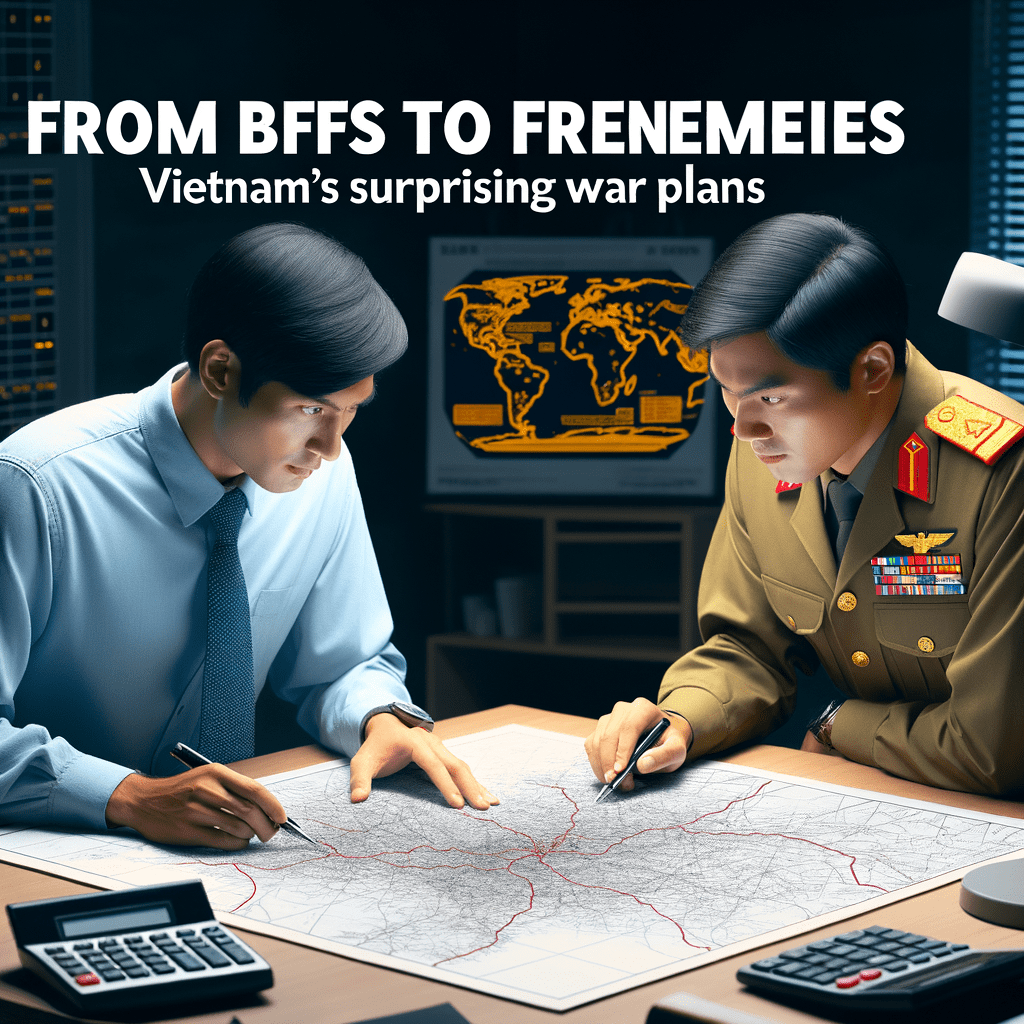
  • From BFFs to Frenemies: Vietnam’s Surprising US War Plans

    From BFFs to Frenemies: Vietnam’s Surprising US War Plans

    Picture this: You and your best friend are inseparable. You finish each other’s sentences, you have a booming lemonade stand business together, and you’ve even started coordinating outfits. Then, one day, you find a detailed, color-coded binder under their bed titled “Plan B: How to Sabotage the Lemonade Stand and Win the Neighborhood.” Awkward, right? Welcome to the current state of US-Vietnam relations.

    For decades, the story has been one of reconciliation and blossoming friendship. The US is Vietnam’s largest export market, and the two countries have been getting cozier by the year, united by shared economic interests and a mutual side-eye towards China. But then, a recently surfaced vietnam us relations military document threw a comedic wrench in the works, revealing that Vietnam’s military is still actively training for a potential conflict with… you guessed it, the United States.

    The World’s Most Awkward ‘Just In Case’ Binder

    Before anyone starts digging a Cold War-era bunker, let’s be clear: this isn’t a sign of impending doom. It’s more of a bureaucratic hiccup. Think of it like a corporate disaster recovery plan. Does the IT department *expect* the main server to be carried off by a flock of angry geese? No. But do they have a 500-page document outlining the exact protocol for that scenario? You bet they do. Militaries are the ultimate “what-if” planners. They have contingency plans for everything, from alien invasions to a surprise attack by their closest ally. It’s standard procedure, but it’s hilariously awkward when the ‘what-if’ scenario involves the same country you’re scheduled to have a trade summit with next Tuesday.

    It’s Not You, It’s My Geopolitical Reality

    The irony here is thicker than a humid Hanoi summer. The very document outlining defense strategies against American air and naval power exists while the two nations are simultaneously deepening their own military and economic ties. It’s a perfect example of the ‘frenemy’ paradox in international politics. Consider the absurdity:

    • The US is Vietnam’s top destination for exports, buying billions of dollars worth of clothes, shoes, and electronics.
    • Both countries collaborate on security issues in the South China Sea.
    • High-level officials from both nations are constantly meeting, smiling, and shaking hands for the cameras.

    This military document feels like a relic from a different time, a piece of legacy code in the geopolitical operating system that no one has gotten around to deleting yet. It’s a reminder that even as nations become partners, the old institutional muscle memory of “prepare for the worst” dies hard.

    So, Are We Still On for Pho?

    Ultimately, this revelation is less a diplomatic crisis and more a funny peek behind the curtain. It doesn’t mean the friendship is fake. It just means that in the world of global strategy, you keep all your options—and all your old paperwork—on the table. The US-Vietnam relationship isn’t about to be downgraded. It’s just been re-categorized to “It’s Complicated, But We’re Making It Work (And We Both Have Binders).”