Category: Global Protocols

  • You Can’t Add a Country to Your Cart: The Geopolitical Absurdity of Buying Greenland

    You Can’t Add a Country to Your Cart: The Geopolitical Absurdity of Buying Greenland

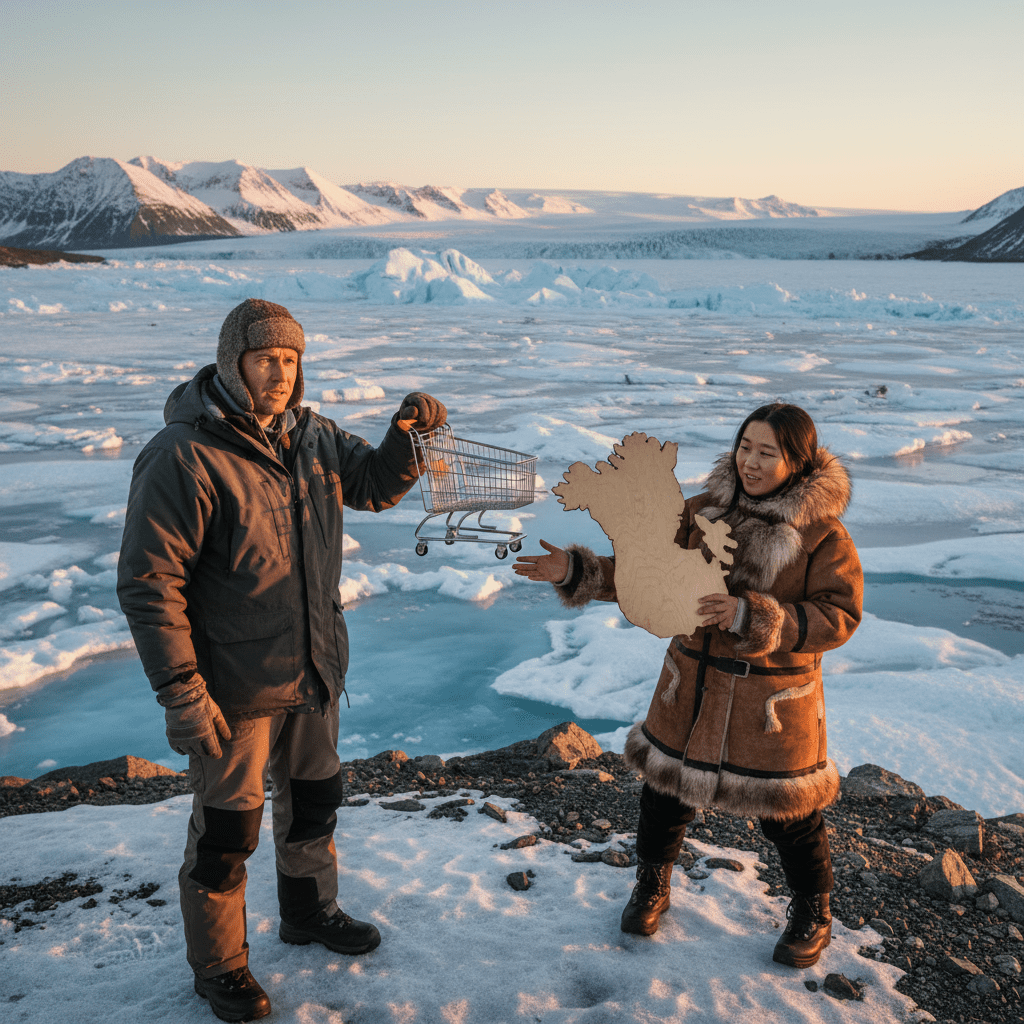
    There are moments in international relations that feel less like sober statecraft and more like someone tried to apply a video game cheat code to the real world. Case in point: the time the United States casually floated the idea of buying Greenland. It’s the geopolitical equivalent of seeing a cool car and asking the driver’s boss if it’s for sale. It reveals a fundamental, and frankly hilarious, misunderstanding of how the whole ‘countries’ thing works in the 21st century.

    The Ultimate Real Estate Window Shopping

    On paper, you can almost see the bizarre logic. From a purely strategic standpoint, Greenland is a prize. It’s a massive island with untold natural resources, sitting astride critical Arctic shipping lanes. It’s the ultimate fixer-upper with great bones and a killer view. The problem is, this isn’t a game of Risk. You can’t just trade three continents for a strategically important island. The ‘Greenland acquisition’ idea treats a nation like a line item on a balance sheet, overlooking one tiny, inconvenient detail: the people who actually live there.

    Sovereignty: The System’s Terms of Service Everyone Skips

    The core of the absurdity lies in the concept of sovereignty. Greenland isn’t just an empty plot of land owned by Denmark; it’s a self-governing country with its own parliament, culture, and national identity. The proposal to buy it was like submitting a help desk ticket to purchase a colleague’s entire department, assuming their manager could just sign it over. The response from both Greenland and Denmark was the diplomatic equivalent of a system error message: “404 Nation Not Found (for sale).” They politely but firmly pointed out that countries aren’t commodities. You can’t buy a people, their history, or their right to self-determination, no matter how much you’re willing to offer.

    A Glitch in the Global Matrix

    Ultimately, the Greenland saga was a wonderful, weird lesson in international relations. It highlighted the clash between an old-world, colonial mindset of territorial transactions and the modern reality of national identity. It was a reminder that the world map is not a real estate catalog. While the idea of a Greenland acquisition has faded into a historical punchline, it serves as a perfect example of what happens when grand strategy forgets to check with, you know, humanity. It’s a geopolitical fever dream that reminds us all: before you try to buy something, it’s probably a good idea to make sure it’s actually for sale.

  • Global Currency Chess: Why the Dollar’s Nosedive Reshapes World Power

    Global Currency Chess: Why the Dollar’s Nosedive Reshapes World Power

    For decades, the US dollar has been the world’s default operating system. Like Windows 95, it’s not perfect, it’s had a few catastrophic crashes, but everyone knows the keyboard shortcuts and where the start menu is. Most of the world’s financial “software” is designed to run on it. But what happens when that trusty OS starts getting a bit sluggish, throwing up error messages, and generally nosediving in value? You get a frantic, global scramble as everyone tries to figure out if it’s time to switch to Linux (the Yuan?) or that flashy new macOS (the Euro?). This isn’t just a market fluctuation; it’s a high-stakes game of global currency chess, and the pieces are moving.

    The Winners Circle: Popping the Champagne

    A weaker dollar isn’t a funeral for everyone. For some, it’s like finding a golden ticket in their balance sheet. Here’s who’s cashing in:

    • US Exporters: Suddenly, American-made tractors, software, and movies are on a global discount rack. It’s like their international e-commerce site suddenly offered free shipping and 20% off everything. Sales go up, and champagne corks start flying.
    • Nations with Dollar-Denominated Debt: Imagine owing a friend $1,000. Then, overnight, the value of that dollar drops. In your local currency, the debt just got smaller. It’s the financial equivalent of your friend texting, “Eh, just pay me back $800, we’re cool.” Many emerging economies just breathed a huge sigh of relief.
    • Tourists Visiting America: If you’re holding Euros, Yen, or Pounds, welcome to the great American fire sale! Your money now stretches further, buying you more giant sodas and trips to Disney World. The whole country feels like it’s on Black Friday.

    The Losers Lounge: Where’s the Tylenol?

    Of course, for every winner, there’s someone else staring at their portfolio like it just tried to install BonziBUDDY. The losers’ lounge is crowded:

    • Foreign Central Banks: Countries like China and Japan have been hoarding US dollars like a dragon hoards gold. A weaker dollar means their massive treasure chest is shrinking in value. It’s the economic equivalent of discovering your emergency food supply is just expired pudding.
    • US Importers: That fancy French wine, German car, or cheap electronic gadget from Asia? It just got more expensive. For companies relying on international supply chains, it’s like their main supplier just switched to premium-only pricing, and the invoice is due.
    • American Tourists Abroad: Your dollar now buys you one less croissant in Paris and about half a pint in London. You’re experiencing the other side of the currency exchange coin, and it feels like a universal tourist tax has just been levied against you personally.

    The Grand Chessboard: What’s the Next Move?

    The real impact of the US dollar decline on the global economy is this fundamental reshuffling. It forces countries to rethink their reliance on a single currency. Will we see a rise in a multi-polar currency world, where the Euro, Yuan, and Dollar all compete for dominance? It’s like going from a world with one internet provider to having three, all with different plug types and confusing service agreements. The dollar isn’t being deleted from the system, but it might be getting downgraded from “System Administrator” to just another “User with Privileges.” This isn’t a crash; it’s an awkward, system-wide update that nobody asked for but everyone has to install. Get ready for a reboot.

  • Firearms and Faux Pas: The Great Olympic Standoff in Turin

    Firearms and Faux Pas: The Great Olympic Standoff in Turin

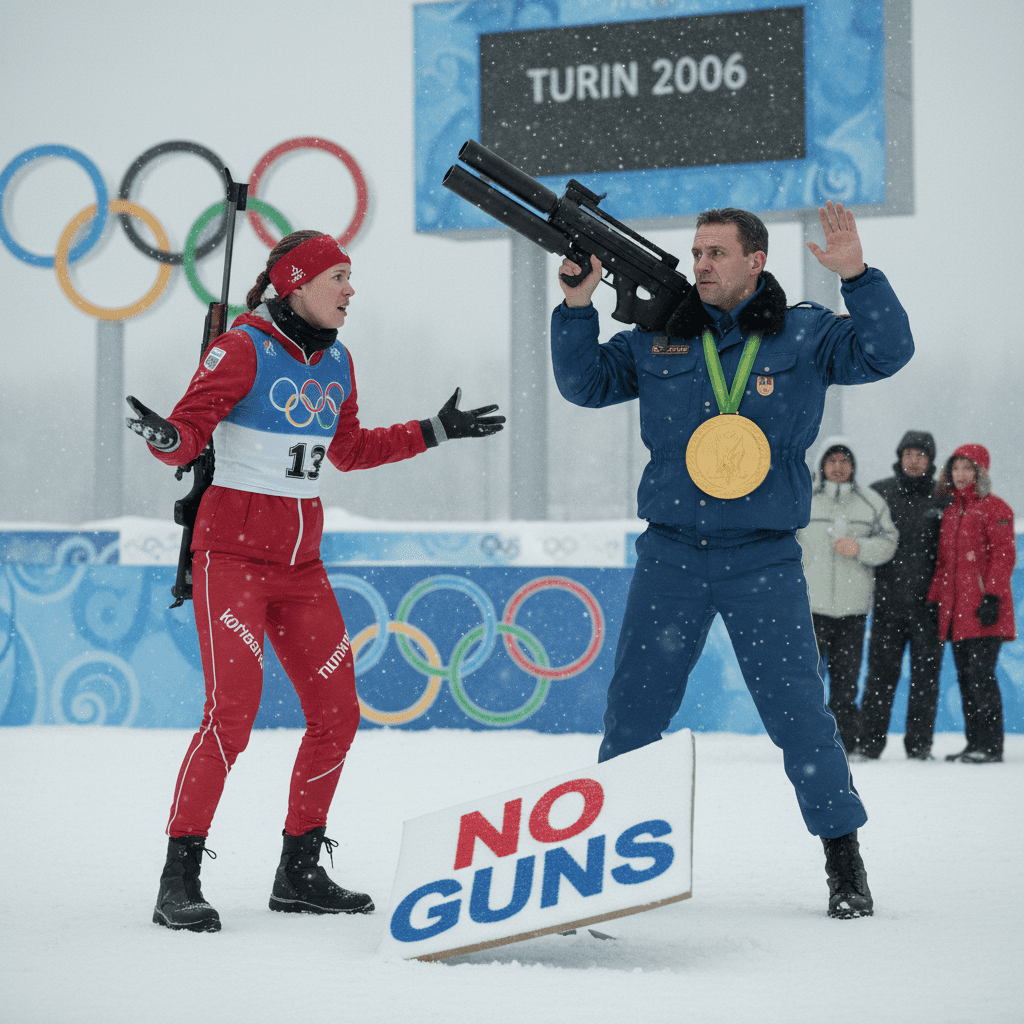
    There are few things more stressful than international travel. Did you pack the right adapter? Is your passport valid? Did you remember to formally notify the host nation that your diplomatic security team is bringing a cache of undeclared firearms onto their sovereign soil? Ah, that old chestnut. Back in 2006, during the Turin Winter Olympics, a classic case of “protocol mismatch” flared up between the U.S. and Italy, providing a beautiful lesson in bureaucratic absurdity. It was a diplomatic incident born from the kind of logic that usually lives in IT support tickets.

    The Unapproved Hardware Installation

    The setup was simple: a team of U.S. Immigration and Customs Enforcement (ICE) agents, part of a larger Diplomatic Security Service detail, landed in Italy to protect American dignitaries. They brought their standard toolkit, which, naturally, included their service weapons. The problem? Italy, the host network administrator in this analogy, had a very firm policy: foreign agents are not permitted to be armed. The local sysadmins—the highly respected Carabinieri—had the situation under control. This was less a security threat and more of a surprise hardware installation that violated the Terms of Service. The Italians responded by politely but firmly confining the agents to their hotel, effectively putting their user accounts on hold pending review.

    A Tale of Two Network Policies

    What followed was a beautiful clash of standard operating procedures. The U.S. perspective was essentially, “This is our global security patch; we install it everywhere for consistency.” The Italian perspective was, “Thanks, but your patch has known compatibility issues with our system, which is called ‘national sovereignty.’ Please see our documentation.” A diplomatic flurry ensued, with officials scrambling to resolve an issue that boiled down to someone, somewhere, not reading the memo. It was the international equivalent of trying to plug a 120V American appliance into a 230V Italian socket without a converter. Sparks were bound to fly.

    The Resolution Patch

    Ultimately, after some high-level calls that were surely the diplomatic version of a tier-3 support escalation, a compromise was reached. The agents were allowed to carry their weapons, but only under very specific, restricted circumstances. Everyone saved face, and the Olympics proceeded without a hitch. The incident served as a powerful reminder for all international operations:

    • Always read the host country’s documentation before deploying your team.
    • “Because we’ve always done it this way” is not a valid justification for overriding local policies.
    • When in doubt, filing the correct paperwork beforehand is much easier than filing a diplomatic protest afterward.

    The great firearm faux pas of 2006 faded into history, but it remains a perfect example of how even the most powerful nations can get tripped up by the simplest of rules. It’s proof that in the complex world of international relations, the most important skill is often knowing when to leave your hardware at home.

  • Panda-monium: How Bear Diplomacy Shapes Global Politics

    Panda-monium: How Bear Diplomacy Shapes Global Politics

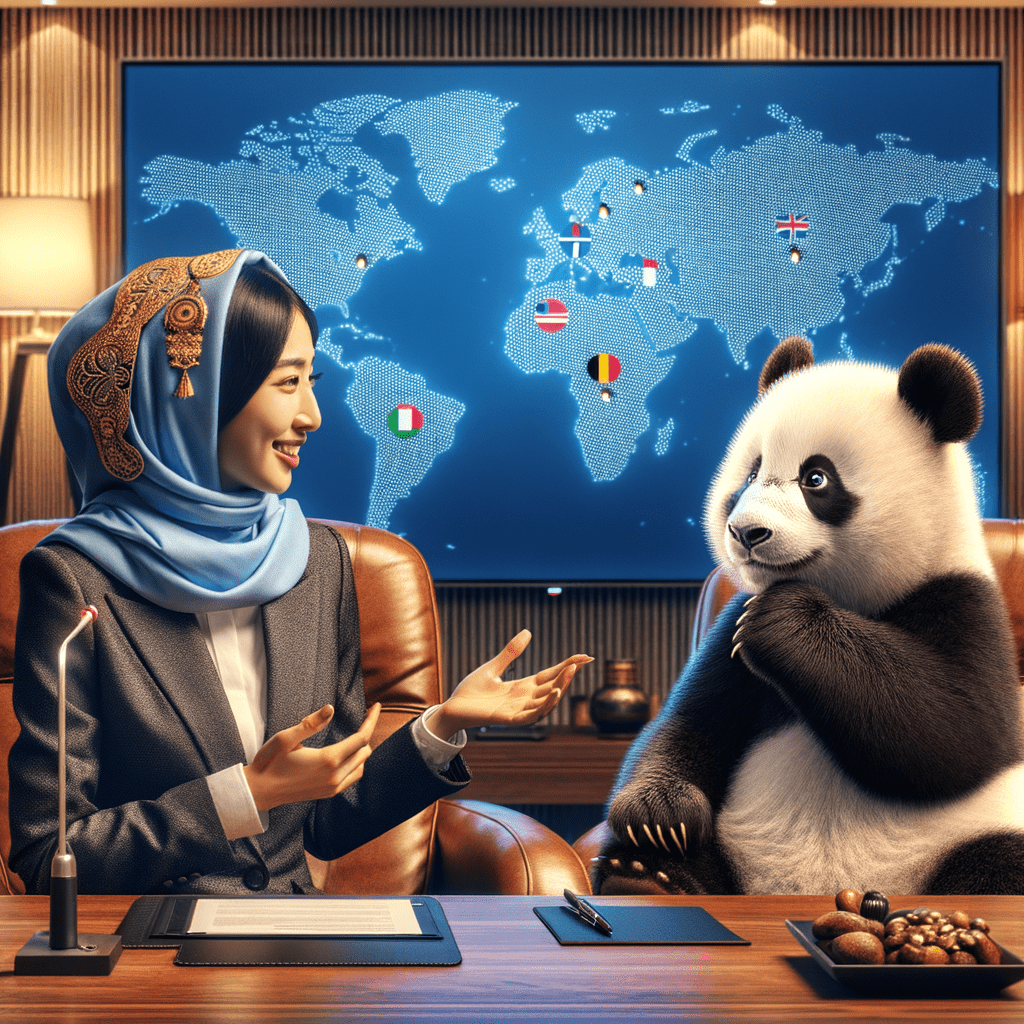
    In the high-stakes world of international relations, you’d expect negotiations to be dominated by stern-faced diplomats in drab suits, poring over trade agreements and security pacts. But what if I told you one of the most effective diplomatic tools was a 250-pound, perpetually sleepy mammal with a penchant for bamboo? Welcome to the wonderful, slightly absurd world of Panda Diplomacy, where global politics gets a whole lot cuter.

    The Ultimate Subscription Service

    So, what exactly is this furry foreign policy? At its core, ‘panda diplomacy’ is China’s practice of sending giant pandas to other nations as diplomatic gifts. It’s the ultimate goodwill gesture, a living, breathing symbol of friendship. Think of it as the world’s most exclusive subscription box. You don’t actually *own* the panda; you lease it for a cool million dollars a year per bear. And yes, any cubs born on your soil are still considered Chinese citizens, subject to return. The paperwork must be a nightmare. Can you imagine the line items? ‘Bamboo Consumables: Market Price.’ ‘Enrichment Toy Depreciation.’ ‘Existential Napping Surcharge.’ It’s a masterclass in soft power, disarming potential adversaries with overwhelming cuteness.

    A Tale of Two Nations: Panda Diplomacy China Japan Relations

    Nowhere is this dynamic more visible than in the complex history of panda diplomacy China Japan relations. The relationship between these two powers can be, to put it mildly, a bit tense. But pandas have often served as a fluffy, black-and-white barometer of their political climate.

    • The Honeymoon Phase: In 1972, to celebrate the normalization of diplomatic ties, China gifted Japan two pandas, Kang Kang and Lan Lan. The Japanese public went absolutely wild. It was less a diplomatic exchange and more like the arrival of rock royalty. This single act generated immense public goodwill, achieving more than a thousand speeches ever could.
    • The Cooling Off: Fast forward a few decades. When political tensions flare up over territorial disputes or historical grievances, the panda pipeline can suddenly develop ‘logistical issues.’ The planned arrival of a new panda might be delayed, or a beloved bear’s loan agreement might not be renewed. The departure of Xiang Xiang from Tokyo’s Ueno Zoo in 2023 was treated like a national tragedy, a subtle but powerful reminder that the friendship, like the panda’s stay, is conditional.

    These adorable ambassadors become powerful pawns. Their presence signals warmth and cooperation, while their absence can feel like a diplomatic cold shoulder. It’s a brilliant strategy; no one wants to be the politician responsible for getting the pandas taken away.

    Why Does It Work? The Unassailable Logic of Cuteness

    The genius of panda diplomacy is that it operates on an emotional, human level. A panda cannot make a controversial statement at a press conference. It cannot be caught in a scandal (unless you count ‘eating too much bamboo’ as scandalous). It is a politically neutral vessel of pure, unadulterated charm. By loaning out these national treasures, China projects an image of itself as a gentle, benevolent partner, even while engaging in hard-nosed geopolitics behind the scenes.

    So the next time you see a viral video of a panda sneezing or tumbling clumsily down a slide, remember what you’re really watching. It’s not just an adorable animal; it’s a masterclass in international strategy, a furry instrument of foreign policy, and a walking, bamboo-munching symbol of how global power really works. The world stage is a chess board, and China is playing with the cutest pieces.

  • Rare Earth Geopolitics: The Element of Surprise in Global Supply Chains

    Rare Earth Geopolitics: The Element of Surprise in Global Supply Chains

    Welcome to the periodic table’s VIP lounge, a dimly lit corner occupied by 17 obscure metals known as rare earth elements. For decades, they were the chemical equivalent of background actors. Now, they’re the stars of a global drama full of supply chain cliffhangers and geopolitical plot twists. Trying to understand modern tech without them is like trying to troubleshoot a network outage by unplugging the coffee machine; it feels productive, but you’re missing the point entirely.

    The Spice Must Flow (But It’s Stuck in Procurement)

    So, what are these things? Think of rare earths as the secret spice in the recipe for everything you love. Your smartphone, your electric car, the wind turbine you admire from the highway—they all rely on tiny pinches of elements with unpronounceable names like neodymium and ytterbium. You don’t need much, but without them, your cutting-edge gadget has the functional capacity of a paperweight. The problem is, for years, the global supply chain has looked less like a chain and more like a single, heavily monitored thread leading back to one primary supplier. This has created the geopolitical equivalent of discovering your company’s entire critical infrastructure runs on a single, unsupported server located in a rival’s basement.

    The Global Scramble for… Yttrium?

    The result is a worldwide scramble that looks a lot like a corporate mandate to “diversify our vendor portfolio.” Except the vendors are continents and the lead time is a decade. Countries are now frantically digging in their own backyards, hoping to find more than just old lawn darts and questionable geology. It’s a hilarious, high-stakes game of resource musical chairs.

    • You need terbium for high-performance magnets? The request has been routed to the Department of Geopolitical Leverage for approval. Please expect a response in 3-5 business years.
    • Looking for dysprosium? Sorry, that’s on backorder until we figure out how to mine it without upsetting a protected species of newt.
    • Want some promethium? Good luck, it’s radioactive and vanishes faster than a free donut in the breakroom.

    The Periodic Table of Power

    Ultimately, the saga of rare earth elements geopolitics is a masterclass in realizing you’ve been single-sourcing your most critical component. It’s a humbling reminder that the most powerful forces shaping our future might not be ideologies, but the humble lanthanides sitting at the bottom of the chart. The next time you power on your device, take a moment to appreciate the international tug-of-war that made it possible. It’s the ultimate element of surprise.

  • My Inbox is a Failed State: Gmail’s Spam Filter and Global Diplomacy

    My Inbox is a Failed State: Gmail’s Spam Filter and Global Diplomacy

    There’s a special kind of morning panic reserved for when you open your inbox and find it pristine, empty, and suspiciously quiet. The terror is quickly replaced by confusion when you click over to your spam folder and find it teeming with life. There they are: the meeting confirmation from your boss, the receipt for your online order, and an urgent update from accounting, all nestled comfortably between an offer for a miracle hair growth serum and a plea from a long-lost prince. Gmail’s algorithm has apparently staged a coup, and my inbox is now a failed state.

    While frantically rescuing legitimate emails from digital purgatory, it struck me that this sudden, nonsensical breakdown is the perfect, low-stakes metaphor for international relations. This isn’t just a tech glitch; it’s a miniature global communication breakdown playing out in my browser tab.

    The Diplomatic Pouch is Full of Junk Mail

    Consider the parallels between my chaotic inbox and the delicate dance of global diplomacy:

    • The Misclassified Memo: That critical email from a client marked as ‘spam’ is the equivalent of a vital diplomatic cable being accidentally shredded by an overzealous intern. The sender assumes the message was received; the recipient is blissfully unaware, leading to confusion and missed opportunities. You can’t act on intelligence you never got.
    • The Whitelist Veto: I’ve clicked ‘Report not spam’ on emails from my own mother at least a dozen times. Yet, the algorithm remains suspicious. This is the bureaucratic equivalent of telling a border agent, “He’s with me!” only to have them ignore you completely. You can establish trusted channels, but the system has its own inscrutable rules.
    • The Priority Paradox: While important messages are being quarantined, an email with the subject line ‘!!! URGENT ACTION REQUIRED: YOUR DOMAIN WILL EXPIRE !!!’ sails right through to the primary inbox. This is like the UN Security Council spending an entire session debating the catering budget while ignoring a smoldering international crisis. The system’s sense of priority is, to put it mildly, skewed.

    What we’re all experiencing is a masterclass in how complex systems fail. It’s not necessarily malicious; it’s just wires getting crossed on a planetary scale. This is the heart of a true global communication breakdown—not a refusal to talk, but a failure of the message to arrive as intended, filtered through layers of automated suspicion and algorithmic bias.

    So as I continue to build my elaborate system of filters and rules to retake control of my inbox, I’ll spare a thought for the diplomats. If getting a simple meeting invite to the right folder is this hard, I can only imagine what it’s like trying to deliver a multi-page peace treaty. For now, I’ll just keep checking my spam. You never know when a world-changing message might be hiding in there.

  • When Bureaucracy Freezes Over: Global Politics in the Polar Vortex

    When Bureaucracy Freezes Over: Global Politics in the Polar Vortex

    If you’ve ever stared out the window at a world encased in ice, your car looking like a forgotten popsicle and your pipes groaning a sad, frozen tune, you already understand the basics of modern international relations. As a polar vortex turns daily life into a slow-motion disaster movie, it’s hard not to notice the uncanny resemblance to the current state of global politics. Things are, for lack of a better word, stuck.

    Frozen Infrastructure, Meet Frozen Negotiations

    During a deep freeze, the systems we rely on grind to a halt. Roads are impassable, deliveries are delayed, and the global supply chain suddenly feels as fragile as an icicle. Sound familiar? This is the diplomatic world on any given Tuesday. Trade agreements are put “on ice,” communication channels experience a “chilling effect,” and major international treaties are left sitting in a committee that moves with the glacial pace of, well, an actual glacier. Everyone is waiting for a thaw, but the forecast just calls for more frost.

    The Official Response: “We’re Aware of the Outage”

    When the power goes out, you call the utility company and get a pre-recorded message: “We are experiencing a high call volume and are working to restore service.” This is the bureaucratic equivalent of a shrug. Similarly, in the world of winter storm global politics, press secretaries stand at podiums and announce that “constructive dialogues are ongoing.” It’s a polite way of saying that everyone is snowed in, the coffee has run out, and no one can agree on paragraph three, subparagraph C. Progress is frozen solid, but the official status is “in progress.”

    The Great Blame-Shovel

    After the snow falls, the blame game begins. The city didn’t plow fast enough. The weather report was wrong. Your neighbor’s snowblower is an affront to civilization. In global politics, this is elevated to an art form. Country A issues a sternly worded memo about Country B’s lack of commitment. Country B accuses Country A of negotiating in bad faith. A neutral third party releases a 400-page report concluding that the situation is “complex.” It’s less like a chess match and more like a neighborhood snowball fight where everyone claims they didn’t start it, but they’re definitely going to finish it.

    Hoping for a Diplomatic Spring

    Then, one day, the sun peeks out. A drip of water falls from the roof. The ice begins to crack. This is the moment of hope—the political equivalent of a surprise summit or an unexpected handshake. A minor accord is reached, and suddenly, the channels of communication are thawing. It’s a sign of progress, a diplomatic spring. But just like in winter, everyone keeps one eye on the forecast, just in case another cold front of disagreement is on its way. After all, bureaucracy, like a winter storm, has a way of returning just when you’ve put the shovels away.

  • After the Fall: How the Challenger Disaster Accidentally Rebooted Space Cooperation

    After the Fall: How the Challenger Disaster Accidentally Rebooted Space Cooperation

    In the grand, cosmic IT department of human endeavor, disasters often serve as the most brutal form of bug report. The Challenger tragedy in 1986 was a fatal exception error on a global scale. It was a moment of profound heartbreak and a spectacular failure of engineering. Yet, in a twist worthy of a geopolitical sitcom, this catastrophic system crash inadvertently forced a hard reboot on international space cooperation, pushing former rivals into the most ambitious group project in history.

    Before the Break: The Era of ‘My Spaceship, My Rules’

    Before 1986, international space cooperation was more of a diplomatic handshake than a shared Jira board. The Apollo-Soyuz Test Project was a lovely photo op, but the day-to-day reality was still rooted in Cold War one-upmanship. The Space Shuttle was the crown jewel of American exceptionalism, a reusable space truck that promised routine, cheap access to orbit for the U.S. and its chosen allies. The underlying message was clear: we can fly ourselves, thanks. It was the ultimate siloed development environment, where the source code was kept under lock and key.

    The Unscheduled System Halt

    Then, 73 seconds after launch, the system halted. The Challenger disaster didn’t just ground a single orbiter; it grounded an entire philosophy. The subsequent Rogers Commission report was a scathing post-mortem that revealed deep-seated organizational and technical flaws. The U.S. space program, once the embodiment of solo-flight confidence, was suddenly without a ride to orbit. This created a capability vacuum, the geopolitical equivalent of the lead developer pushing a build that breaks the entire server and then realizing their own computer won’t boot. Suddenly, a little help from your friends (and even your frenemies) doesn’t seem like such a bad idea. The phone lines to the European Space Agency and, eventually, the Russian space program, started looking a lot more appealing.

    Building the Impossible: The ISS Group Project

    The most tangible result of this forced collaboration is the International Space Station (ISS). The ISS is a glorious, sprawling monument to what happens when you make fierce competitors share a sandbox. It’s the result of countless memoranda of understanding, technical compromises, and probably a few heated arguments over metric versus imperial bolts. Think of it as the most expensive and complex piece of IKEA furniture ever assembled, with instruction manuals in five languages, built in zero gravity by people who were pointing rockets at each other a decade prior.

    • The U.S. provided the core structure and labs.
    • Russia provided the initial crew transport and life support (the Soyuz became the indispensable space taxi).
    • Europe and Japan contributed sophisticated laboratory modules.
    • Canada built the robotic arm, the official ‘grabby thing’ of low Earth orbit.

    This wasn’t just about sharing hardware; it was about sharing risk, knowledge, and mission-critical responsibilities. The Challenger disaster exposed the catastrophic fragility of relying on a single system. The ISS, by its very design, is an exercise in multinational redundancy. If one partner’s system has an issue, the whole station doesn’t come crashing down. It was the ultimate lesson learned: in space, as in enterprise software, a single point of failure is an invitation for disaster.

    So while we rightly remember the Challenger disaster for the human and technical loss, its legacy is surprisingly complex. It was a tragic catalyst that humbled a superpower and turned a space race into a collaborative marathon. It proved that sometimes, the only way to build something truly robust is for everyone’s individual projects to fail spectacularly, forcing them all into one giant, chaotic, and ultimately successful conference room.

  • The Blizzard of Diplomacy: How Snowstorm Prep Explains Ukraine-Russia Peace Talks

    The Blizzard of Diplomacy: How Snowstorm Prep Explains Ukraine-Russia Peace Talks

    There are two kinds of people when a blizzard is in the forecast. There’s the person who calmly checks their emergency kit, tops off the generator, and has a well-stocked pantry from October. Then there’s the person fighting you for the last bruised banana at the grocery store, having completely forgotten that winter, as it does every year, involves cold and precipitation. In the high-stakes theater of international relations, particularly the delicate Ukraine-Russia peace negotiations, we’re seeing a similar divide between proactive strategy and last-minute panic.

    The ‘Milk and Bread’ School of Diplomacy

    Running into negotiations without a clear, unified strategy is the political equivalent of showing up to a snowed-in potluck with nothing but a bag of melting ice. This approach is characterized by reactive, headline-grabbing gestures that lack foundational support. It’s making bold public statements that haven’t been vetted with allies, like vowing to shovel the entire neighborhood with a single dustpan. The goals are often vague and shifting, akin to deciding you need a snowblower only after three feet of powder has already buried your car. This reactive scrambling leads to stalemates, mistrust, and ultimately, a diplomatic cold spell where everyone is stuck indoors, glaring out the window.

    The ‘Go-Bag and Generator’ Strategy

    Conversely, successful negotiation, like competent winter survival, is all about the boring, methodical prep work done months in advance. It’s less about dramatic speeches and more about quiet, deliberate planning. A well-prepared diplomatic team, like a seasoned New Englander, has their kit in order.

    • Know Your Inventory: Before the first snowflake falls, you know what’s in your pantry. In diplomacy, this means having crystal-clear objectives. What are your non-negotiables (the generator, the backup heat)? What are your concessions (the extra box of crackers you can trade with a neighbor)? Entering talks without this internal alignment is like realizing you have three cans of Spam and no can opener.
    • Read the Forecast: A good prepper listens to the meteorologist, they don’t just stick their head out the window. This means relying on solid intelligence, understanding the historical context of the conflict (the last few winters), and heeding the advice of neutral third parties. Ignoring the forecast because you don’t like what it says is a surefire way to get snowed in.
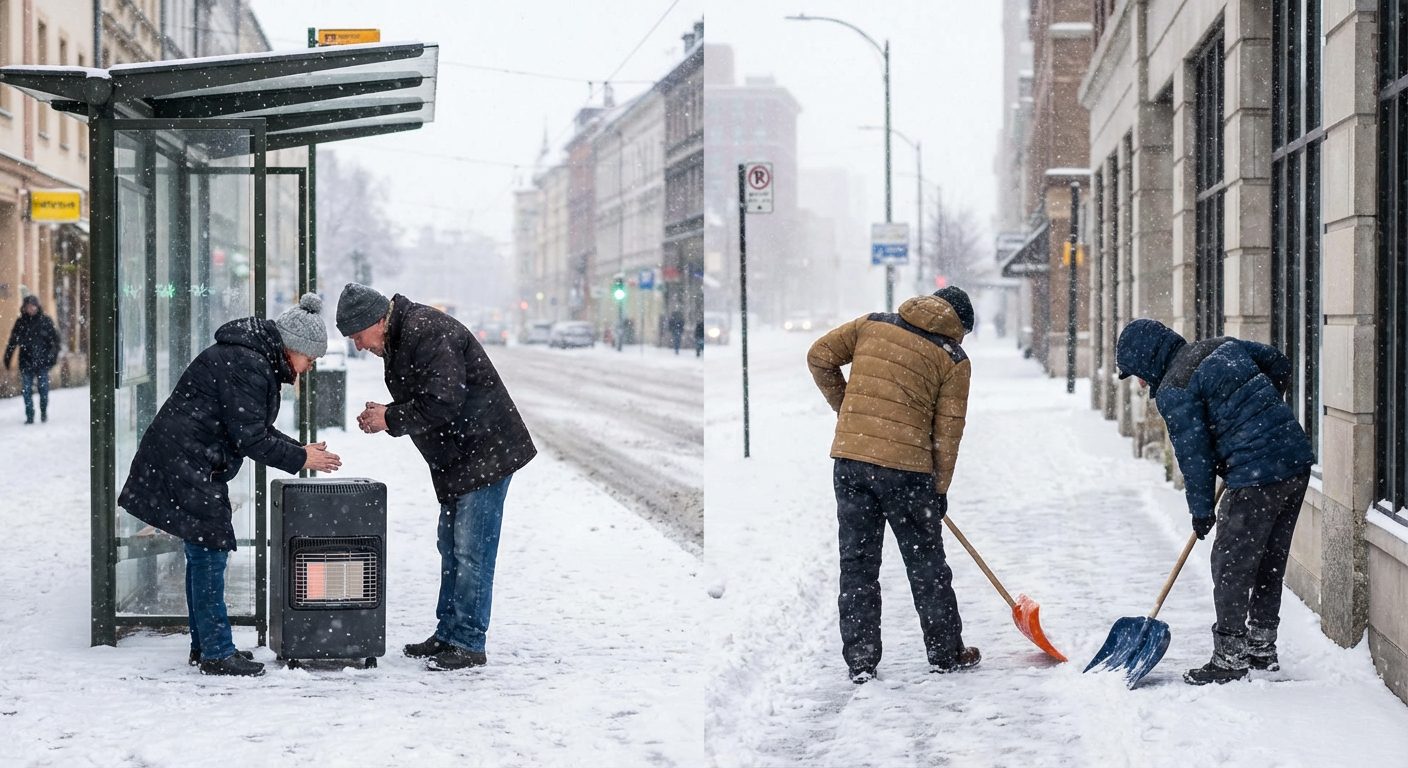
    • Have a Neighborhood Plan: You can’t clear a city street by yourself. Effective peace processes are multilateral. They involve allies, international institutions, and agreed-upon rules—the diplomatic version of coordinating who shovels which part of the sidewalk. It ensures the burden is shared and the outcome is stable for everyone.

    Ultimately, a ceasefire is just the snow stopping. The real work is the long, arduous process of digging out. It requires patience, coordination, and the right tools that should have been ready long before the storm hit. While treating peace talks like a weather event might seem trivial, the core lesson is anything but: preparation doesn’t just prevent inconvenience; it builds the foundation for a lasting, stable peace that can withstand the next winter.

  • The Geopolitics of a Snow Day: A Winter Storms International Relations Comparison

    The Geopolitics of a Snow Day: A Winter Storms International Relations Comparison

    There’s a special kind of dread that descends when a meteorologist points a large, menacing finger at a swirling purple blob on a weather map. It’s the same feeling you get watching a diplomat issue a “strongly worded condemnation.” In both scenarios, you know a lot of frantic, slightly absurd posturing is about to happen. The chaotic ballet of a government trying to manage a few inches of frozen water is, I submit, the perfect microcosm of international relations. The only difference is that one involves salt trucks and the other involves sanctions.

    The Pre-Emptive Posturing

    Long before the first flake falls, the grandstanding begins. The mayor holds a press conference, standing grimly before a fleet of pristine salt trucks, assuring the public that “we are prepared.” This is the municipal equivalent of a nation rolling tanks through its capital during a military parade. It’s pure deterrence theater. Meanwhile, citizens engage in their own strategic stockpiling, clearing grocery store shelves of milk, bread, and eggs as if preparing for a protracted siege. This bread-and-milk diplomacy is a clear signal to Old Man Winter: we will not be starved into submission.

    The First Flake Offensive

    When the first flakes finally arrive, the situation escalates. Local news channels deploy reporters to stand by empty highways, pointing at the ground and saying, “As you can see, it’s starting to stick.” This is the “monitoring the situation” phase of a global crisis. The first fender-bender on the overpass is the inciting incident, the shot heard ’round the cul-de-sac. Immediately, the Emergency Broadcast System kicks in with a list of school closings scrolling at a pace that suggests a far graver emergency. The non-aggression pact between commuters is officially dissolved.

    Plow Alliances and Jurisdictional Disputes

    Now we enter the complex world of treaties and alliances. The massive state Department of Transportation plows clear the main arteries—the superpowers of the road network. But they will not, under any circumstances, venture into the sovereign territory of a residential side street. That’s a local issue. This leads to bitter jurisdictional disputes. You watch the city plow clear your neighbor’s road across the street, which is technically a different “zone,” while yours remains a pristine, unconquered tundra. Neighbors with snowblowers form their own ad-hoc coalitions, forging short-term alliances based on mutual interest and shared driveways.

    The Great Thaw and Reconstruction

    Eventually, a fragile peace is negotiated by the sun. The great thaw begins. But the conflict has left its scars. Giant, blackened snowbanks line the roads like grim war memorials. The armistice reveals a new enemy: potholes the size of small principalities. The post-storm era is all about rebuilding and remembering. We share war stories of “The Great Blizzard of ‘24” and silently judge those who still haven’t shoveled their sidewalks, a clear violation of societal treaties. We are weary, but we have survived, ready to do it all over again when the next purple blob appears on the horizon.