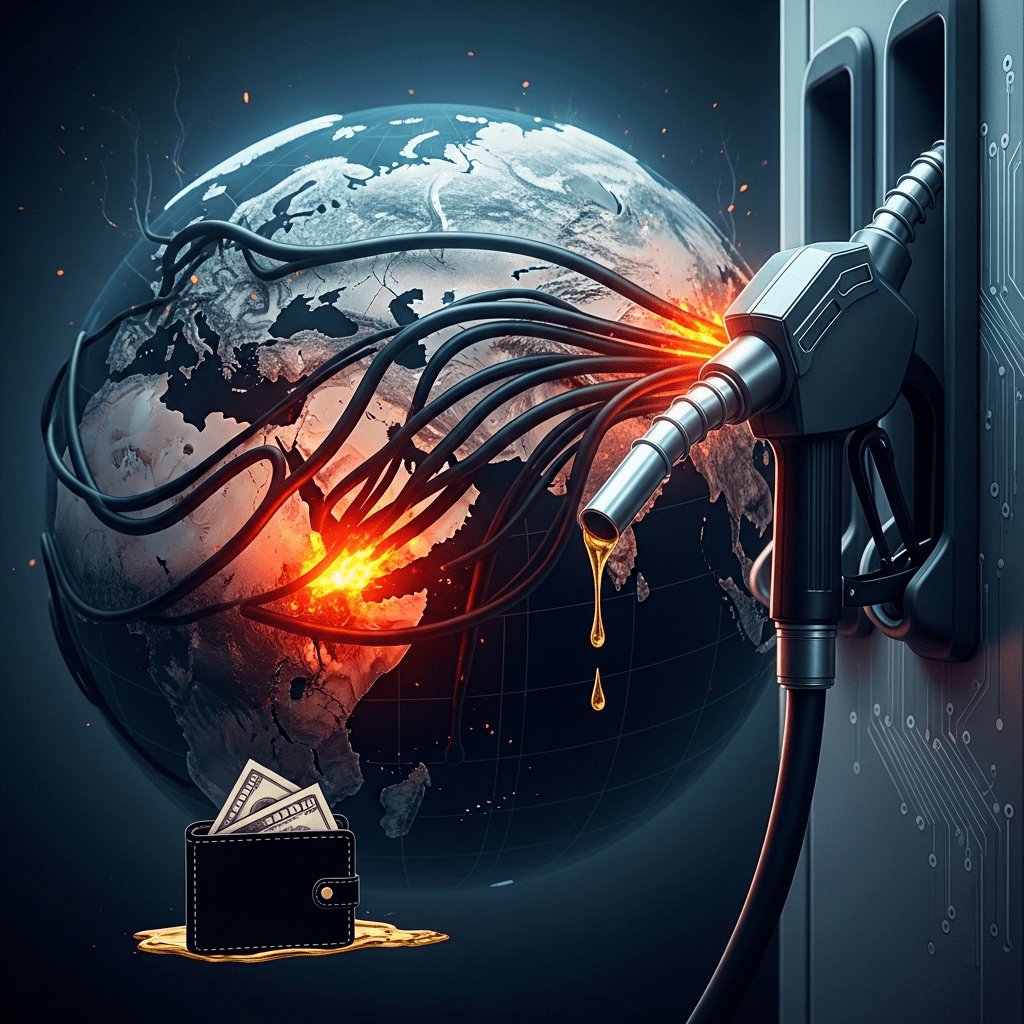
We’ve all been there. Standing at the gas pump, watching the numbers spin faster than a hamster on a triple espresso, feeling a deep, spiritual connection with our wallet as it weeps silently. You might blame taxes, or the station owner, or that extra large coffee you just bought. But the real culprit is often a geopolitical drama playing out thousands of miles away, a global-scale bureaucratic glitch that somehow ends with you paying more for your commute. Today, let’s look at how Iran conflict is driving up gas prices, turning international news into your personal financial headache.
The Planet’s Most Important Traffic Jam
Imagine the entire world’s coffee supply had to pass through one, single, very narrow hallway patrolled by two very grumpy cats. That hallway is the Strait of Hormuz. It’s a tiny waterway, but a staggering amount of the world’s oil—we’re talking about a fifth of global consumption—sails through it every day. When tensions flare up with Iran, which sits on one side of this strait, it’s like one of the grumpy cats has started swatting at the coffee carts. Suddenly, everyone who needs their caffeine fix (or in this case, crude oil) gets very, very nervous.
The Market’s Overactive Imagination
Here’s the funny part: the price at the pump often skyrockets before a single drop of oil is actually lost. The global oil market behaves like a skittish office worker who heard a rumor about potential layoffs. It doesn’t wait for confirmation; it panics immediately. This is called speculation. Traders bet that the supply *might* be disrupted in the future, which drives up the cost of oil *right now*. It’s a global chain reaction of anxiety, and it works like this:
- The Spark: Tensions rise in the Persian Gulf.
- The Panic: Oil traders, fearing a future shortage, bid up the price of crude oil contracts.
- The Ripple Effect: Refineries now have to pay more for that crude oil to turn it into gasoline.
- The Final Boss: That higher cost is passed down the line, through distributors and truckers, until it lands squarely on the giant sign at your local gas station.
An Absurd Journey to Your Tank
So, the next time you’re filling up and wondering why it costs a small fortune, remember the absurdly complex journey that fuel took. A political disagreement in the Middle East caused a financial panic in London and New York, which made it more expensive for a tanker to get to a refinery in Texas, which in turn made the truck delivering gas to your corner station charge more. It’s a beautiful, maddening example of the butterfly effect. A butterfly flaps its wings in the Strait of Hormuz, and you have to cancel your premium streaming subscription. It’s not personal, it’s just global logistics at its most comical.
Leave a Reply