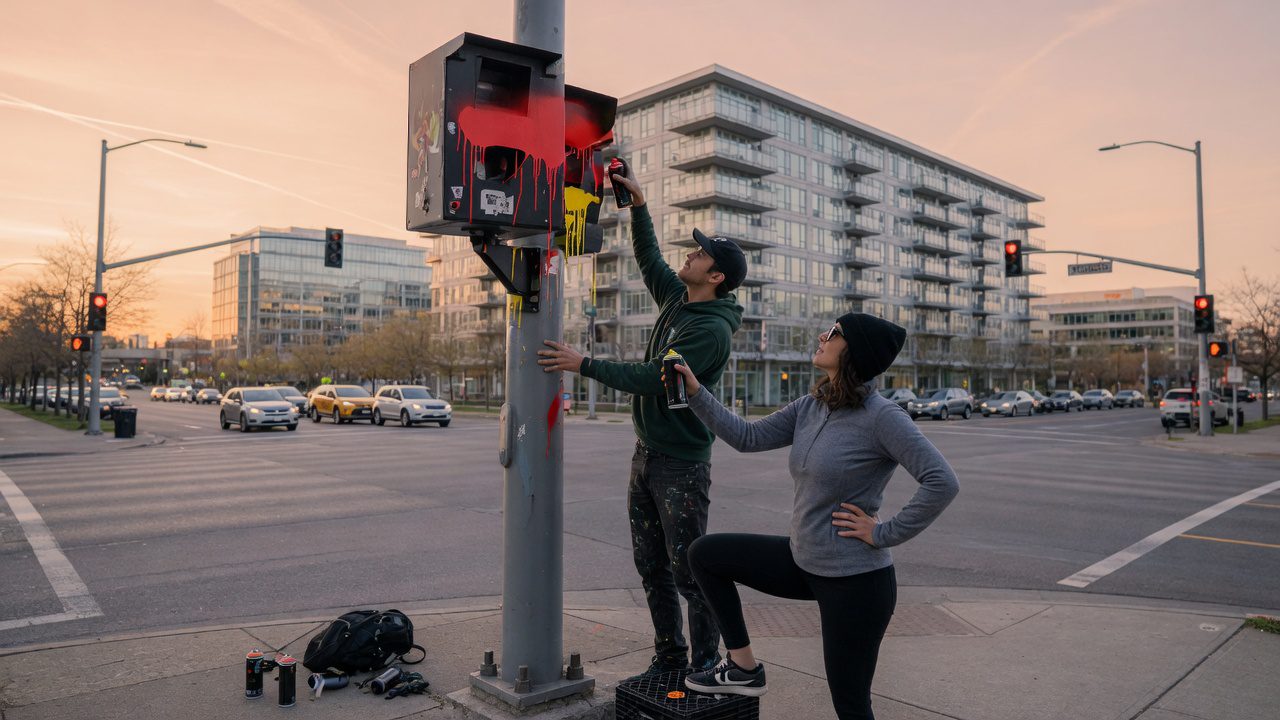
Bridging the surge in AI-powered surveillance with relatable daily frustrations of privacy invasion, the absurd cat-and-mouse game between cities installing cameras and citizens turning detective to disable them has reached peak comedy. As municipalities roll out Flock Safety systems across roads and intersections, residents are responding with everything from spray paint to creative hacks, turning quiet streets into unexpected battlegrounds for data control.
The AI Surveillance Boom in Smart City Infrastructure
Flock cameras represent the latest wave of edge-computing tech deployed in public infrastructure, using AI to scan license plates, track movements, and feed data into centralized cloud platforms. Cities tout them as tools for solving crimes faster, yet the constant data harvesting raises eyebrows about who owns the streams and how long they linger in databases. This infrastructure shift mirrors broader trends in IoT expansion, where every new sensor adds another node to the surveillance network.
Privacy Frustrations Fuel the Cat-and-Mouse Game
Daily commuters tired of feeling like extras in a dystopian data center find the always-on monitoring intrusive, especially when footage gets shared across jurisdictions without clear warrants. The result? An escalating game where officials install more units and locals respond with targeted disablements, from covering lenses to severing connections. It’s less about chaos and more about pushing back against opaque data policies baked into these systems.
Real-World Impact on Tech Policy and Cybersecurity
Vandalism incidents highlight vulnerabilities in these deployments, from physical tampering exposing network weak points to potential cascading effects on traffic management software. Policymakers now face pressure to add transparency requirements and audit trails, lest the backlash slows adoption of AI infrastructure projects. Data shows rising complaints correlating with camera density, underscoring how unchecked surveillance can erode public trust faster than any firmware update can restore it.
- Data Strategy: Cities must weigh collection volumes against retention rules to avoid legal challenges.
- Infrastructure Risks: Exposed cameras invite both physical and remote exploits, complicating IT security roadmaps.
- Policy Shifts: Expect more regulations tying surveillance tech to citizen consent frameworks.
Leave a Reply