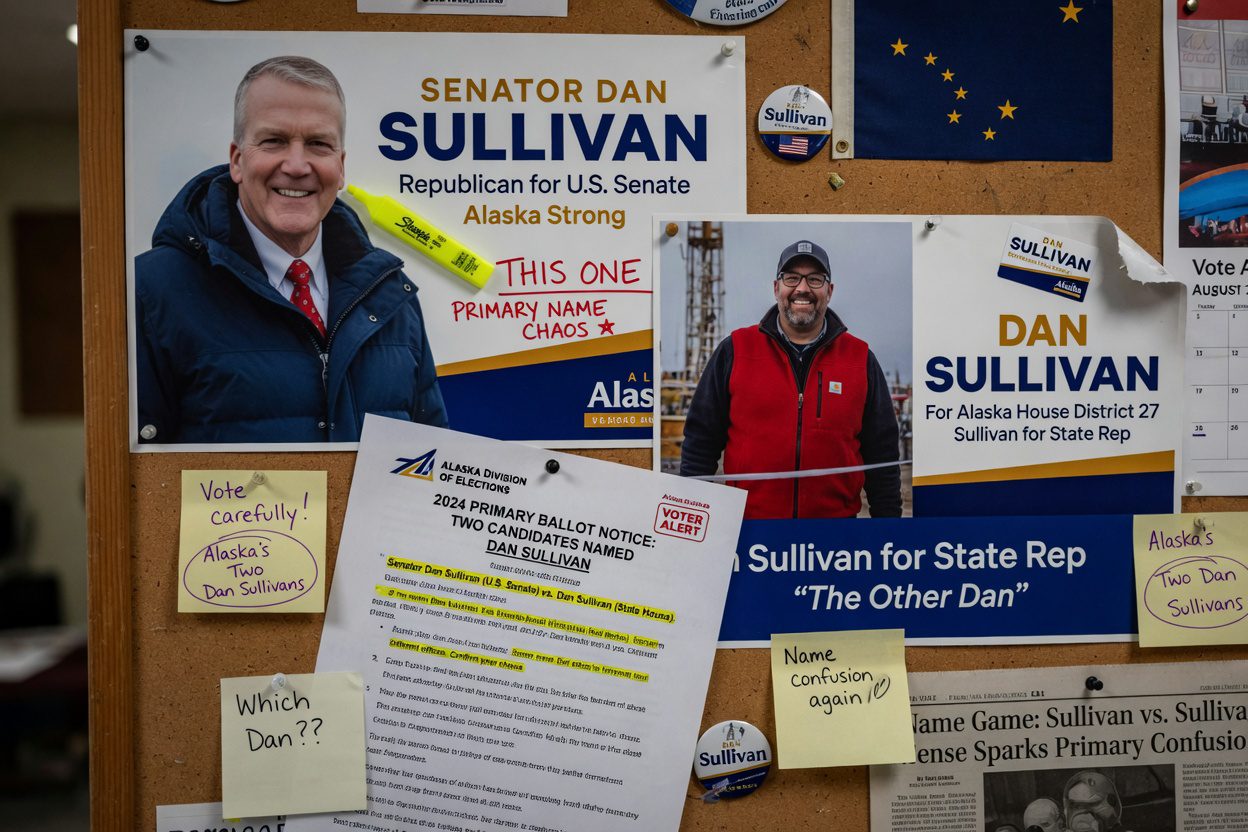
Imagine showing up to the wrong doctor’s appointment because the scheduling system couldn’t distinguish between two patients with the same name. That’s the relatable comedy of bureaucratic mix-ups now hitting Alaska’s senate primary, where two Dan Sullivans create redistricting headaches that mirror the data collisions plaguing election software and voter databases nationwide.
The Name Collision Problem In Voting Infrastructure
Alaska’s primary race highlights a classic IT headache: legacy systems built for unique identifiers struggle when real-world names overlap. Voter rolls, redistricting tools, and ballot-tracking platforms often rely on fuzzy matching algorithms that falter on duplicates, leading to misallocated resources or confused constituents. It’s like a cloud database without proper deduplication logic—suddenly your “Dan Sullivan” query returns chaos instead of clarity.
Real-World Impact On Data Integrity
Election officials scrambling to separate the two candidates reveal broader strategy gaps in tech infrastructure. Poor name-handling can cascade into cybersecurity risks, such as spoofed records or delayed audits, while policy shifts toward better API integrations could prevent these mix-ups. The cost? Wasted hours and eroded public trust in systems already stretched thin.
Lessons For Modern Election Data Systems
- Implement stronger unique ID frameworks beyond simple name fields to avoid primary-level confusion.
- Adopt cloud-based deduplication tools that scale with redistricting demands.
- Train staff on data hygiene practices that treat names like the unreliable keys they are.
In short, Alaska’s two Dan Sullivans serve as a lighthearted warning: fix the backend now, or prepare for more appointment mix-ups at the ballot box.
Leave a Reply