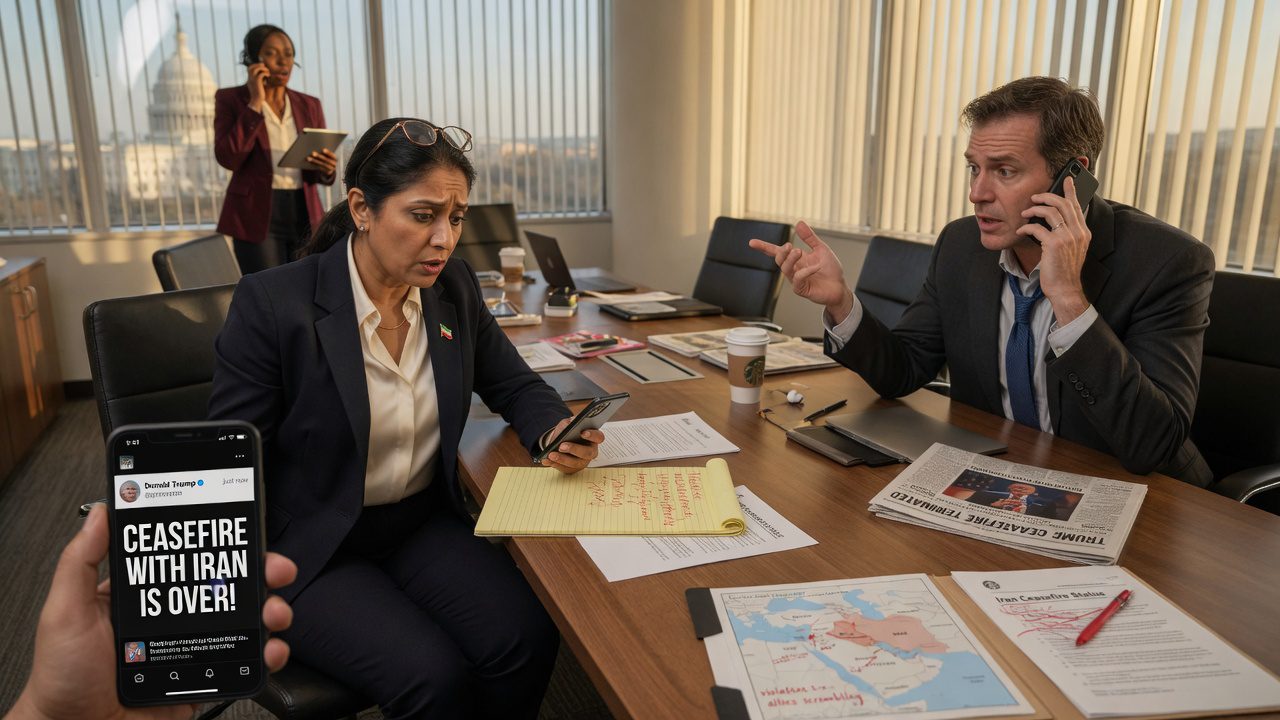
Trump Declares Iran Ceasefire ‘Over’: Diplomatic Whiplash Unfolds
In a stunning reversal that has sent shockwaves through international relations, former President Donald Trump has declared the fragile ceasefire with Iran “over,” igniting a fresh wave of diplomatic uncertainty. The announcement, delivered via social media and subsequent statements, has left allies, adversaries, and analysts scrambling to interpret the implications for Middle East stability.
The Announcement and Immediate Context
Trump’s comments came amid rising tensions following reported violations along the Iran-Israel border. “The so-called ceasefire is over,” Trump stated in a late-night post, citing intelligence on Iranian missile movements. This marks a sharp departure from earlier diplomatic overtures where he had hinted at de-escalation talks. The move has been described by observers as classic “diplomatic whiplash,” a term capturing the abrupt policy shifts that characterized much of his previous tenure.
The ceasefire in question stemmed from backchannel negotiations brokered in late 2023, aimed at preventing full-scale conflict after a series of proxy skirmishes. While never formally ratified by Congress, it had temporarily reduced drone strikes and naval confrontations in the Strait of Hormuz.
Background on US-Iran Relations
US-Iran relations have long been marked by volatility. The 2018 withdrawal from the JCPOA nuclear deal set the stage for heightened sanctions and proxy conflicts. Trump’s “maximum pressure” campaign previously led to the killing of Qasem Soleimani, further straining ties.
The recent ceasefire emerged as part of broader efforts to stabilize oil markets amid global energy concerns. However, domestic political pressures in the US, including election-year rhetoric, appear to have influenced the latest pivot.
Global Reactions
Iranian officials quickly condemned the statement, with Foreign Minister Abbas Araghchi calling it “reckless posturing.” European allies, including Germany and France, expressed concern over potential escalation, urging restraint through NATO channels.
Israeli Prime Minister Benjamin Netanyahu welcomed the firmness, stating it aligns with security needs. Meanwhile, China and Russia, key Iranian partners, warned against unilateral actions that could disrupt regional trade routes.
Stock markets reacted swiftly, with oil prices surging 8% on fears of renewed hostilities. Tech supply chains, reliant on stable Gulf shipping, also saw volatility in semiconductor futures.
Analysis: The Whiplash Effect
Diplomatic whiplash refers to the disorienting impact of inconsistent messaging from major powers. Experts note this pattern undermines trust in US commitments, complicating future negotiations. “Allies are left wondering if today’s agreement holds tomorrow,” said Dr. Elena Vargas, a Georgetown University foreign policy analyst.
For businesses in the tech sector, such instability threatens investments in Middle Eastern data centers and 5G infrastructure projects. Companies like Google and Microsoft have paused expansions pending clarity.
Potential Ramifications
If tensions escalate, the US could face renewed calls for military involvement, echoing past debates over Iraq and Afghanistan. Conversely, a swift backtrack might restore some equilibrium but erode Trump’s negotiating leverage.
Congressional leaders from both parties have called for briefings, highlighting the need for legislative oversight on foreign policy pronouncements.
Looking Ahead
As diplomats work behind the scenes to contain the fallout, the episode underscores the challenges of personalistic diplomacy in an interconnected world. With elections looming, further twists seem inevitable.
The coming weeks will test whether this declaration leads to renewed conflict or serves as leverage for new talks. One thing is clear: the diplomatic tightrope has rarely been more precarious.
This article draws on public statements and expert analysis as of the latest reports. For real-time updates, monitor official channels.
Leave a Reply