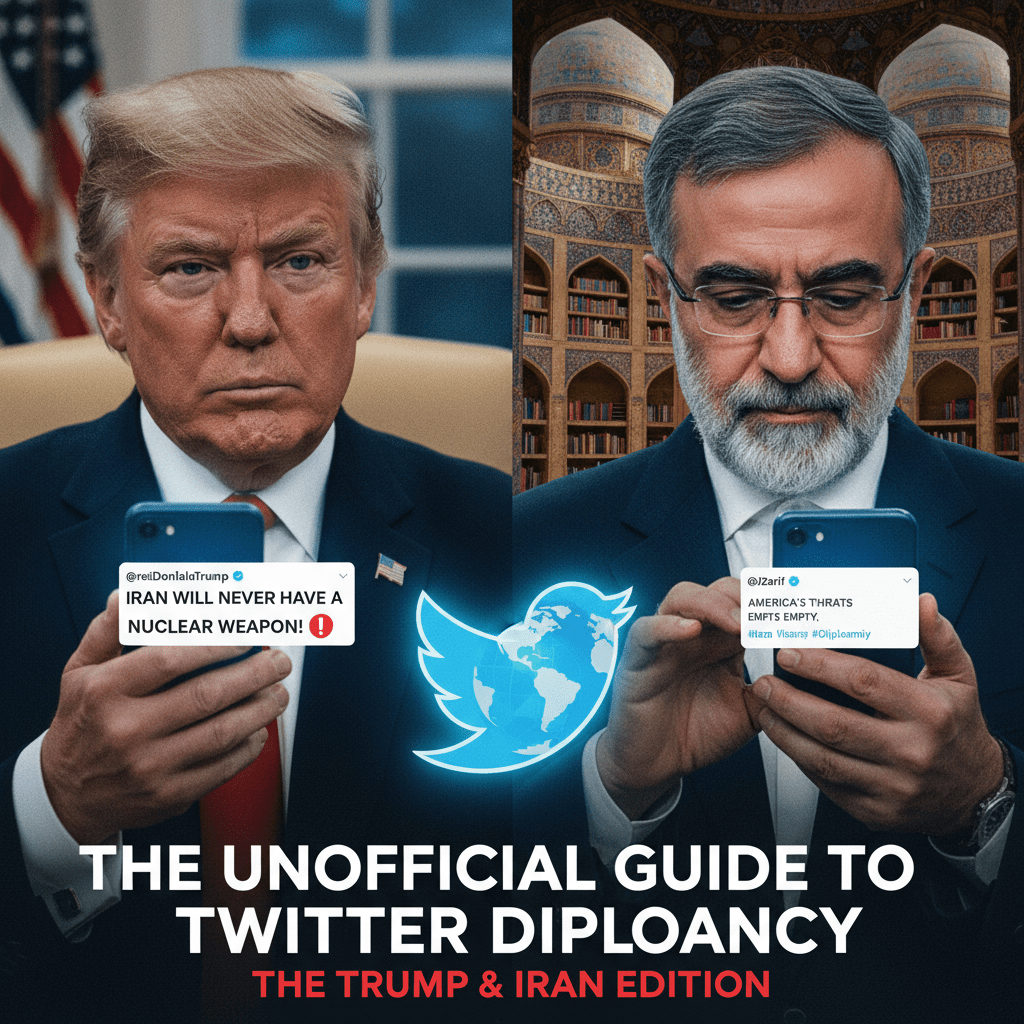
Remember when international relations involved hushed conversations in wood-paneled rooms and communiqués delivered by carrier pigeon? Okay, maybe not pigeons, but you get the idea. It was a slow, deliberate process, like updating enterprise software on a dial-up connection. Then social media crashed the party, and suddenly foreign policy started looking a lot like your family’s group chat after someone brings up politics at dinner. Welcome to the era of social media diplomacy, where geopolitical tensions unfold in 280 characters or less, right next to a video of a cat falling off a shelf.
Diplomacy 1.0 vs The Twitter Update
The old system, let’s call it Diplomacy 1.0, had its protocols. A statement would go through dozens of drafts, reviewed by people whose job title was probably something like “Undersecretary for Ambiguous Phrasing.” The final product was so carefully worded it could mean everything and nothing at the same time. Fast forward to the situation involving the Trump administration, Iran, and protesters. Suddenly, the primary channel for statecraft wasn’t a secure line, but a public platform designed for sharing breakfast photos. We witnessed world leaders issuing statements and warnings directly to the public, bypassing traditional channels entirely. It was the geopolitical equivalent of skipping the IT help desk and emailing the CEO directly with your printer problem.
Features and Bugs of the New System
Like any massive, unplanned system update, this new method of social media diplomacy came with a few… quirks. On one hand, it allowed for unprecedented direct communication. Leaders could signal support for Iran’s protesters in real-time, and citizens could engage directly with global narratives. But this system has some serious bugs:
- The Nuance Eraser: Complex geopolitical issues don’t fit neatly into a tweet. Character limits can turn a carefully considered position into a blunt instrument, ripe for misinterpretation.
- The Amplification Glitch: A single tweet, typo and all, can be screenshotted, translated, and broadcast globally in minutes, escalating a situation before Diplomacy 1.0 has even had its morning coffee.
- The Reply Guy Problem: Every serious declaration is immediately followed by a chaotic stream of memes, trolls, and unsolicited advice from accounts with egg avatars. It’s hard to project gravitas when your post is followed by someone yelling “FIRST!”
Watching this unfold was a surreal masterclass in our modern, hyper-connected world. It’s a place where protesters organize using the same digital tools that world leaders use to posture. The result is a messy, unpredictable, and sometimes darkly comical collision of state power and meme culture. Whether this is a permanent upgrade or a temporary glitch in the system remains to be seen, but one thing is for sure: the pigeons are officially out of a job.
Leave a Reply