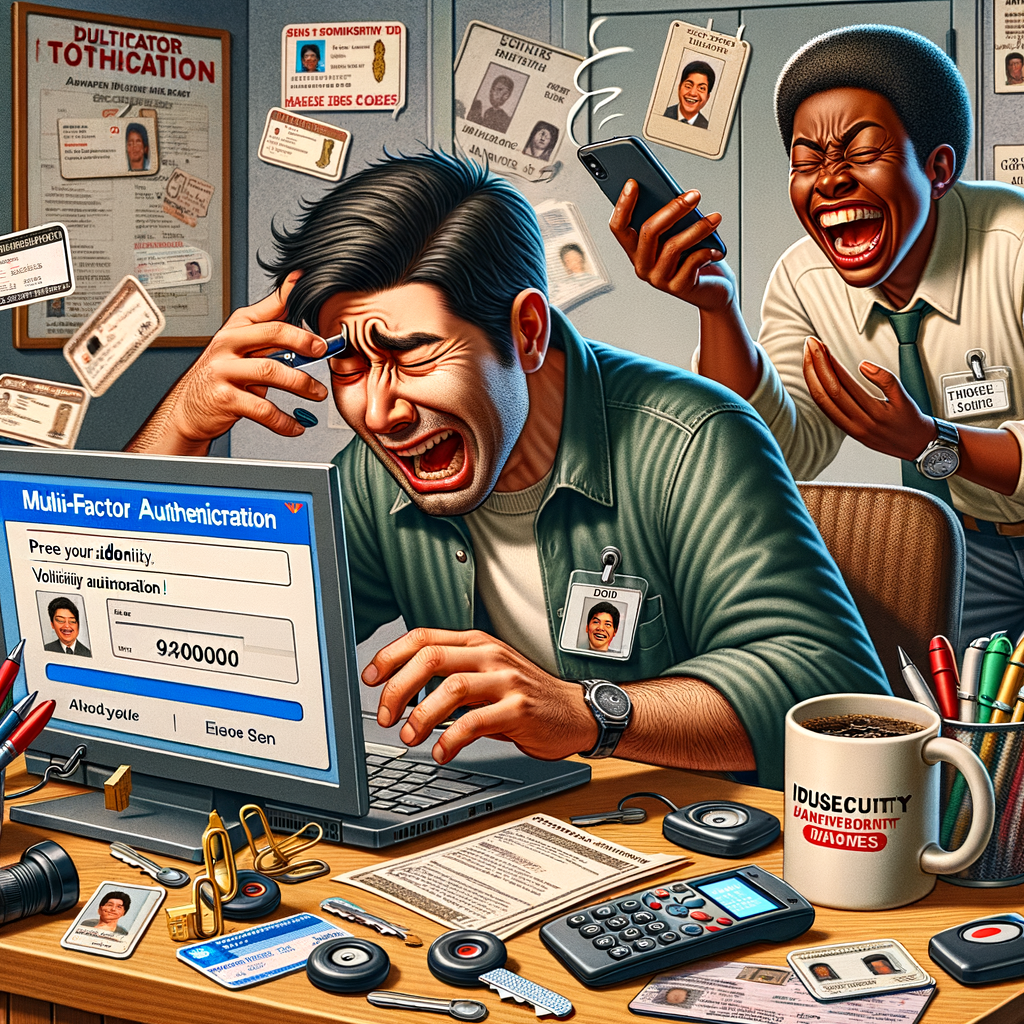
It begins with a simple, optimistic thought: “I’ll just quickly check my email.” You type your password, a magnificent string of characters you’ve somehow committed to memory, and hit Enter. Victory is at hand. But then, the screen changes. A new box appears, a digital gatekeeper demanding tribute. It wants… the code. And so begins the Multi-Factor Authentication Olympics, a daily event you never trained for.
The Scramble: A Modern-Day Treasure Hunt
Suddenly, your desk becomes an archaeological dig site. Where is your phone? Under a pile of reports? In your jacket pocket? In the other room, taunting you with its silence? This is the Phone Pat-Down, a frantic, full-body maneuver that would make a TSA agent proud. You find it, unlock it with a thumbprint that only works on the third try, and open the authenticator app. A six-digit number glows back at you, its 30-second lifespan a tiny, ticking clock counting down your relevance.
The Many Flavors of “Are You a Robot?”
The MFA experience is a buffet of mild inconveniences. Each login is a new adventure. Will it be:
- The Push Notification: A simple “Yes, it’s me” button that feels suspiciously easy, making you wonder if you’ve just granted a Nigerian prince access to your 401(k).
- The Six-Digit Code: The classic. A number that expires faster than a carton of milk left on the counter, forcing you to type with the speed and precision of a bomb-defusal expert.
- The Biometric Tango: Forcing your face into the perfect lighting so your phone recognizes you and not your sleep-deprived doppelgänger.
We do all this to prove a simple fact: we are the same person who sat in this very chair five minutes ago. We are not a sophisticated hacker from a shadowy organization; we are just someone who desperately needs to see if the catering order for Wednesday’s meeting has been confirmed. In our quest to outsmart the robots, we have, ironically, become slaves to a robotic process. But hey, at least we’re secure. Probably.
Leave a Reply