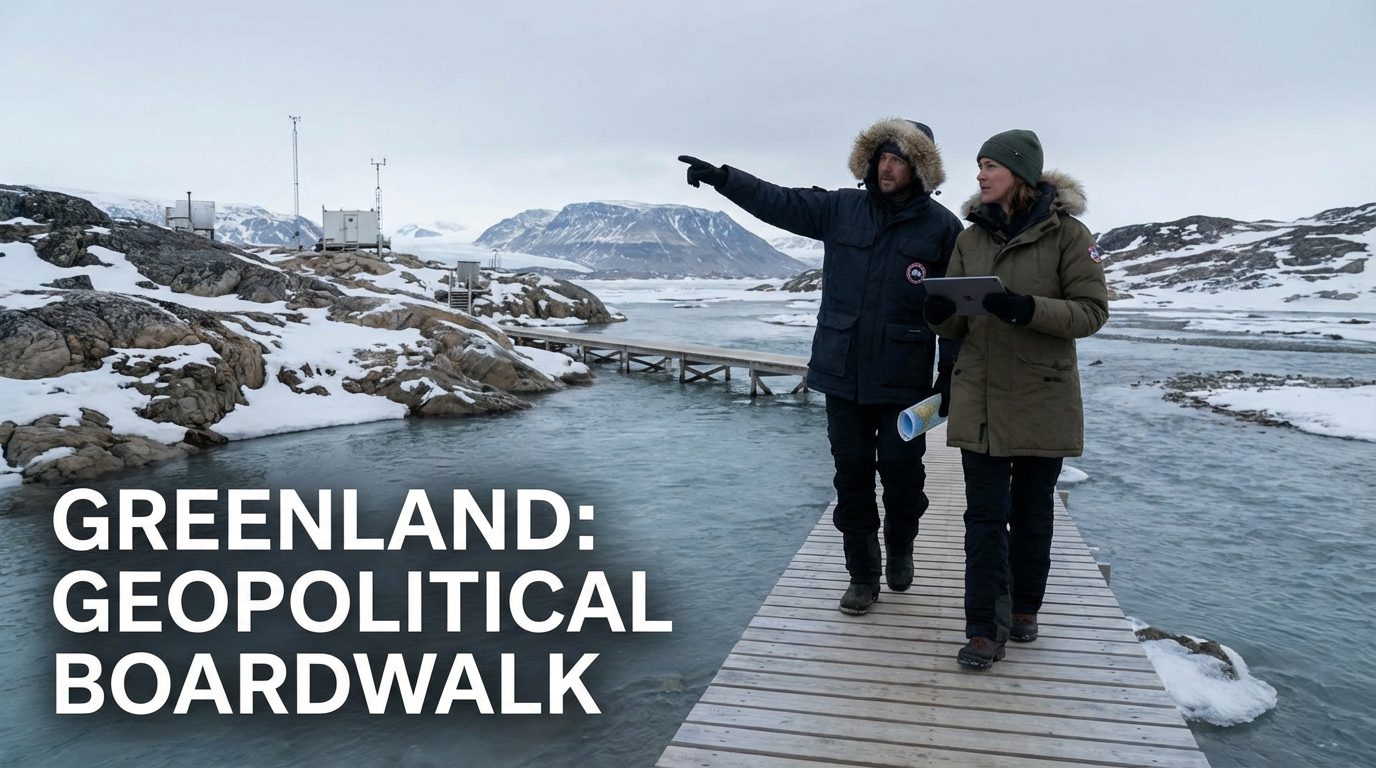
Let’s be honest, for most of history, Greenland was the geopolitical equivalent of Baltic Avenue on the Monopoly board. You knew it was there, big and white and taking up space, but nobody was fighting to build a hotel on it. Then, climate change dealt the world a ‘Chance’ card we didn’t ask for, and suddenly everyone realized Greenland isn’t just a block of ice; it’s Boardwalk, and the rent is about to get very, very high.
The Great Melt-Off: More Than Just Water
So, what changed? In a word: access. As the Arctic ice melts at a record pace, the things that made Greenland a frozen fortress are disappearing, revealing a trifecta of strategic goodies that has major world powers acting like desperate contestants on a reality TV real estate show.
- New Shipping Superhighways: Remember when that one boat got stuck in the Suez Canal and broke the internet (and global trade)? Well, melting ice is opening up new Arctic shipping lanes, like the Northwest Passage and the Northern Sea Route. These routes can shave weeks off travel time between Asia, Europe, and North America. Greenland is positioned like the ultimate highway service station, offering a prime location to control, monitor, or service this new maritime traffic.
- A Buried Treasure Chest: It turns out that under all that ice lies a vast, untapped treasure trove of rare earth minerals. These are the elements crucial for building everything from your smartphone to electric vehicle batteries and wind turbines. There’s a beautiful, bureaucratic irony in the fact that the planetary warming caused by old energy is revealing the very minerals we need for new green energy.
- Location, Location, Location: Greenland sits squarely in the strategic sweet spot between North America and Russia. It’s the perfect perch for military bases, early-warning radar systems, and general high-tech surveillance. The U.S. has maintained Thule Air Base there for decades, but now everyone wants a piece of that prime observational real estate.
The Players in this Cold, Cold Game
This sudden interest has created a fascinating, slow-motion scramble. The United States famously offered to buy it, which is the international equivalent of slipping a business card under the door with a low-ball offer. China has declared itself a ‘near-Arctic state’—a geographically creative claim—and is heavily investing in scientific and economic ventures. Russia, with the longest Arctic coastline, is expanding its military presence. And caught in the middle is Denmark and Greenland itself, navigating this newfound popularity while managing a complex path toward potential full independence. They’re the homeowners of a quiet fixer-upper that suddenly got a five-star Zillow rating.
The game has changed. What was once a vast, frozen wasteland on the map is now a pivotal piece in the global chess match of the 21st century. The race for Greenland isn’t just about an island; it’s about controlling the future of trade, technology, and security in a rapidly changing world.
Leave a Reply