Category: Infrastructure

  • Westjet Flight Attendants Strike Impact On Travelers: IT Infrastructure Vulnerabilities Exposed

    Westjet Flight Attendants Strike Impact On Travelers: IT Infrastructure Vulnerabilities Exposed

    Airline labor disputes like the ongoing WestJet situation underscore how deeply modern travel depends on interconnected IT systems, where a strike can trigger widespread disruptions through scheduling algorithms, crew management platforms, and passenger rebooking databases.

    The Role Of Crew Scheduling Software In Strike Scenarios

    WestJet relies on sophisticated crew scheduling and optimization software to assign flight attendants and pilots across its network. When labor actions halt operations, these systems face immediate overload as automated pairings break down, forcing manual interventions that strain backend infrastructure and data centers supporting real-time updates.

    Data Overload On Passenger Systems

    Rebooking tools and mobile apps connected to centralized reservation databases experience surges in traffic during strikes. This highlights vulnerabilities in cloud-based infrastructure, where sudden demand spikes can lead to latency or temporary outages, directly amplifying the westjet flight attendants strike impact on travelers seeking alternative arrangements.

    Cascading Effects On Broader Aviation Networks

    Integrated systems linking airlines with airports, air traffic control data feeds, and third-party booking engines mean disruptions propagate quickly. Policy discussions around aviation IT resilience now emphasize redundancy in data centers and cybersecurity measures to prevent secondary exploits during operational chaos.

    • Real-time flight status APIs become critical yet overloaded points of failure.
    • Cloud providers hosting airline operations must scale resources rapidly to maintain service continuity.
    • Travelers encounter unpredictable outcomes as predictive analytics models fail to account for human labor variables.

    Ultimately, these events reveal strategic gaps in how the aviation sector manages technology dependencies amid workforce challenges, affecting everything from data integrity to customer trust in digital travel platforms.

  • Why Oil Prices Fell After Trump Iran Negotiations: Impacts On Tech Infrastructure And Energy Costs

    Why Oil Prices Fell After Trump Iran Negotiations: Impacts On Tech Infrastructure And Energy Costs

    Diplomatic developments surrounding U.S. negotiations with Iran have triggered a sharp 5 percent drop in oil prices, creating immediate ripple effects that reach from global energy markets straight to consumer fuel costs and onward into technology infrastructure. This volatility underscores the unpredictable link between geopolitical headlines and everyday expenses, particularly for energy-intensive sectors like data centers and cloud computing.

    Energy Market Shifts And Tech Sector Exposure

    The decline in crude prices following the talks highlights how quickly market sentiment can shift based on diplomatic signals. For technology operators, lower oil benchmarks often translate into reduced electricity generation costs, since many power grids still depend on oil and natural gas. Data centers operated by major cloud providers consume vast amounts of power, making them sensitive to these fluctuations.

    Cost Implications For Data Centers

    Facilities running continuous workloads for AI training, content delivery, and enterprise cloud services stand to benefit from stabilized or lower energy rates. Operators may see modest relief in operational expenses, though the savings depend on regional energy mixes and long-term hedging contracts. Monitoring platforms that track real-time commodity prices now play a larger role in forecasting infrastructure budgets.

    Policy Monitoring Through Digital Infrastructure

    Technology tools have become essential for tracking the impact of international negotiations on energy supply chains. Analytics platforms aggregate news sentiment, futures data, and grid performance metrics to help IT leaders anticipate cost changes. This capability is increasingly integrated into enterprise resource planning systems used by hyperscale providers.

    • Real-time dashboards that correlate diplomatic events with commodity pricing
    • Predictive models that adjust cooling and workload scheduling in data centers
    • Supply chain software that flags risks in fuel-dependent logistics for hardware procurement

    Long-Term Strategy For Infrastructure Resilience

    While short-term price relief may ease pressure on gas bills and data center power costs, sustained volatility encourages greater investment in renewable energy sources and efficiency technologies. Organizations are accelerating adoption of on-site solar, advanced battery storage, and AI-driven energy management to reduce reliance on fossil fuel price swings. These steps strengthen both operational stability and compliance with emerging sustainability regulations.

  • Cyclospora Outbreak Causes Prevention Tips: Tech Infrastructure’s Role in Clarifying Seasonal Health Guidance

    Cyclospora Outbreak Causes Prevention Tips: Tech Infrastructure’s Role in Clarifying Seasonal Health Guidance

    The Cyclospora parasite’s requirement for extended maturation time on fresh produce creates a direct link to this year’s surge in cases, where public health communications have delivered mixed signals equivalent to advising consumers to keep eating salad but perhaps not. This disconnect highlights broader weaknesses in how data flows through food supply chains and health monitoring systems.

    Maturation Process Driving Case Surges

    Cyclospora cayetanensis needs days or weeks on contaminated produce to become infectious, a biological quirk that aligns with summer distribution patterns and explains the explosive growth in reported infections. Traditional surveillance methods struggle to correlate these timelines with real-time logistics data, leaving gaps that amplify the confusing messaging around safe consumption.

    Data Infrastructure Challenges in Tracking

    Modern outbreak detection relies on cloud-based analytics platforms and IoT sensors embedded in agricultural supply chains, yet many systems lack the interoperability needed to flag maturation risks early. When produce moves through fragmented networks without standardized data protocols, public health agencies receive delayed or incomplete signals, contributing to the inconsistent guidance that has characterized recent responses.

    Prevention Tips Integrated with Technology

    • Implement blockchain-enabled traceability tools to monitor produce from farm to table and identify high-risk batches before distribution.
    • Utilize predictive modeling software fed by weather and logistics data to forecast maturation windows and issue targeted alerts rather than broad advisories.
    • Deploy mobile applications connected to centralized health databases that provide location-specific recommendations based on verified case clusters.

    Policy Implications for IT and Infrastructure

    Strengthening cybersecurity standards for food safety databases and expanding access to shared cloud infrastructure could reduce the lag between detection and public communication. Without coordinated investment in these systems, the cycle of vague messaging during seasonal outbreaks will persist, undermining both consumer confidence and operational efficiency across the sector.

  • Western US Heat Wave Wildfires Evacuations Expose Tech Infrastructure Vulnerabilities

    Western US Heat Wave Wildfires Evacuations Expose Tech Infrastructure Vulnerabilities

    The recurring pattern of western us heat wave wildfires evacuations continues to test the limits of regional infrastructure, with extreme temperatures accelerating fire risks and forcing repeated community displacements across the western United States.

    The Annual Cycle And Infrastructure Strain

    Each summer, heat domes intensify wildfire conditions, prompting emergency declarations that disrupt power grids, transportation networks, and digital connectivity essential for modern operations. This cycle reveals gaps in long-term planning for critical systems that support both residents and industries.

    Effects On Data Centers And Cloud Operations

    Data centers in fire-prone areas face heightened risks from power outages and evacuation orders, which can interrupt cloud services relied upon by businesses nationwide. Operators must now incorporate wildfire modeling into site selection and redundancy strategies to maintain uptime during peak heat events.

    Emergency Communication Systems

    Tech-enabled alerts and satellite-based networks play a growing role in coordinating western us heat wave wildfires evacuations, yet bandwidth limitations during mass movements often hinder real-time data sharing between agencies and the public.

    Policy Implications For It Resilience

    Legislators are examining requirements for enhanced grid hardening and diversified cloud architectures to reduce dependency on vulnerable western facilities. Investment in predictive analytics tools could help forecast infrastructure threats tied to climate-driven heat and fire patterns.

    • Improved sensor networks for early fire detection near facilities
    • Standardized protocols for data backup during evacuations
    • Public-private partnerships to bolster rural connectivity

    These measures aim to shift from reactive responses to proactive infrastructure design that accounts for predictable seasonal challenges.

  • Why DOJ Dropped Reflecting Pool Vandalism Charges: Lessons From Botched National Infrastructure Projects

    Why DOJ Dropped Reflecting Pool Vandalism Charges: Lessons From Botched National Infrastructure Projects

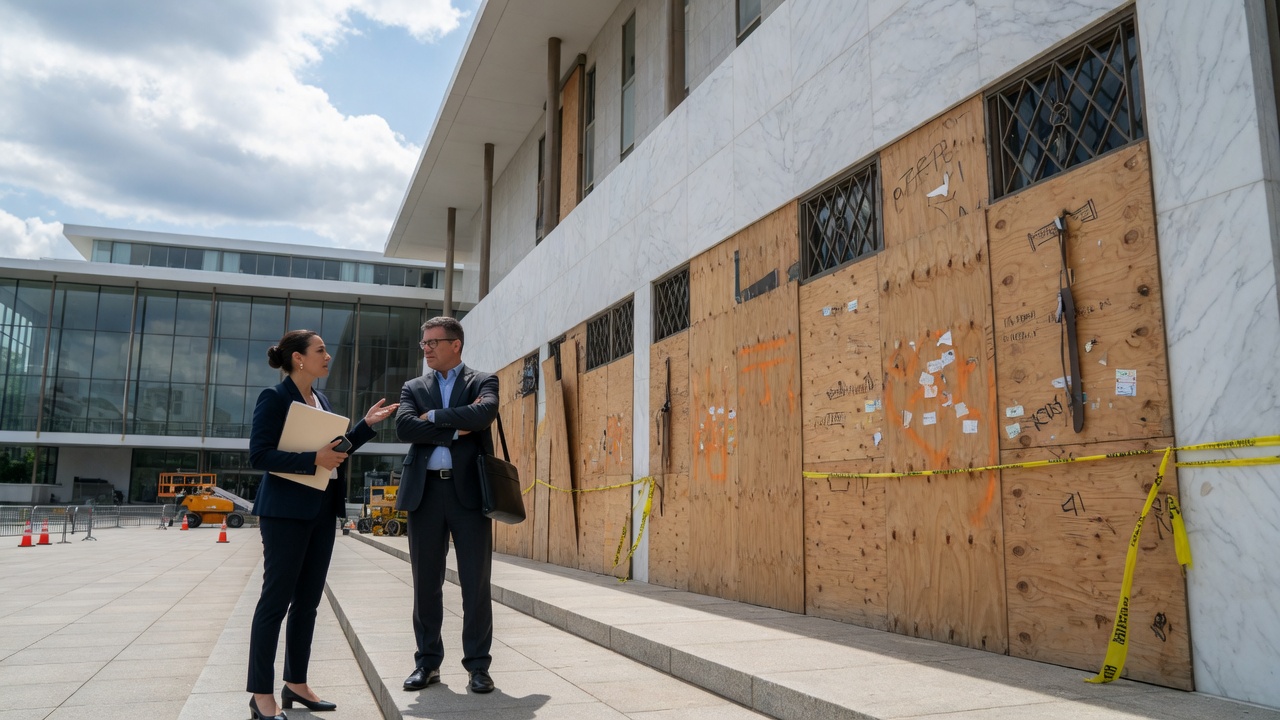
    The botched renovation of the Reflecting Pool at a national landmark illustrates how bureaucratic construction failures can mirror home renovation disasters, where one defective installation nullifies established rules and compliance frameworks, ultimately prompting the DOJ to drop related vandalism charges.

    Infrastructure Failures and Their Ripple Effects

    Construction missteps at iconic sites often expose deeper issues in project oversight, procurement, and execution. When deliverables fall short of engineering standards, legal accountability can shift dramatically, much like how a single faulty component in a large-scale IT rollout can invalidate entire security protocols or service-level agreements.

    Policy and Compliance Implications

    Such outcomes force agencies to reassess enforcement priorities. Data from federal infrastructure audits show that project overruns exceeding 30 percent frequently correlate with revised legal strategies, reducing the viability of charges when foundational work itself violates specifications.

    Parallels to IT and Data Center Deployments

    Similar dynamics appear in technology infrastructure. A poorly executed data center migration or cloud integration can trigger cascading compliance failures, leading organizations to abandon punitive measures in favor of remediation. This reflects the same principle where systemic installation errors override initial contractual penalties.

    • Review of vendor contracts to include performance benchmarks.
    • Implementation of phased testing protocols before full activation.
    • Integration of real-time monitoring tools to detect deviations early.

    Strategic Recommendations for Future Projects

    Agencies managing critical infrastructure must prioritize modular design and independent verification to prevent failures that erode legal standing. In both physical and digital domains, robust governance frameworks reduce the risk of outcomes where project flaws dictate policy reversals.

  • Painless Permanent Tattoo By Mail: How IT Infrastructure Powers Needle-Free Body Art

    Painless Permanent Tattoo By Mail: How IT Infrastructure Powers Needle-Free Body Art

    For many people, the desire for permanent body art collides with a strong aversion to needles and the commitment of in-person sessions, creating a relatable tension much like deciding whether to order takeout on a whim. Emerging biotech approaches now promise painless permanent tattoo by mail services that could remove those barriers, and the underlying systems rely heavily on digital infrastructure, cloud platforms, and secure data handling to make delivery and customization possible at scale.

    Connecting Biotech Trends To Everyday Consumer Expectations

    Biotech innovations in needle-free delivery methods are advancing rapidly, allowing users to select designs through web or mobile interfaces and receive application kits without visiting a studio. This model mirrors e-commerce logistics but adds layers of personalization software that process user-uploaded images and health data. The shift reduces traditional pain points while introducing new requirements for reliable backend systems that ensure accurate production and safe transport.

    Role Of Cloud Computing And Data Centers

    Services offering painless permanent tattoo by mail depend on cloud-based design tools hosted in distributed data centers to generate precise templates and track inventory in real time. These platforms aggregate anonymized preference data to refine product offerings, supporting commercial investigation into market demand. Without robust server infrastructure and low-latency networks, the ability to customize orders at volume would remain limited, affecting both speed and consistency for end users.

    Cybersecurity And Regulatory Considerations

    Handling personal health information and payment details in mail-order tattoo systems demands strong encryption and compliance frameworks similar to those used in telemedicine. IT teams must implement access controls and audit trails to protect against breaches, especially as designs may incorporate biometric or medical indicators. Policymakers are beginning to examine how existing medical-device regulations apply to these hybrid biotech-IT products, influencing supply-chain strategies for companies entering the space.

    Strategic Implications For The Broader Tech Sector

    Adoption of painless permanent tattoo by mail highlights how consumer-facing biotech increasingly intersects with established IT infrastructure providers. Logistics networks, AI-driven quality assurance, and secure API integrations become competitive advantages. Organizations evaluating entry into this market should assess data-center capacity and cybersecurity readiness as core components of their operational plans, rather than afterthoughts.

    • Cloud platforms enable rapid iteration on designs without physical prototyping.
    • Secure data pipelines support compliance while scaling personalization.
    • Infrastructure investments determine whether services can meet growing commercial demand.
  • Montana Man Impaled By Trekking Pole Hikes To Safety: Lessons For Tech Infrastructure Reliability

    Montana Man Impaled By Trekking Pole Hikes To Safety: Lessons For Tech Infrastructure Reliability

    The story of a Montana man impaled by trekking pole who hikes to safety underscores a growing challenge in outdoor technology: equipment designed to enhance safety can instead introduce critical points of failure when least expected. As extreme adventure trends expand, the integration of sensors, GPS mapping, and connected applications into hiking gear creates new dependencies that mirror broader issues in IT infrastructure resilience.

    Connecting Outdoor Gear Failures To Infrastructure Vulnerabilities

    Modern trekking equipment increasingly incorporates digital components such as location trackers and environmental sensors that feed data into cloud-based platforms. When these systems malfunction, the consequences parallel outages in data centers or network disruptions, forcing users to rely on manual overrides or personal endurance. This incident illustrates how a single hardware flaw can escalate into a prolonged survival scenario, highlighting the need for redundant design in consumer-facing technology.

    Data Implications For Emergency Response Systems

    Incident reports like this one provide valuable datasets for refining predictive algorithms used in navigation apps and satellite communication services. Analysts note that aggregated trail data can improve risk modeling, yet gaps in real-time monitoring often leave users exposed during critical windows. Organizations managing outdoor infrastructure must prioritize data integrity to prevent similar equipment betrayals from compounding into larger operational failures.

    Strategic Recommendations For The IT And Outdoor Tech Sector

    • Implement rigorous testing protocols for connected devices to simulate extreme conditions before deployment.
    • Develop policy frameworks that mandate backup analog systems alongside digital features in adventure equipment.
    • Invest in cybersecurity measures to protect location data streams from interference that could worsen physical incidents.

    These steps can reduce the real-world impact of gear failures, turning potential disasters into manageable events through better system architecture.

  • Japan Earthquake Damages Kumamoto Castle No Tsunami: Lessons For Infrastructure Resilience

    Japan Earthquake Damages Kumamoto Castle No Tsunami: Lessons For Infrastructure Resilience

    The recent 7.1 magnitude earthquake in Japan delivered targeted damage to Kumamoto Castle while sparing coastal regions from any tsunami, illustrating nature’s selective disruption much like a quirky bureaucracy where only specific systems activate amid broader chaos. This pattern of uneven impact carries direct lessons for technology infrastructure, where resilience depends on anticipating partial failures rather than uniform threats.

    Selective Damage And Infrastructure Parallels

    Earthquakes often affect landmarks and everyday facilities differently, exposing vulnerabilities in physical and digital networks. In this case, the quake struck historic structures but avoided triggering widespread coastal alerts, mirroring how IT systems might experience isolated outages while core operations remain intact.

    Data Center Preparedness Strategies

    Japan’s tech sector relies on earthquake-resistant data centers equipped with seismic sensors and redundant power supplies. Such events underscore the need for targeted monitoring tools that detect localized shaking to prevent cascading failures in cloud services and network connectivity.

    Early Warning Technology And Policy Implications

    Advanced seismic networks in Japan provide seconds of advance notice, enabling automated shutdowns of critical systems. Organizations can apply similar strategies to software-defined infrastructure, using real-time data feeds to isolate affected components and maintain service continuity during selective disruptions.

    • Integrate IoT sensors for granular vibration detection in facilities.
    • Develop failover protocols that activate only for confirmed high-impact zones.
    • Update disaster recovery plans to account for non-uniform event patterns.

    Real-World Impact On Tech Operations

    Businesses managing data centers or digital services must prioritize adaptive infrastructure to minimize downtime from events like this Japan earthquake. By focusing resources on high-risk assets while maintaining flexibility elsewhere, companies reduce costs and enhance reliability in an era of increasing natural disruptions.

  • Cracker Barrel CEO Steps Down Logo Debacle Explained: IT Infrastructure Lessons From Corporate Rebrand Cycles

    Cracker Barrel CEO Steps Down Logo Debacle Explained: IT Infrastructure Lessons From Corporate Rebrand Cycles

    Corporate rebranding efforts often mirror the familiar cycle of rearranging furniture only to restore the original layout, producing predictable operational chaos without lasting gains. In the case of the recent Cracker Barrel leadership transition, the sequence of logo revisions followed by a CEO departure highlights recurring patterns that extend far beyond visual identity into technology infrastructure, software systems, and data management.

    Rebranding Cycles and Digital Infrastructure Strain

    Every logo adjustment requires coordinated updates across websites, mobile applications, content delivery networks, and backend databases. These changes consume engineering hours and introduce temporary inconsistencies in cloud-hosted assets, increasing the risk of configuration errors that affect site performance and user access.

    Resource Allocation in IT Systems

    Organizations frequently allocate substantial budgets to redesign digital properties during rebrands. When revisions are later reversed, the same teams must roll back code, DNS records, and cached content, duplicating effort and extending project timelines without advancing core infrastructure stability.

    Cybersecurity and Data Consistency Implications

    Logo and branding modifications touch multiple security touchpoints, including certificate management, API endpoints, and third-party integrations. Repeated alterations can create windows of exposure where outdated assets remain indexed or accessible, underscoring the need for disciplined change-management protocols in enterprise environments.

    Policy Considerations for Tech Teams

    Beginners in technology policy should note that leadership decisions around visual identity directly influence IT governance. Clear documentation of rollback procedures and version control practices helps mitigate the downstream effects of such cycles on cloud resources and compliance requirements.

  • Fire Clouds France Spain Wildfires 2025 Disrupt Infrastructure And Summer Travel

    Fire Clouds France Spain Wildfires 2025 Disrupt Infrastructure And Summer Travel

    In a surprising twist of nature, wildfires across France and Spain in 2025 are generating their own thunderclouds known as fire clouds, creating sudden storms that upend summer travel plans for millions and expose vulnerabilities in critical technology systems.

    Travel Technology Systems Under Strain

    These pyrocumulonimbus events produce erratic winds and lightning that force flight cancellations and route changes at major European airports. Booking platforms and airline reservation systems experience sudden spikes in queries, testing the scalability of cloud-based services during peak season.

    Data Center And Power Grid Vulnerabilities

    Wildfire activity near key infrastructure corridors threatens power supplies to data centers in southern Europe. Operators must activate backup protocols more frequently, highlighting the need for resilient energy strategies and real-time monitoring tools to prevent outages that could cascade into broader service disruptions.

    Advanced Monitoring With Satellite And AI Tools

    Technology firms are deploying satellite imagery and machine learning models to detect fire cloud formation earlier. These systems integrate with emergency response platforms, allowing authorities to issue targeted alerts that help travelers adjust plans through mobile applications before conditions worsen.

    Policy Implications For Infrastructure Resilience

    European regulators are examining requirements for enhanced cybersecurity measures around critical infrastructure during climate-driven events. Investments in predictive analytics and redundant networks aim to reduce the economic fallout from repeated travel and logistics interruptions.