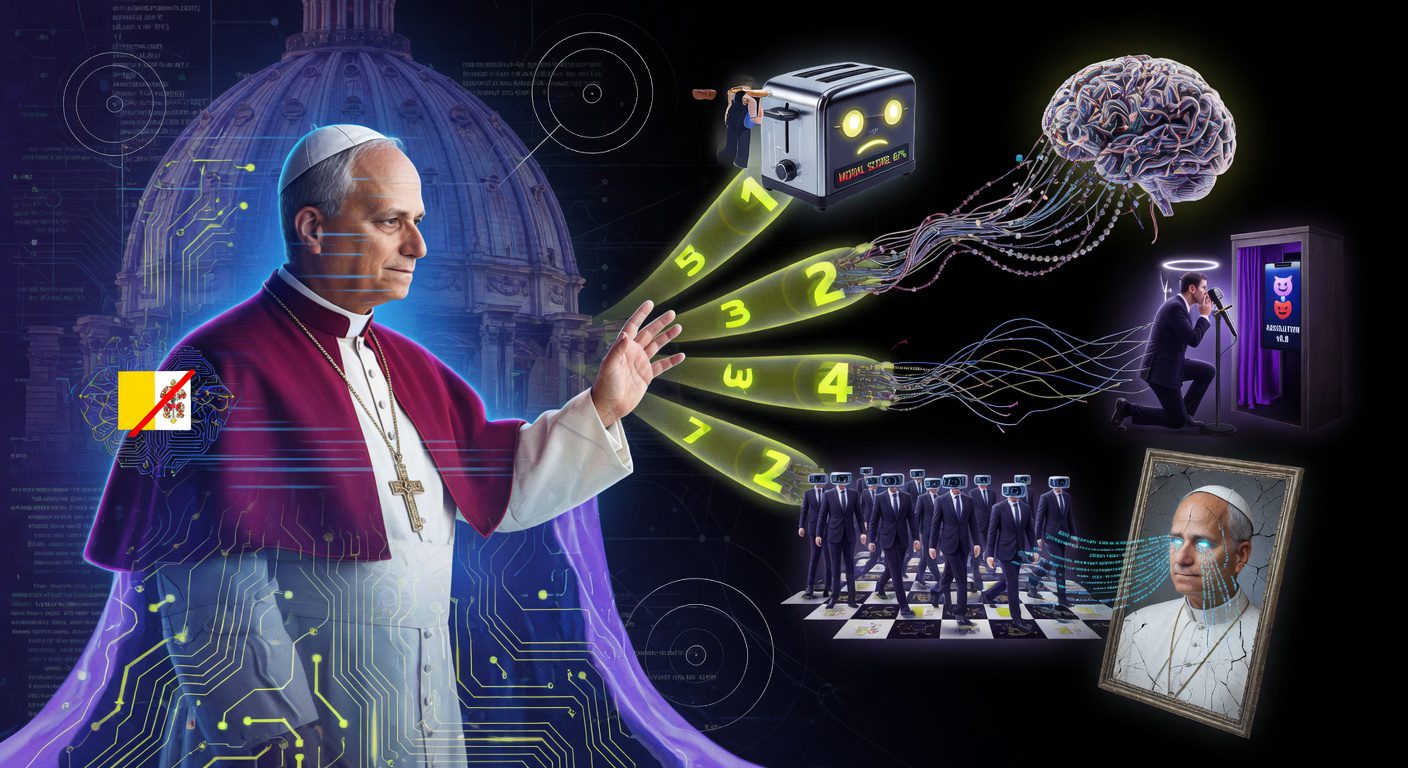
Picture this: you’re rushing through breakfast, coffee in hand, when your smart toaster pops up not just golden bread but a passive-aggressive notification about your carb intake based on last week’s data. Sounds absurd? That’s the lighthearted lens Pope Leo brings to AI risks, where Pope Leo 5 ways AI could warp humanity explained turns lofty Vatican warnings into relatable tech comedy like endless loading screens freezing your life. In this beginner-friendly deep dive, we’ll explore how these concerns play out in everyday glitches, sharing stories from my own digital disasters to practical steps anyone can take, all while keeping the mood warm and funny like chatting with a tech-savvy pal over glitchy Wi-Fi.
The Vatican’s Wake-Up Call Meets Your Kitchen Gadgets
Imagine the Pope addressing crowds not about ancient texts but about algorithms that might one day decide if your fridge restocks kale or cookies based on mood scans. This sets the stage for Pope Leo 5 ways AI could warp humanity explained, starting with how subtle tech biases sneak into routines. One extended anecdote: last year my smart fridge nagged me daily about expired yogurt, leading to a week of overbuying produce that wilted while I chased takeout. The humor lies in the bureaucracy of it all – machines enforcing rules without the human touch of a forgiving grandma. Tip: audit your device permissions monthly by checking app settings for data sharing, a simple step that reclaims control like decluttering a digital junk drawer.
Way One: Erosion of Genuine Human Bonds Through Algorithm Filters
AI often curates our feeds to show only agreeable content, warping connections much like a party where robots pick your friends. In Pope Leo 5 ways AI could warp humanity explained, this first risk hits home with social media rabbit holes. My personal story involves a cousin’s wedding invite lost in an algorithm purge because our chats mentioned politics; I missed the event and spent hours doomscrolling cat videos instead. Practical tip: set phone timers for 20-minute social sessions, then switch to voice calls with loved ones to rebuild those bonds – it’s like hitting refresh on real life.
Way Two: Hidden Biases Amplifying Everyday Autocorrect Disasters
Autocorrect turning heartfelt texts into nonsense reveals AI’s flawed training data, a classic glitch in the system. Extending an example, I once texted my boss about a project deadline only for it to read ‘dead lion’ thanks to predictive errors, sparking awkward laughs but highlighting warped communication. For Pope Leo 5 ways AI could warp humanity explained, this ties to broader humanity shifts where small biases scale up. Step-by-step advice: review keyboard settings weekly, add custom words for your slang, and double-check messages before send to dodge the comedy of errors.
Way Three: Overdependence Creating Infinite Loading Screen Frustrations
Those spinning icons during video calls aren’t just annoying; they symbolize reliance that could stall human progress. A vivid tale from my remote work days: a three-hour meeting froze midway, forcing me to improvise with handwritten notes that somehow felt more productive than the AI-suggested agenda. This section in Pope Leo 5 ways AI could warp humanity explained shows the absurdity of tech bureaucracy grinding life to a halt. Tip: always have analog backups like notebooks ready, and practice offline modes on apps to build resilience against the digital pause button.
Way Four: Privacy Erosion Where Even Toasters Judge Your Habits
Smart appliances tracking every crumb could lead to judgmental feedback loops, painting a funny yet cautionary scene of your toaster shaming late-night snacks. Anecdote time: after linking my coffee maker to an app, it started suggesting decaf based on sleep data I never shared willingly, turning mornings into surveillance theater. Linking back to Pope Leo 5 ways AI could warp humanity explained, this illustrates warped autonomy in daily life. Actionable steps: disable unnecessary IoT features in home devices via their menus, use guest networks for gadgets, and review privacy policies like you’d scan a suspicious receipt.
Way Five: Echo Chambers Fueling Endless Algorithm Rabbit Holes
Getting lost in recommended videos about conspiracy toasters exemplifies how AI narrows worldviews. My extended personal saga involved falling down a gadget review hole that convinced me to buy a $200 smart plug, only to realize it just turned lights on with extra steps and zero personality. This wraps Pope Leo 5 ways AI could warp humanity explained by showing the relatable trap of digital mazes. Practical guidance: diversify searches with opposite viewpoints intentionally, set app limits on recommendations, and journal what you learn offline to break the cycle.
Bringing it all together, these five ways blend Vatican foresight with kitchen-counter realities, encouraging mindful tech use without panic. Try weekly digital detox afternoons where you unplug and observe real-world absurdities like paper menus, fostering balance through small, story-worthy experiments.
Key Takeaways and Your Next Steps
Remember, Pope Leo 5 ways AI could warp humanity explained isn’t doom but a call to laugh while staying aware. Start today by picking one tip from above, share your own toaster tales with friends, and explore these related searches: vatican ai ethics for beginners, funny ai fails stories, how to limit algorithm influence, smart home privacy tips, everyday tech bias examples.
Leave a Reply