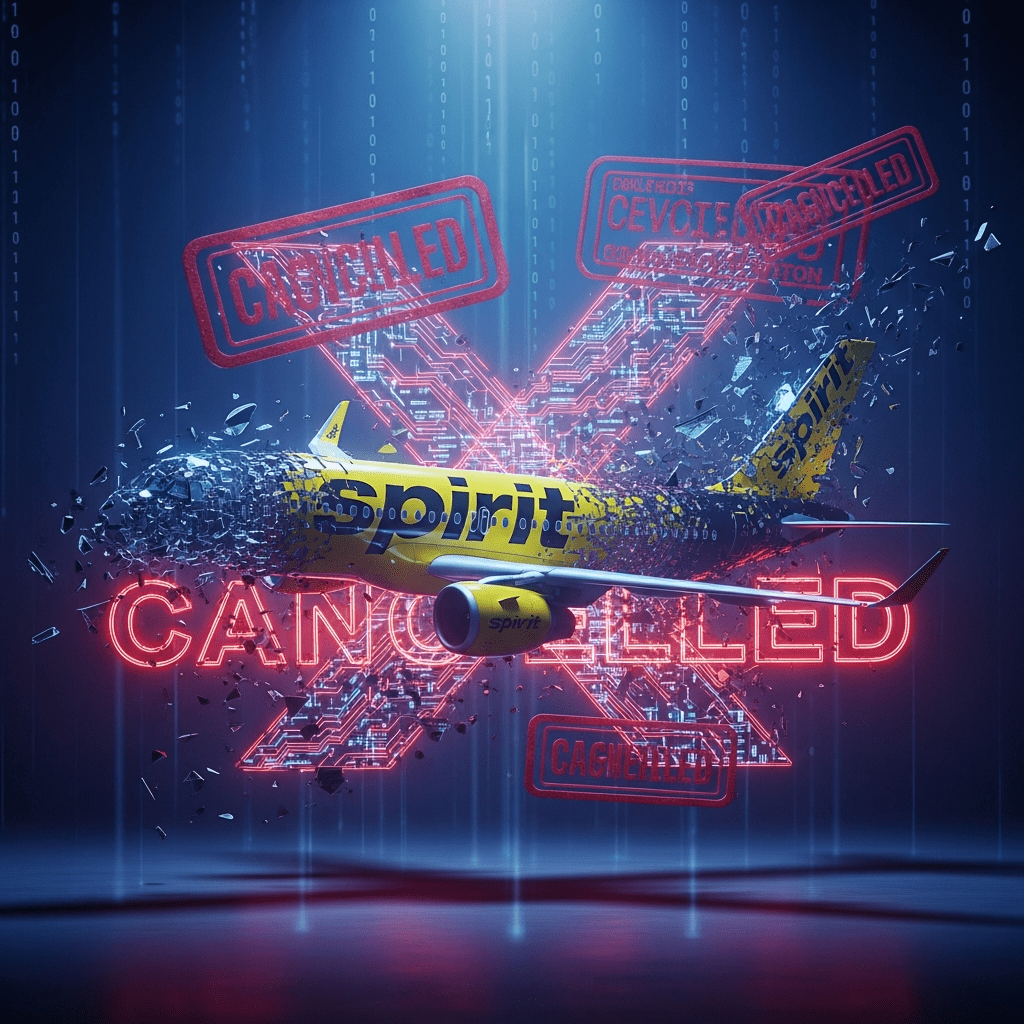
It arrives not with a bang, but with a push notification. That little digital tap on the shoulder from your airline’s app, carrying the same ominous energy as an email from HR titled “A Quick Chat.” The news of the Spirit Airlines shutdown wasn’t just a business headline; for thousands, it was the sudden, screeching sound of a vacation record-scratching to a halt. But before we shake our fists at the sky (or the empty gate), let’s appreciate the magnificent, multi-layered comedy of systemic failure that got us here.
The Great Paperwork Shuffle
Behind every major corporate event is a mountain of paperwork so tall it has its own weather system. The proposed rescue deal for Spirit wasn’t just a handshake; it was a labyrinthine process involving regulators, lawyers, and enough sub-clauses to make a software license agreement blush. Imagine a Rube Goldberg machine powered by legal jargon. A lever is pulled in one department, which releases a marble of compliance, which rolls down a chute of antitrust review, only to be stopped by a tiny gate labeled “Pending Approval of Form 8-K/A.” The deal didn’t just fall through; it likely tripped over a misplaced semi-colon in a document last edited three months ago on a computer running Windows XP.
When Good APIs Go Bad
While the humans were busy shuffling papers, the computers were having a crisis of their own. The moment the shutdown became official, a single command was sent out: “Cancel everything.” This is the digital equivalent of yelling “Fire!” in a crowded server farm. Suddenly, the airline’s booking API, which was probably coded in 2008 and held together by one very stressed developer’s hope, had to communicate this apocalypse to thousands of partner sites, travel agencies, and apps. The result? Digital chaos. Flights that were “confirmed” one minute vanished the next. Rebooking systems buckled under the strain, offering travelers exciting new routes like a 38-hour, four-connection journey from Miami to Orlando. It’s a beautiful reminder that our sleek, modern travel infrastructure is basically just a series of very polite, but easily flustered, robots trying to talk to each other.
Your Hero’s Journey to Gate B42
And that leaves us, the humble traveler, staring at a phone screen that now displays an error message instead of a boarding pass. This triggers the universally recognized Five Stages of Airline Shutdown Grief, a process familiar to anyone who’s tried to get a refund for an in-flight Wi-Fi that didn’t work.
- Denial: “It’s just a glitch. I’ll close and reopen the app. That always works.”
- Anger: “Why is the hold music a synthesized version of ‘MMMBop’ on a loop?”
- Bargaining: “Okay, I’ll take the middle seat next to the lavatory. I’ll even check my bag. Just get me to Des Moines!”
- Depression: “I guess I live here now. The Cinnabon stand is my new living room.”
- Acceptance: “You know, a 22-hour bus ride sounds like a great opportunity to catch up on my podcasts.”
In the end, the great airline shutdown isn’t a story of villains, but a testament to the beautiful fragility of our interconnected world. It’s a symphony of bureaucratic inertia and digital mayhem, reminding us that sometimes, the most sophisticated systems can be brought to their knees by a single, unfortunate ‘false’ value. Now if you’ll excuse me, I have a rental car to book. I hear they have a lovely unicycle available.
Leave a Reply