Steve Miller's Blog

A digital workshop for systems-minded tech commentary.

Tag: tech

  • Montana’s Experimental Treatment Centers Put FDA Oversight on Pause

    Montana’s Experimental Treatment Centers Put FDA Oversight on Pause

    I’ve spent enough years watching organizations invent “temporary exceptions that somehow become permanent to recognize the pattern when a state does it with medicine.

    Montana did not quietly tweak a form. Through Senate Bill 422 (2023) and Senate Bill 535 (2025), the state broadened Right to Try beyond terminal illness and then built a commercial licensing framework for Experimental Treatment Centers—clinics that can recommend and administer investigational drugs, biologics, or devices that have completed Phase I trials but lack full FDA approval. Implementing rules from the Montana Department of Public Health and Human Services took effect July 25, 2026. That is the sober version of the story the earlier stub turned into a cloud-compliance metaphor.

    What the law actually does

    Phase I trials are small, dose-finding safety studies. Most candidates that clear Phase I never reach approval; efficacy and rarer risks show up later. Federal Right to Try (2018) and FDA expanded access already give pathways for seriously ill patients. Montana went further: eligibility no longer requires a terminal diagnosis, and licensed centers may provide qualifying treatments for compensation, subject to state rules on staffing, adverse-event reporting, informed consent, and facility standards.

    Patients still must consider approved options, get a provider recommendation, and give written informed consent. State licensing is not FDA approval. It is a parallel gate—one that lives in Helena, not Silver Spring.

    Primary sources worth reading yourself:

    • [Montana Free Press / Capitol Tracker on SB 422](https://apps.montanafreepress.org/capitol-tracker-2023/bills/sb-422/)
    • [Montana DPHHS final rulemaking on Experimental Treatment Centers (MAR 2026-427)](https://dphhs.mt.gov/assets/rules/2026-427-Adp-Arm.pdf)
    • [FDA overview of Expanded Access](https://www.fda.gov/news-events/public-health-focus/expanded-access)
    • Medical Daily’s summary of the July 2026 rule go-live: [Montana licenses clinics for FDA-unapproved treatments](https://www.medicaldaily.com/montana-experimental-treatment-centers-licensing-fda-unapproved-477773)

    Why a sysadmin brain flinches

    When I ran IT shops, the scariest phrase was we’ll just run it in production; we tested it on a few users.” Phase I is that sentence in lab coats. Useful as a first filter. Not a substitute for the later trials that kill most candidatesfor good reasons.

    Montana’s model creates a split control plane: federal labeling and interstate commerce rules on one side, state-licensed commercial administration on the other. EHRs, pharmacy systems, and claims pipelines were built around FDA status codes, NDC catalogs, and coverage rules that assume a single authority. Now you can have a product that is “legal here under MCA Title 50” and “not approved for general use” under federal law at the same time. That is not a clever API design. That is two systems of record with overlapping jurisdiction and different failure modes.

    From a debugging lens, the questions I want answered are boring and important:

    1. How do adverse events get reported, to whom, and how fast do patterns surface?
    2. What happens when a Montana-administered product follows a patient into an Ohio hospital?
    3. How do insurers, PBMs, and Medicare treat these encounters?
    4. What audit trail exists if a center’s “documented clinical evidence” later falls apart?

    If those answers are muddy, you don’t have innovation—you have an incident waiting for a spreadsheet.

    Patient autonomy vs. system integrity

    I get the human argument. If approved options have failed and you understand the risks, waiting for a multi-year Phase III queue can feel like cruelty with a filing cabinet. Right to Try was sold on that emotion for a reason.

    But commercial licensing changes the incentive structure. Centers can charge. Patients can shop. Marketing will outrun pharmacovigilance unless the state forces the opposite. SB 535’s requirement that centers put a slice of profit toward free care or premium support is a political patch, not a safety architecture.

    Humorously—and I mean the dry kind—Montana just stood up what IT people call a shadow IT environment for medicine: officially acknowledged, locally governed, and permanently awkward for the enterprise standard.

    What operators and policymakers should watch

    • **Data integrity:** Trial-like outcomes without trial-like controls will pollute real-world evidence used by AI diagnostics and payers.
    • **Supply chain:** National distributors and compounding networks will get asked to move products that live in a gray zone; compliance teams will hate the ambiguity.
    • **Federal response:** Expect pressure for FDA guidance, interstate commerce cases, or CMS coverage clarifications. States rarely get the last word when products cross borders.
    • **Copycats:** If Montana’s centers attract capital, other states will draft lookalikes. Policy fragments faster than software patches.

    Bottom line

    Montana built a real regulatory experiment: Phase I as the entry ticket, state licenses as the storefront, informed consent as the EULA. Whether that expands access for people who have run out of options or becomes a loophole machine depends entirely on enforcement quality—adverse-event reporting, honest marketing, and whether “considered approved options means a serious conversation or a checkbox.

    Im not anti-patient choice. I’m anti-systems that skip the hard validation step and then act surprised when production breaks. Medicine deserves better change control than a weekend deploy.

    Steve Miller — Mason, Ohio. Former programmer, sysadmin, and IT manager. Still allergic to “we’ll patch it later.”


  • DHS Watchdog: “Alligator Alcatraz” Used Phone-Booth Metal Enclosures

    DHS Watchdog: “Alligator Alcatraz” Used Phone-Booth Metal Enclosures

    Nicknames in government projects are usually a warning light. When Floridas soft-sided immigration detention site in Ochopee earned the nickname “Alligator Alcatraz, the branding wrote checks the facility’s physical design could not cash. A September 2026 Department of Homeland Security Office of Inspector General report is what happens when auditors stop reading the brochure and measure the cages.

    What OIG actually found

    In an unannounced inspection of ICEs Florida Soft-Sided Facility (FSSF), DHS OIG documented cramped housing and a practice inspectors said they had not seen elsewhere in ICE facilities: confinement in small metal enclosures staff called “calming areas.”

    Between July 17, 2025, and January 18, 2026, 79 detainees were held in those enclosures. Each offered about 18 square feet of floor space—roughly 4 feet 3 inches by 4 feet 3 inches, and about 7 feet 9 inches tall. Stays ranged from minutes to nearly two hours, averaging about 59 minutes per OIG and news summaries of the report. Inspectors called the practice unprecedented among facilities they had reviewed and inconsistent with standards that require the least restrictive environment necessary for safety and security.

    Staff told inspectors detainees sometimes asked to go inside, and doors were described as unlocked, with notices saying people could leave. OIG still flagged the design as highly unconventional and found at least one documented case that looked disciplinary: a detainee held 26 minutes for “failed to comply with a lawful command.”

    The facility closed in June 2026. Recommendations were closed out because operations had already ceased—which is the bureaucratic version of fixing a bug by retiring the server.

    Sources:

    • [DHS OIG report OIG-26-22 (PDF)](https://www.oig.dhs.gov/sites/default/files/assets/2026-09/OIG-26-22-Sep26.pdf)
    • [CBS News coverage of the metal enclosures finding](https://www.cbsnews.com/news/florida-alligator-alcatraz-small-metal-enclosures-dhs-ice-watchdog/)
    • [CNN Politics summary of the inspection](https://www.cnn.com/2026/09/14/politics/alligator-alcatraz-trump-immigrants)
    • [The Guardian on cage-like enclosures](https://www.theguardian.com/us-news/2026/sep/14/alligator-alcatraz-immigration-jail-cages-report)

    Branding vs. bill of materials

    The old stub leaned on Disney jokes. The real issue is specification drift: a facility marketed as a scalable model for detention capacity, built fast with soft-sided structures, then improvising physical controls that fail a humane-treatment checklist.

    In IT terms, this is what you get when capacity planning outruns standards compliance. Leadership wants beds. Procurement buys tents and modular units. Operations invents a calming area because the floor plan never included a proper de-escalation space. Then auditors arrive with tape measures.

    I managed shops where someone once labeled a wiring closet “the meditation room” because it was quiet. Funny until the fire marshal shows up. Phone-booth metal boxes used on people are not funny at allthey are a design failure with human consequences.

    Capacity theater and standards

    OIG also described overcrowded housing footprints far below common square-footage expectations cited in coverage (reports referenced roughly 28 square feet per detainee versus a 75-square-foot benchmark discussed in secondary reporting). Soft-sided, rapid-build detention is attractive because it scales on paper. Paper is not a life-safety system.

    Standards exist so staff under pressure do not invent their own. When “calming” and “discipline” blur in the documentation, you no longer have a clear control. You have an ambiguous tool that will be misused the first busy night.

    Lessons for anyone who builds systems that hold peopleor data

    1. **Name things honestly.** “Alligator Alcatraz sold toughness. It also invited scrutiny. If your product name sounds like a theme park, expect tourists with cameras—and inspectors.
    2. **Design the exception path before go-live.** De-escalation spaces, medical isolation, and restrictive housing need specs, logging, time limits, and independent review—not improvisation.
    3. **Log use like an audit event.** Who authorized it, why, duration, outcome. One disciplinary note in 79 uses is enough to destroy the “voluntary calming” narrative.
    4. **Retiring the site is not a root-cause fix.** Closing FSSF ends this instance. It does not prevent the next soft-sided surge facility from copying the same floor plan.

    Why this belongs on an infrastructure blog

    Detention sites are infrastructure the same way hospitals and data centers are: physical plants with capacity targets, safety standards, staffing ratios, and failure modes. Soft-sided surge facilities exist because permanent concrete takes years and political fights. The tradeoff is real. What is not acceptable is treating humane-treatment standards as optional backlog.

    When OIG says a practice is unprecedented, that is the equivalent of a Sev-1 postmortem finding: we did something no peer facility does, and we did not catch it internally. That is a governance failure layered on a facilities failure.

    For readers in Ohio watching national immigration policy from a distance, the takeaway is local as well as national: emergency capacity projects in any domain—shelters, hospitals, jails, even temporary IT war rooms—need the same discipline. Spec the hard cases first. Measure the square footage. Log every restrictive intervention. Assume an inspector will visit on the worst day of the month.

    Bottom line

    The watchdog report is not a branding critique. It is a systems critique: rapid capacity without humane design controls produced metal enclosures the size of a phone booth. Nicknames fade. Tape-measure findings do not.

    If we are going to detain people at scale, the physical plant has to survive an unannounced inspection—not just a ribbon-cutting. That is the unglamorous standard. It is also the only one that matters.

    Steve Miller — Mason, Ohio. Ex-programmer/sysadmin/IT manager. Believes “temporary workarounds deserve permanent documentation.

  • Congress Keeps Hearing AI Doomsday—and Shipping Almost Nothing

    Congress Keeps Hearing AI Doomsday—and Shipping Almost Nothing

    If Congress held hearings the way IT shops open tickets, AI would have a thousand “in progress” items and one closed change: a narrow law about nonconsensual intimate imagery. Everything else is still in committee, which is Capitol Hill’s version of “awaiting CAB approval.”

    As of mid-September 2026, with midterms weeks away, that is still the picture. Dramatic testimony. Sparse statute.

    What actually became law

    Give credit where it is due. The TAKE IT DOWN Act became Public Law 119-12 on May 19, 2025. It criminalizes intentional disclosure of nonconsensual intimate visual depictions—including AI-generated digital forgeries—and requires covered platforms to remove them promptly after notice. That is real, targeted, and enforceable.

    It is also not a comprehensive AI safety regime. It does not set training-data rules, model-release gates, energy reporting for training clusters, or liability baselines for frontier systems.

    See:

    • [Congress.gov: S.146 TAKE IT DOWN Act](https://www.congress.gov/bill/119th-congress/senate-bill/146)
    • [GovInfo compiled text of Public Law 119-12](https://www.govinfo.gov/content/pkg/COMPS-18158/pdf/COMPS-18158.pdf)

    What is still theater

    Reporting in September 2026 describes a familiar deadlock: Senate negotiators discussing risk-mitigation duties and possible federal preemption of some state AI rules; House members pushing bills such as a Frontier Act for audits and catastrophic-risk pauses; leadership eyeing the calendar more than the text. NBC, Reuters, and BBC coverage converge on the same punchline—action before Election Day is unlikely.

    • [NBC News: warnings shock Congress, action unlikely before election](https://www.nbcnews.com/politics/congress/warnings-ai-danger-congress-action-unlikely-election-rcna597230)
    • [Reuters: Senate negotiators consider major-risk mitigation rules](https://www.reuters.com/legal/litigation/us-senate-negotiators-consider-requiring-ai-firms-mitigate-known-major-risks-2026-09-11/)
    • [BBC: AI regulation faces deadlock](https://www.bbc.com/news/articles/ck20989806e9o)

    From a systems view, that delay is not neutral. States keep writing their own rules. Enterprises keep guessing which standard will matter in 18 months. Hyperscalers keep expanding GPU campuses under a patchwork of executive orders, export controls, and voluntary commitments. The control plane is fragmented on purpose—or at least by habit.

    Election-year physics

    I used to tell executives that you cannot freeze production every time someone shouts “risk” in a meeting. You also cannot ignore repeated, documented failure modes. Congress has perfected the worst of both: maximal rhetoric, minimal change control.

    Midterm calendars compress voting weeks. Consensus on AI does not exist across parties—or even within them. Some want industrial policy and U.S. lead-at-all-costs. Others want brakes, audits, and liability. Preemption fights pit state attorneys general against federal baseline fans. Add White House executive-order strategies that prefer agency guidance over statutes, and you get hearings as content, not legislation as product.

    What IT and security teams should do while Washington stalls

    1. **Inventory model use like software.** Who uses which foundation models, with what data, under what contracts.
    2. **Assume multi-jurisdiction rules.** California, Colorado, EU AI Act-style obligations, and sector rules (health, finance, kids) will hit you before a grand federal bargain does.
    3. **Treat deepfake and abuse reporting as ops.** TAKE IT DOWN is a reminder that content-response SLAs are becoming legal SLAs.
    4. **Separate safety theater from engineering controls.** Eval suites, red-team results, and access logging beat a PDF of principles.

    The dry joke, then the point

    Watching CEOs warn about existential risk and then lobby against anything with teeth is like a vendor presenting a disaster-recovery slide while refusing to fund a second site. I have sat through that meeting. The coffee was better than the follow-through.

    Voters get soundbites. Operators get uncertainty. Uncertainty has a price: duplicated compliance work, delayed deployments, and brittle ad-hoc controls that fail the week a model jumps a capability notch.

    What “delay” costs outside the Beltway

    In Mason, Ohio, nobody is waiting on a Senate white paper to decide whether to let ChatGPT draft a status report. They are waiting on clearer rules for:

    • whether customer recordings can train a vendor model;
    • how long to retain AI-assisted decision logs for audits;
    • what counts as acceptable deepfake handling after TAKE IT DOWN;
    • whether a “high-risk” label will suddenly apply to a tool already in production.

    Every month without a federal baseline pushes that work onto counsel, insurers, and state AGs. That is not agile. That is cost-plus compliance.

    I am not romantic about perfect legislation. I am romantic about boring predictability—the same reason change-advisory boards exist. Tell operators the rules, give them a runway, enforce them evenly. Hearings without votes are just expensive stand-ups with better cameras.

    Bottom line

    Congress can keep booking the apocalypse on C-SPAN. Until it ships a baseline—transparency, incident reporting, liability clarity, or even a narrow high-risk regime—the United States will keep regulating AI the way poorly run shops manage shadow IT: one exception at a time, after the outage.

    TAKE IT DOWN proves they can pass something specific when the harm is vivid and the coalition is wide. Comprehensive AI rules need the same clarity of scope. Until then, treat federal AI policy as a backlog item with no sprint date.

    Steve Miller — Mason, Ohio. Still waiting for Congress to merge the PR branch into main.

  • iPhone Duo’s Split View Is Real—and Still Not an iPad

    iPhone Duo’s Split View Is Real—and Still Not an iPad

    Apple finally put two apps side by side on an iPhone—and then immediately reminded everyone why “works on iPad” and “works on iPhone” are different products pretending to share a family name.

    The device is iPhone Duo, Apple’s first foldable, unveiled September 2026. Unfolded it offers a 7.6-inch inner display; closed, a 5.4-inch outer screen. Starting price in coverage: $1,999. Preorders October 16, availability October 23, per Apple and press reports. Split View is the headline feature for people who live in tickets, dashboards, and email threads.

    What Duo actually ships

    Apple’s own materials say Duo can run two apps side by side, open two windows of one app (hello, dual Safari), keep Siri alongside content, and save app pairs. That is new for iPhone. No prior iPhone documented true side-by-side multitasking like this.

    MacRumors and others dug into the catch: the split is fixed 50/50. You cannot drag the divider the way you can on iPad. Geometry explains it. Inner and outer displays share the same aspect ratio; each half of the inner screen roughly matches the outer canvas. A resizable divider would create odd widths developers never layout-tested and would break the “same shape open or closed” story.

    Sources:

    • [Apple Newsroom: Apple unveils iPhone Duo](https://www.apple.com/newsroom/2026/09/apple-unveils-iphone-duo/)
    • [Apple iPhone Duo product page](https://www.apple.com/iphone-duo/)
    • [MacRumors: Split View not like iPad](https://www.macrumors.com/2026/09/11/iphone-duo-split-view-not-like-ipad/)
    • [Reuters: Apple’s $1,999 passport-shaped foldable](https://www.reuters.com/business/retail-consumer/apple-expected-unveil-first-folding-phone-with-new-ceo-ternus-command-2026-09-09/)

    Why the old stub got the story backwards

    The AI Bot post framed this as “iPhone Duo nails it, iPad is a bureaucratic maze.” That is cute and wrong. iPad has had flexible Split View and Stage Manager complexity for years—sometimes too much complexity. Duo introduces a constrained multitasking model optimized for a fold, not a portable laptop replacement.

    If anything, Apple is applying change control: ship a limited, predictable mode on day one so apps do not implode. I have shipped features that way. Users grumble. Support tickets stay survivable.

    Infrastructure angle for IT folks

    MDM and app-compatibility teams should care about more than hinge memes:

    1. **Two canvases, one identity.** Outer and inner screens mean apps must handle abrupt size changes without losing form state—password fields, MFA prompts, VPN login pages.
    2. **Enterprise apps lag.** Internal portals built for single-column mobile WebViews may look silly at 50/50. Test before you approve Duo on the corporate plan.
    3. **Security UX.** Side-by-side mail + VPN admin console is productive and also a shoulder-surfing dream on a train. Train users; consider timeout policies.
    4. **Repair and lifecycle.** Foldables historically fail differently than slab phones. Budget for higher break/replace rates if you buy a fleet of $2,000 devices for field staff.

    Productivity: where Duo helps, where iPad still wins

    Duo helps when you need glanceable pairing: chat + map, password manager + portal, monitoring alert + runbook. The fold becomes a portable dual-pane without dragging a tablet.

    iPad still wins for uneven splits, keyboard-first work, Stage Manager window piles, and anything that needs a 60/40 or 70/30 layout. Calling iPad a “maze” ignores that power users asked for those knobs. Apple’s sin on iPad has been discoverability and gesture overload—not lack of capability.

    A note on the stub’s “Duo vs iPad bureaucracy” framing

    The original post treated iPad multitasking as legacy infrastructure and Duo as the clean rewrite. That gets the engineering history upside down. iPadOS accumulated features across a decade of power-user requests. Duo is a greenfield constraint on a new hinge. Clean UIs are easy when you refuse to resize windows.

    For most of us who remote into systems from a phone in a parking lot, Duo’s fixed split may be enough. For anyone building spreadsheets or reviewing long diffs, the iPad (or a laptop) remains the grown-up tool. Buy for the job, not the keynote.

    Pricing and fleet reality

    At roughly two thousand dollars before tax and case-and-care plans, Duo is not a casual upgrade for a helpdesk pool. It is a specialist device: executives who live in email-plus-CRM pairs, clinicians toggling chart and reference, field engineers with map plus ticket. If your org still issues a phone and a tablet, Duo might collapse that pair for some roles—and create a single point of failure for others. Budget the hinge like you budget laptop hinges: assume it will be the part that defines the refresh cycle.

    Bottom line

    iPhone Duo is a real multitasking milestone for the phone line, shipped with deliberate limits. Treat it as a new form factor with a new constraint set—not proof that Apple loves iPhone and neglects iPad. If you buy one for work, test your actual app pairs at 50/50 before you retire the iPad in your bag.

    Steve Miller — Mason, Ohio. Has strong opinions about window managers and weak patience for gesture scavenger hunts.

  • Trump Says He’d “Love” a United Ireland—Diplomacy Meets Data-Center Reality

    Trump Says He’d “Love” a United Ireland—Diplomacy Meets Data-Center Reality

    U.S. presidents usually treat Northern Ireland’s constitutional status like a live wire: acknowledge the Good Friday Agreement, smile for the cameras, and do not pick a side on reunification. In Dublin in mid-September 2026, President Donald Trump did not get that memo.

    Sitting with Irish Taoiseach Micheál Martin, Trump said he would “love” to see Ireland unified, that it would happen “eventually,” and that it “may as well happen now.” He doubled down the next day at a golf event, calling putting North and South together “one of the naturals of all time.” Unionist leaders and London pushed back. Irish nationalists heard validation. The rest of us got a reminder that offhand presidential lines can still move markets in attention, if not yet in law.

    What he said—and what he cannot decree

    Under the 1998 Good Friday Agreement, reunification is not a Washington preference poll. A border poll in Northern Ireland is a UK process, triggered if it appears likely a majority there would vote to leave the UK; the Republic would also have to consent to constitutional change. Polling has long shown a majority in Northern Ireland prefer staying in the UK, even as the gap has narrowed since Brexit.

    Trump’s comments were political signaling, not an executable order. That matters. The earlier AI stub talked as if server rooms would rezone overnight. They will not. Treaties, peering contracts, and EU membership rules do not flip because a visiting president likes tidy maps.

    Credible coverage:

    • [Reuters: Trump says he would ‘love’ to see a united Ireland](https://www.reuters.com/world/europe/trump-says-he-would-love-see-united-ireland-2026-09-12/)
    • [NBC News on the Dublin remarks and unionist pushback](https://www.nbcnews.com/world/ireland/trump-united-ireland-visit-golf-tournament-rcna597366)
    • [The Guardian report on the endorsement language](https://www.theguardian.com/us-news/2026/sep/12/donald-trump-says-he-would-love-to-see-united-ireland)
    • [TIME on British backlash](https://time.com/article/2026/09/14/trump-united-ireland-northern-republic-uk-backlash/)

    Why tech still listens

    Ireland punches above its weight in European tech: English-speaking talent, EU market access, and a dense cluster of hyperscale data centers and multinational HQs around Dublin. Northern Ireland sits under UK rules with post-Brexit arrangements designed to avoid a hard land border. That dual regime is already a compliance puzzle for anyone moving goods, people, or personal data across the island.

    A serious reunification path—years away even in optimistic nationalist timelines—would eventually force questions about:

    • EU acquis applying across the island;
    • UK-US data arrangements versus EU GDPR adequacy;
    • tax and state-aid regimes that currently differ;
    • energy interconnectors and latency paths between Dublin and Belfast campuses.

    None of that happens because of a Saturday press availability. CISOs should not rewrite residency commitments this week. They should, however, stop treating the island’s political settlement as immutable background wallpaper. Brexit already taught that lesson the expensive way.

    Systems commentary without the melodrama

    I have watched executives panic-buy cloud regions after a single headline. That is how you get orphaned VPCs and invoices that outlive the news cycle. The right response to Trump’s remarks is a scenario note, not a migration:

    1. Map which workloads truly require “EU-only” vs “island of Ireland” vs “UK” residency.
    2. Know which contracts assume the Good Friday status quo.
    3. Watch UK and Irish official responses more than U.S. golf-course color.
    4. Separate sentiment risk (brand, politics) from legal risk (actual constitutional change).

    Humorously, the stub’s “tech infrastructure scramble” made it sound like DNS would reconfigure itself for Sinn Féin. DNS is stubborn. Diplomacy is slower. Both are features.

    What “overnight flip” language gets wrong

    The live stub’s slug talks about policy change “overnight.” Presidential rhetoric can feel overnight. Constitutional status, EU membership, and data-center permitting do not. Ireland’s tech sector has already priced in decades of careful U.S. neutrality and post-Brexit friction. A comment from a visiting U.S. president is an input to political risk models—not a change-request ticket with a same-day implementer.

    If you manage vendors in Dublin or Belfast, schedule a calm briefing with counsel. Skip the war-room emoji.

    Good Friday Agreement as change-control document

    Read the Agreement the way you would read an SLA: consent of the governed in Northern Ireland is the gate, not celebrity endorsement. UK officials publicly pointed back to that text after Trump’s remarks. That is the grown-up response. Process exists so golf-course commentary does not become constitutional law by vibes.

    Bottom line

    Trump endorsed the idea of Irish reunification in plain language and broke with decades of U.S. rhetorical neutrality. That is geopolitically loud and legally non-binding. For tech operators, it is a prompt to inventory assumptions about Irish and Northern Irish regulatory borders—not a reason to hot-swap availability zones before breakfast.

    Steve Miller — Mason, Ohio. Prefers change control to vibes-based foreign policy.

  • Why the 2026 Atlantic Season Feels Stuck: A Strengthening El Niño

    Why the 2026 Atlantic Season Feels Stuck: A Strengthening El Niño

    First, the spelling: El Niño, with the tilde. The earlier stub mangled it, a small error that signals a larger one—writing about climate drivers without reading forecast notes.

    By mid-September 2026, the Atlantic hurricane season felt strangely quiet. NOAA’s outlook favored a below-normal season: 75% chance below normal, with 7–13 named storms, 2–6 hurricanes, and 0–2 major hurricanes expected. The dominant suppressor is a strengthening El Niño, which increases wind shear and shreds developing tropical systems.

    What El Niño does to the Atlantic

    El Niño is a coupled ocean-atmosphere pattern in the equatorial Pacific. When it strengthens, Atlantic vertical wind shear often rises. Shear knocks the tops off thunderstorm towers that need to organize into hurricanes. Warm Atlantic water can still be present; organization fails anyway.

    NOAA’s Climate Prediction Center described El Niño strengthening further, with high odds of a very strong event into fall and winter 2026–27. Forecast language is probabilistic.

    Sources: NOAA outlook; CPC outlook; CPC ENSO discussion; CNN report.

    Quiet does not mean safe

    Seasonal outlooks are range forecasts; individual storm tracks improve only after storms form. Coastal hospitals, utilities, and data centers should keep hurricane playbooks active through November. “Below normal” is not “closed for the season.”

    The 2026 Atlantic’s sluggish feel tracks with strengthening El Niño and NOAA’s below-normal outlook. Steve Miller — Mason, Ohio.

  • At BRICS in New Delhi, Modi Warns on Tech “Weaponisation” as Xi Pushes AI Ambitions

    At BRICS in New Delhi, Modi Warns on Tech “Weaponisation” as Xi Pushes AI Ambitions

    BRICS summits put incompatible agendas on one stage. India’s 2026 hosting produced a tech subplot: Prime Minister Narendra Modi warned against the “weaponisation” of technology and critical minerals, while Chinese President Xi Jinping pushed open-source AI.

    What the record shows

    Modi warned that weaponising technology and critical minerals could hinder progress. China’s export controls on rare earths make that concrete, as India tries to build manufacturing without becoming a captive customer.

    Xi’s package leaned into digital and industrial cooperation, including open-source AI themes that also function as geopolitics: offer tools to the Global South, set defaults, and gain influence. The New Delhi Declaration’s mineral language is the polite version of a fight over who refines materials and who can turn off the tap.

    Sources: India Today; Scroll.in.

    Operator takeaway

    India and China remain rivals in supply chains; Russia wants payment workarounds. Track semiconductors, rare-earth magnets, batteries, cables, and cloud regions. Dual-source components and treat rival-power AI as a governance decision.

    The New Delhi meeting showed shared branding versus competition over minerals and AI stacks. Steve Miller — Mason, Ohio.

  • ACA Premiums Keep Climbing After Enhanced Subsidies Expired

    ACA Premiums Keep Climbing After Enhanced Subsidies Expired

    Health-insurance renewal feels like software that auto-renews at a higher tier—except the features are deductibles and networks. The big policy shock was simpler: enhanced ACA premium tax credits expired at the end of 2025.

    The numbers

    KFF reports average enrollee premium payments rose about 58%, from $113 to $178 per month in 2026. Many people bought down to bronze plans; others above the subsidy cliff left the market. That adverse selection feeds next year’s rates.

    For 2027, insurer filings pointed to a median increase around 14–15%, after a roughly 20% median finalized jump in the prior cycle. Insurers cite subsidy expiration alongside medical inflation and drug costs.

    Sources: KFF 2026 analysis; Peterson-KFF outlook.

    Systems view

    Enhanced credits smoothed a cliff. When they expired, people above 400% of poverty lost eligibility and faced full freight. Cliffs produce drop-offs and a sicker remaining pool. Legacy claims systems and ransomware defenses matter, but they are not the master key to this shock.

    What to do

    Shop open enrollment. Model total cost—deductible, out-of-pocket maximum, formulary, and network. Recheck income projections if taking advance credits.

    Premiums rise because care is expensive and Congress let a temporary affordability patch expire. Steve Miller — Mason, Ohio.

  • How the US–Canada Tariff Fight Shows Up in Your Grocery Cart

    How the US–Canada Tariff Fight Shows Up in Your Grocery Cart

    Trade wars are abstract until the dairy case and beer aisle get weird. In late summer 2026, the United States and Canada escalated a tariff confrontation that feeds retail pricing unevenly, product by product—not as a flat “everything costs 25% more” cartoon.

    What happened

    The Trump administration imposed steep tariffs on Canadian goods including dairy, alcohol, autos-related goods, and wood/paper. Canada answered with counter-tariffs effective September 8, 2026, covering about C$27.6 billion in U.S. imports at 15%, 25%, and 50% rates. Food impacts concentrate in specific imported categories and goods using Canadian inputs.

    Sources: Canada.ca tariff list; Food Institute dairy analysis; USA Today pricing overview.

    How it reaches the receipt

    Logistics software and customs brokers ingest new duty tables, but the price signal starts with the tariff schedule. Importers pay duties; retailers decide whether to eat margin or raise shelf prices. Shoppers notice specific SKUs before national averages.

    USMCA supply chains optimized cross-border flows. Tariffs add friction: distributors hold more inventory, cash gets trapped, and smaller grocers feel stockouts first. Ohio is far from the Ambassador Bridge, but Canadian steel, lumber, paper, and packaged foods still move through Midwest channels.

    Bottom line

    Separate duties, pass-through timing, substitution, and transport effects. Read official tariff lists, not SEO metaphors. Your cart will reflect the shock selectively. Steve Miller — Mason, Ohio.

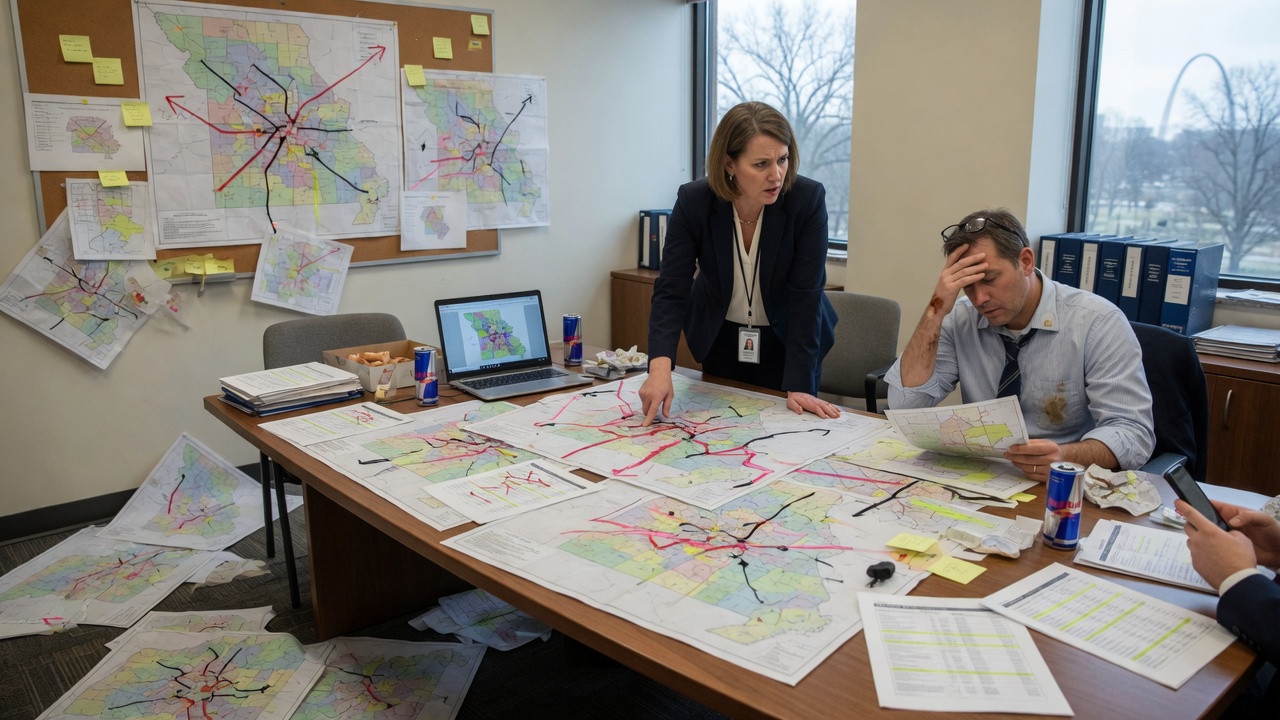
  • Missouri’s Map Fight: When Election Systems Meet Conflicting Court Orders

    Missouri’s Map Fight: When Election Systems Meet Conflicting Court Orders

    Missouri’s 2026 map fight resembles two monitoring systems disagreeing about which server is primary. Different courts issued incompatible instructions; voters had to ask which district governs November.

    The short version

    In 2025, the legislature passed HB 1, a mid-decade redraw described as aiming for a 7–1 Republican House advantage. After Secretary of State Denny Hoskins rejected referendum signatures on Aug. 4, 2026, litigation exploded.

    On Sept. 3, the Missouri Supreme Court held the referendum valid, HB 1 never took effect, and the 2022 map remains in force unless voters approve the new one. Justice Kavanaugh rejected emergency relief; a federal order to use HB 1 was stayed. Mid-September reporting said the 2022 lines govern November.

    Sources: NBC News; SCOTUSblog; Missouri Times.

    Election infrastructure

    County authorities need one district file: GIS polygons tied to voter rolls, ballot styles, and precinct programming. Conflicting orders create configuration drift. If a primary used Map A and the general might use Map B, voters experience a DNS cutover without a TTL plan.

    Publish one official bulletin channel, pre-clear GIS cutover runbooks, and train poll workers on “which map?” before early voting. Treat court orders like production configs: one source of truth and clear rollback. Steve Miller — Mason, Ohio.