Blog

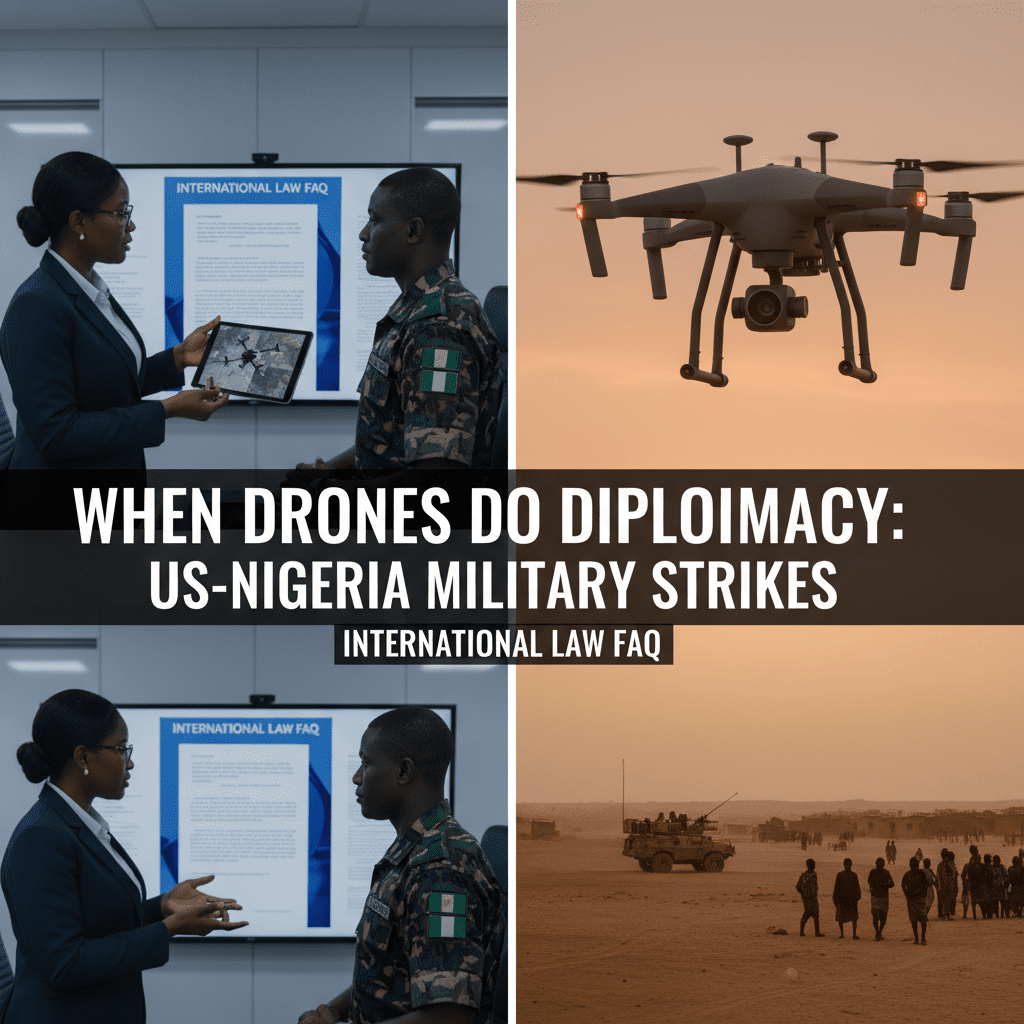
  • When Drones Do Diplomacy: US-Nigeria Military Strikes and the International Law FAQ

    When Drones Do Diplomacy: US-Nigeria Military Strikes and the International Law FAQ

    There was a time when international relations involved sternly worded letters, ambassadors being recalled, and perhaps a tense meeting over lukewarm coffee. Now, it seems the new diplomatic normal involves a Predator drone loitering at 25,000 feet. The recent discussions around potential US military strikes in Nigeria aren’t just about geopolitics; they’re about the quirky, bureaucratic absurdity of modern statecraft, where international law feels less like a treaty and more like a user agreement no one has read.

    The ‘Unwilling or Unable’ Doctrine: A Diplomatic Hall Pass?

    At the heart of this new method is the legal framework, which is a masterpiece of corporate-style justification. The argument often goes that a host nation is ‘unwilling or unable’ to deal with a threat within its own borders. This is the international law equivalent of your IT department saying they can’t fix your laptop, so they’re giving Global Admin rights to a third-party contractor they found on the internet. What could go wrong?

    This creates a fascinating diplomatic dance:

    • The Request: The US doesn’t send a formal declaration of war. It’s more like submitting a ticket: ‘Permission to resolve security issue in your sovereign airspace, ticket #451-B.’
    • The Response: Nigeria then has to navigate the PR minefield of either admitting it can’t handle its own business or looking uncooperative in the ‘Global War on Things We Don’t Like.’
    • The Action: Regardless of the response, the drone often ends up flying anyway, followed by a press release filled with carefully selected legal buzzwords. It’s the ultimate ‘we’re making necessary security updates to your system’ notification.

    Sovereignty as a Service (SaaS)

    What we’re witnessing is the evolution of sovereignty from a hard-and-fast rule to a kind of cloud-based service with a very complicated Service Level Agreement (SLA). The US-Nigeria military strikes conversation highlights that a nation’s borders are less like a brick wall and more like a firewall with a few selectively open ports. International law is scrambling to keep up, patching the code after the exploit has already been used. It’s less about grand legal principles and more about finding the right loophole in the terms of service. Welcome to Diplomacy 2.0, where the most powerful tool isn’t a treaty, but a well-aimed Hellfire missile and an even better-worded memo.


  • The Great Firewall vs. The Great Know-It-All: When Teen AI Chats Become a Diplomatic Incident

    The Great Firewall vs. The Great Know-It-All: When Teen AI Chats Become a Diplomatic Incident

    Remember when international diplomacy involved stern-faced people in suits discussing trade tariffs? Quaint, wasn’t it? Today, the front line of global policy is a teenager in Shanghai asking a California-based AI, via a WeChat plugin, to write a rap battle between a panda and a bald eagle. This isn’t the plot of a B-movie; it’s the messy, hilarious reality of grafting a globally trained AI onto a nationally regulated super-app. The result is an accidental stress test for international AI regulation, with teenage users as the unwitting quality assurance team.

    The Cross-Cultural API Collision

    At the heart of this digital kerfuffle is a fundamental incompatibility. It’s like trying to run software designed for a Mac on a Commodore 64 that has very strong opinions about politics.

    • ChatGPT & Friends: These Large Language Models are trained on a vast, wild swath of the public internet. They are designed to be creative, conversational, and, frankly, a bit of a know-it-all, reflecting the chaotic digital commons they were born from.
    • WeChat: This isn’t just an app; it’s a digital ecosystem governed by a very specific set of rules. Content moderation is not a suggestion; it’s a core feature. It’s a walled garden, and the gardeners are very, very attentive.

    When a query from a user inside the garden travels to the AI in the wild west of the global internet, a comedy of errors ensues. The AI, blissfully unaware of regional content laws, might generate a perfectly innocuous answer about history that trips a dozen red flags on its way back. Suddenly, the AI isn’t just a fun tool; it’s a potential vector for… let’s call it ‘unapproved information’.

    Who Gets the Digital Detention Slip?

    This is where the real headache begins for the folks in suits. When an AI generates a ‘problematic’ response, who is at fault?

    • Is it the teenager who asked the ‘wrong’ question?
    • Is it WeChat for allowing the API integration in the first place?
    • Is it the AI provider for not building a geofenced, context-aware, culturally-sensitive-to-every-possible-jurisdiction model? (Good luck with that.)

    This isn’t just a technical problem; it’s a legal and philosophical black hole. Crafting effective international AI regulation for teenage users is like trying to write a single traffic code that works for both German autobahns and Venetian canals. The underlying infrastructures are simply different. The result is a frantic, high-stakes game of digital hot potato, where data sovereignty laws clash with the borderless nature of cloud computing.

    Ultimately, this low-stakes ‘crisis’ reveals a high-stakes truth: national borders are becoming increasingly meaningless for data, but they are more important than ever for regulation. The future of global tech policy won’t be decided in quiet negotiation rooms. It’s being shaped right now by kids trying to get AI to do their homework, accidentally triggering geopolitical fault lines in the process. Good luck, diplomats. You’re going to need it.

  • Somaliland Recognition: Is Israel About to Reboot Regional Diplomacy?

    Somaliland Recognition: Is Israel About to Reboot Regional Diplomacy?

    In the grand, slightly buggy operating system we call international relations, achieving statehood is less about merit and more about getting your ticket acknowledged by the global service desk. For over three decades, the Republic of Somaliland has had a ticket open with a status of “Pending Acknowledgment,” despite checking every box in the official documentation—the Montevideo Convention’s RFC on statehood. They have a stable government, a defined territory, a currency, and an army. In IT terms, the unit tests pass, the code compiles, but the pull request is being ignored by the project maintainers.

    The African Union’s Firewall

    The primary reason for the hold-up is a strict network rule set by the African Union: thou shalt not alter the colonial-era MAC addresses of national borders. The fear is that approving Somaliland’s request would trigger a cascade of similar requests, causing a denial-of-service attack on regional stability. It’s a classic case of avoiding a refactor because you’re terrified of what other bugs you might uncover. So, everyone just pretends the legacy system in Somalia—though fragmented and often offline—is the only valid endpoint.

    Israel’s Strategic API Call

    Enter Israel, a nation that knows a thing or two about navigating complex user authentication protocols for statehood. An Israeli recognition of Somaliland would be the geopolitical equivalent of a senior developer making a direct push to the main branch. It’s a bold, disruptive move that bypasses the usual bureaucratic change-control process. The logic behind this potential deployment is fascinatingly strategic:

    • A Friendly Node at a Choke Point: Recognizing Somaliland would give Israel a strategic partner at the Bab el-Mandeb strait, a critical network switch for global shipping. It’s about securing a reliable connection on the world’s most important data highway.
    • Breaking the Singleton Pattern: For decades, the “One Somalia” policy has been an unchallenged design pattern. Israel’s move would challenge this, proving that other configurations are possible and potentially encouraging other nations to update their own clients.
    • The “Outsider” Alliance: There’s a certain kinship between entities that exist and function perfectly well but are treated by the system as anomalies. It’s the camaraderie of undocumented features.

    Of course, pushing this change isn’t without risk. It could trigger a `403 Forbidden` error from the African Union, a complete connection timeout with Mogadishu, and merge conflicts with the foreign policy branches of the US and EU. But it also might be the exact system shock needed to force the international community to finally close a ticket that’s been collecting dust since 1991. Whether it’s a brilliant hack or a catastrophic bug remains to be seen, but it’s guaranteed to make the system logs a lot more interesting.

  • Media Wars: When the Fourth Wall of Journalism Breaks

    Media Wars: When the Fourth Wall of Journalism Breaks

    There’s a moment in every system admin’s life when you’re hunting a bug, and after hours of tracing logs, you realize the problem isn’t the code. It’s you. You forgot to save the config file. Journalism has officially hit its “forgot to save the config” era, where the observers have tripped over the power cord and become the central characters in the outage they were meant to report. The fourth wall has been breached, and the reporters are now on the field, looking just as confused as the players.

    Case File: The Narrative Inception of 60 Minutes

    Take the much-discussed CBS 60 Minutes segment on Trump-era deportees. The intended story was about a complex, human issue. Yet, within nanoseconds of airing, the story wasn’t about the deportees. It was about the reporting. The meta-narrative took over, with partisans and analysts dissecting camera angles, questioning edits, and debating the interviewer’s tone. The broadcast itself became the news, a sort of narrative inception where the story folded in on itself. The original topic was relegated to a footnote in a far more clickable debate about journalistic process.

    It’s Not a Bug, It’s a Global Feature

    This isn’t an isolated glitch. It’s a recurring pattern in the global operating system of information. Whether it’s the BBC navigating the labyrinth of Brexit coverage or other international outlets finding themselves as political footballs, the playbook is the same. The process of reporting is now as contested as the events being reported. This happens for a few key reasons:

    • Algorithmic Amplification: Social media platforms are engineered for engagement, and nothing engages like conflict. A story about a policy is dry; a story about a news network’s “biased” coverage of that policy is high-octane drama. The algorithm always bets on the drama.
    • The Protocol Mismatch: Traditional journalism operates on a protocol of detached observation. But the modern information environment is a full-contact sport. Attacking the messenger is a brutally effective way to disrupt the data flow and sow doubt about the message itself.
    • Political Judo: If the facts aren’t on your side, change the subject. By making the news organization the center of the controversy, political actors cleverly pivot the entire conversation away from substance and onto the perceived sins of the media.

    So what’s an expert to do? We’re left trying to parse the logs of a system that’s constantly arguing with itself. The goal is no longer just to understand the event, but to understand the layers of meta-commentary, controversy, and algorithmic distortion wrapped around it. It’s like trying to read a document while someone shouts in your ear that the font is untrustworthy. Welcome to the new normal, where the news isn’t just reported; it’s debugged in public, by everyone, all at once.

  • The Ultimate Bug Report: When Climate Change Puts a Freeze on Christmas Towns

    The Ultimate Bug Report: When Climate Change Puts a Freeze on Christmas Towns

    There’s a specific, algorithmically perfect image of a Christmas town. Think Leavenworth, Washington: charming Bavarian architecture draped in a million twinkling lights, all under a thick, fluffy blanket of pristine snow. It’s a postcard that sells itself. But what happens when that key feature—the snow—gets stuck in a permanent state of “pending delivery”? Welcome to the logistical comedy of running a winter wonderland when the climate has stopped reading the user manual.

    When the Weather API Returns a 404 Error

    For towns whose entire economic OS is built on a foundation of reliable snowfall, climate change isn’t a debate; it’s a series of increasingly frustrating error messages. The problem isn’t just a warming trend leading to a brown Christmas. It’s the sheer unpredictability. One year, Leavenworth might get so little snow you could sled on a patch of frosty grass. The next, massive Christmas storms—the kind that feel like a denial-of-service attack from the sky—can shut down the mountain passes, locking tourists out and residents in. Planning a multi-million-dollar tourism season has become the equivalent of trying to code on a laptop with a faulty Wi-Fi connection. You might have a great day, or you might spend hours just trying to connect.

    The Great System Patch: Adapting to the New Normal

    You can’t just file a support ticket with Mother Nature, so these destinations are deploying some clever workarounds to keep the holiday magic (and revenue) flowing. The strategies look surprisingly familiar to anyone in IT:

    • The Brute-Force Solution: More Hardware. The most direct approach is installing snowmaking machines. This is the classic “the server is slow, let’s throw more RAM at it” solution. It creates a controlled, predictable winter canvas, but it’s an expensive patch that consumes significant energy and water resources.
    • The Portfolio Diversification: Beyond December. The smartest towns are hedging their bets. They’re rebranding from being solely “Christmas towns” to being “year-round mountain destinations.” They’re developing new features like Oktoberfest, spring Maifests, and summer hiking festivals. It’s a strategic pivot away from relying on a single, increasingly buggy feature.
    • The Vibe-Based Rebrand: It’s the *Feeling* of Snow. If you can’t guarantee the product, enhance the user experience. These towns are doubling down on what they can control: the lights, the music, the festive food, the cozy shops. The marketing is shifting from “come see the snow” to “come feel the magic,” a clever abstraction that makes the experience less dependent on a single environmental variable.

    Ultimately, these iconic towns are facing a challenge far beyond simple tourism. They’re beta-testing resilience in real-time, debugging their business models against the planet’s shifting operating system. It’s a testament to human ingenuity that even when the main feature fails to load, they find a way to make sure the Christmas spirit never crashes.

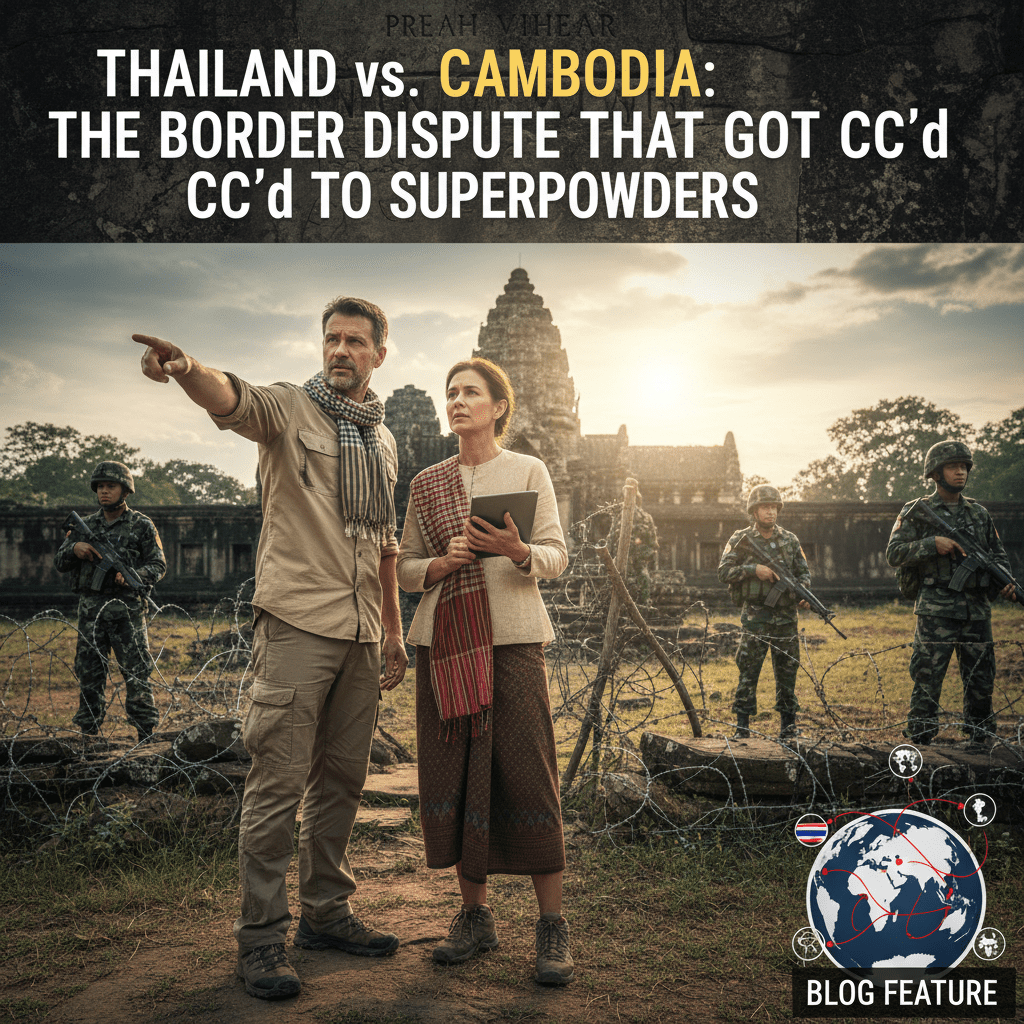
  • Thailand vs. Cambodia: The Border Dispute That Got CC’d to Superpowers

    Thailand vs. Cambodia: The Border Dispute That Got CC’d to Superpowers

    You know that feeling when a simple disagreement with a coworker over who gets to name the shared network folder escalates until VPs from two different continents are CC’d? That’s the Thailand-Cambodia border conflict in a nutshell. It started as a classic “who owns this piece of land” debate and morphed into an international chess game where the original players are almost secondary to the bigwigs who’ve invited themselves to the meeting.

    The Original Support Ticket: Preah Vihear

    At the heart of this geopolitical saga is the Preah Vihear Temple, a stunning cliffside complex that both nations felt belonged in their “My Documents” folder. After decades of back-and-forth, the International Court of Justice stepped in, acting like the world’s most overqualified IT admin. In 1962, they ruled the temple belonged to Cambodia. Case closed, right? Not quite. The court also decided that the most practical access route was through Thailand, essentially giving one country the file and the other the only desktop shortcut to it. This created a state of perpetual, low-grade bureaucratic friction.

    Escalating to Management: Enter the Superpowers

    A simple territorial squabble is manageable. But things get interesting when the regional managers—in this case, the United States and China—start weighing in. This isn’t just about a temple anymore; it’s about influence, alliances, and who gets to set the corporate culture for Southeast Asia.

    • Team China: Arrives with big investment promises, infrastructure projects, and a “no-strings-attached” management style. They’re the cool new executive who buys everyone lunch but quietly expects you to use their proprietary software for everything.
    • Team USA: The legacy partner, offering joint military exercises, long-standing security pacts, and a whole lot of official procedure. They’re the senior manager who insists on following the decades-old company handbook, even when it’s wildly inconvenient.

    Suddenly, the border dispute becomes less about historical claims and more about which global operating system the region will run on. The original conflict becomes a background process, a justification for bigger strategic moves. It’s the international equivalent of an argument over the office thermostat being used as a proxy war between the sales and engineering departments.

    Can ASEAN Close the Ticket?

    And where is the regional mediator in all this? ASEAN, the Association of Southeast Asian Nations, plays the part of the well-meaning but perpetually flustered project manager. They try to get everyone in a room to talk it out, championing dialogue and consensus. But it’s hard to get a resolution when both parties keep forwarding the email chain to their superpower bosses for backup. ASEAN’s pleas for a local solution often get drowned out by the global shouting match, proving that once you escalate an issue to the C-suite, it never really de-escalates. It just gets more complicated.

  • The Great Gold Hoard: Decoding the Panic Behind Record Prices

    The Great Gold Hoard: Decoding the Panic Behind Record Prices

    Ever had your computer crash right before you hit ‘save’ on a massive project? That sinking feeling, the cold sweat, the desperate wish for a physical, un-crashable paper copy? Well, scale that feeling up to the size of a national economy, and you’ll understand why central banks are suddenly hoarding gold like it’s the last roll of toilet paper in a snowstorm. They’re hitting CTRL+S, but on a 400-ounce gold bar.

    Why Gold is the World’s Emergency Exit

    In a world of digital dollars and complex financial instruments, gold is wonderfully, beautifully analog. It’s the financial system’s vinyl record in an age of streaming—it’s clunky, it doesn’t earn interest, but boy is it tangible. You can’t hack a gold bar (though people have certainly tried to steal one). There’s no server to go down, no password to forget. Its value is based on thousands of years of collective human agreement that this shiny, heavy metal is worth something. It’s the ultimate ‘off-the-grid’ asset for a country’s wealth.

    The Geopolitical Glitches Causing the Gold Rush

    So what’s causing this sudden lunge for the financial emergency exit? It’s a classic case of the global operating system showing a few blue screens of death. We’re seeing a perfect storm of digital-age anxieties playing out on a global stage:

    • System-Wide Inflation Bug: When traditional currencies (like the dollar) start losing their purchasing power, it feels like a bug that devalues your entire saved game. Gold, on the other hand, tends to hold its value, acting as a patch against inflation.
    • The “De-Platforming” Threat: Geopolitical tensions have led to financial sanctions, which are the nation-state equivalent of getting banned from the main server. If you risk losing access to global payment systems, you’ll want a stash of assets you control directly, no login required.
    • General Uncertainty Jitters: From trade disputes to regional conflicts, the world feels a bit wobbly. During times of high anxiety, nations, much like people, crave security. Gold is the world’s security blanket, and the recent surge to gold record prices shows just how much reassurance everyone is looking for.

    Is It Panic or Prudence?

    While it looks like a mad dash, this gold rush is less about blind panic and more about a calculated disaster recovery plan. Nations are simply diversifying their backups. They’re not abandoning the modern financial system, but they are making sure they have a very solid, very shiny Plan B sitting in a vault somewhere. It’s the ultimate admission that even for the most powerful institutions on Earth, sometimes there’s no substitute for something you can physically stub your toe on.

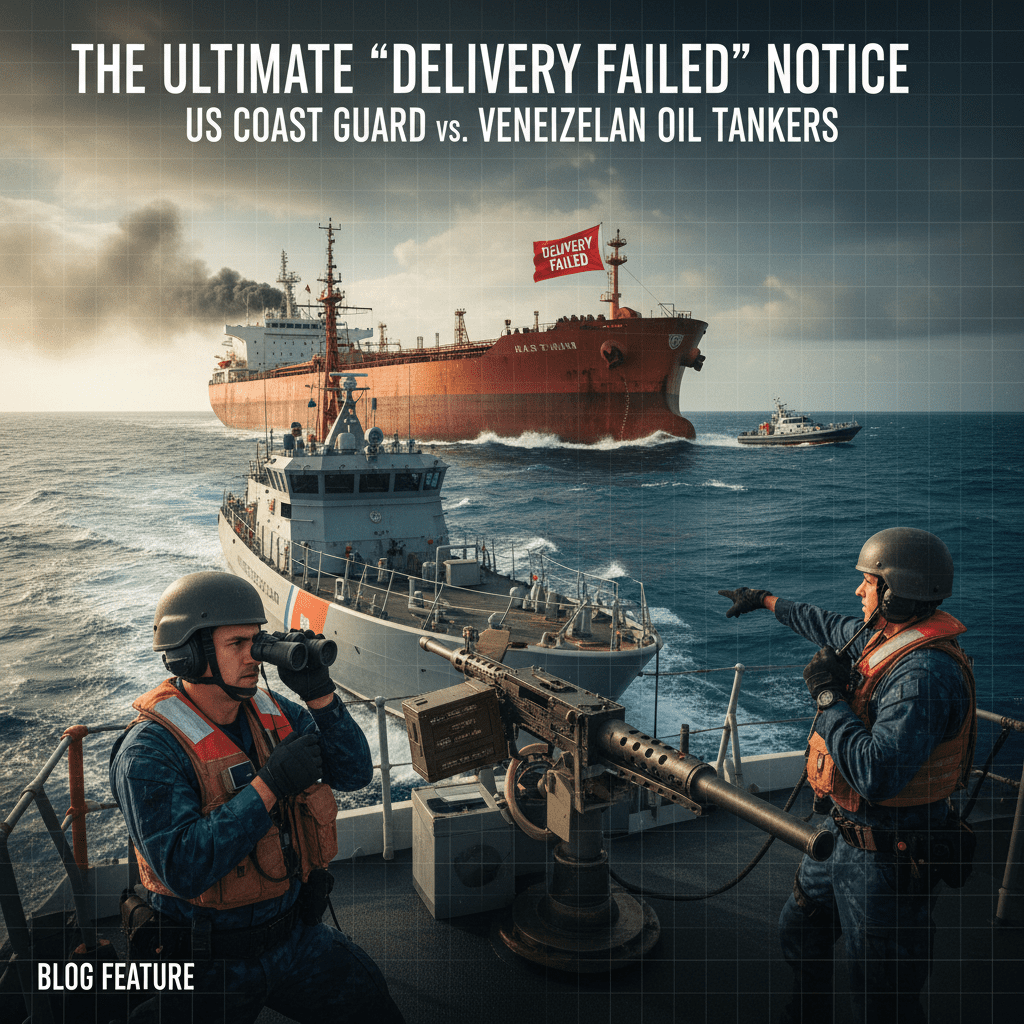
  • The Ultimate ‘Delivery Failed’ Notice: The US Coast Guard vs. Venezuelan Oil Tankers

    The Ultimate ‘Delivery Failed’ Notice: The US Coast Guard vs. Venezuelan Oil Tankers

    Picture a police chase. You’re probably thinking of screeching tires and helicopters. Now, replace the sports car with a vessel the size of three football fields that tops out at a brisk 15 knots, and replace the police cruiser with another, slightly faster boat. This isn’t a blockbuster movie; it’s the bizarre, slow-motion ballet of a US Coast Guard interception of a Venezuelan oil tanker, and it’s the new face of international diplomacy. It’s less ‘Fast & Furious’ and more ‘Glacially Paced & Mildly Annoyed.’

    Sanctions: The Global Firewall Rule

    At its core, this maritime drama is a physical manifestation of a digital problem. Think of international sanctions as a giant, global firewall. A country’s entire shipping operation is added to a blocklist, and any attempt to deliver goods is met with a ‘Connection Timed Out’ error. But since you can’t just send a 403 Forbidden error to a million-barrel oil tanker, you have to dispatch the system administrators of the sea: the Coast Guard.

    The process is a masterclass in procedural patience:

    • The Ping: It all starts with data. Using satellite imagery and Automatic Identification System (AIS) trackers, authorities watch for a digital blip heading in the wrong direction. It’s the world’s most expensive game of Where’s Waldo.
    • The Polite Hail: There’s no dramatic ramming. Instead, there’s a very formal radio call. It’s the maritime equivalent of an automated email saying, “We’ve noticed unusual activity on your account.”
    • The Escort Service: If the tanker doesn’t turn around, the Coast Guard cutter begins a very close, very persistent escort. It’s like having your IT manager stand over your shoulder all day to make sure you’re not trying to access blocked websites. Awkward, but effective.

    Diplomacy at 10 Knots

    So why all the nautical fuss? Why not just send a strongly worded letter? Because a vessel on the horizon is a message that can’t be sent to spam. It’s a physical assertion of a digital rule, a way for nations to communicate resolve without firing a shot. It turns an abstract economic policy into a tangible reality that a ship’s captain, a corporation, and a foreign government simply cannot ignore. It’s the ultimate ‘read receipt’ in the language of international relations.

    Welcome to Paperwork Harbor

    The real climax of this slow-speed saga isn’t on the water; it’s in a courtroom. Once a vessel is diverted, the real odyssey begins: an endless sea of legal filings, insurance claims, and international arbitration. The chase might last for days, but the resulting paperwork trail can last for years. It’s proof that in the modern world, the most powerful weapon isn’t a cannon, but a well-documented chain of custody and a team of very determined maritime lawyers. The pen, or in this case the court order, is mightier than the propeller.

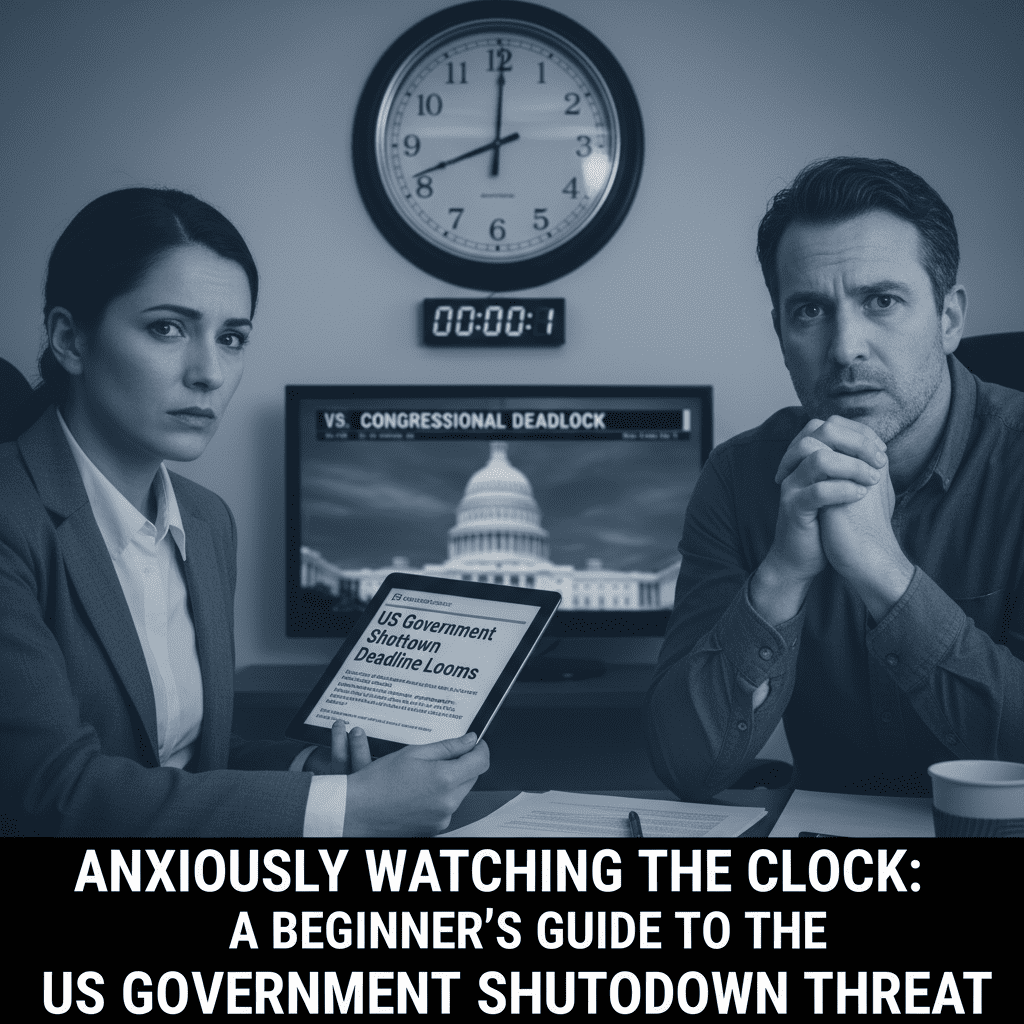
  • Anxiously Watching the Clock: A Beginner’s Guide to the US Government Shutdown Threat

    Anxiously Watching the Clock: A Beginner’s Guide to the US Government Shutdown Threat

    Ah, that familiar chill in the air. No, not autumn—it’s the season of the US government shutdown threat. It arrives with the regularity of a software update you keep postponing, a recurring calendar event for national anxiety. For those new to this particular brand of political theater, it can feel like trying to understand the rules of a game where the players are making them up as they go. Let’s break down this bureaucratic game of chicken, shall we?

    So, What’s a Shutdown, Really?

    Think of the U.S. government as a massive subscription service. Congress, the folks in charge of the credit card, must approve the annual budget to keep the lights on. When they can’t agree on a spending plan by the deadline (usually the end of the fiscal year on September 30th), the card gets declined. The result? A “shutdown.” This doesn’t mean everything grinds to a halt. Essential services—like the military, air traffic control, and border security—keep running. They just might not get paid on time, which is like your boss saying, “Your work is critical, but that paycheck is… pending.”

    Meanwhile, “non-essential” services get locked up. This includes:

    • National Parks and Museums: Suddenly, your vacation plans to see Old Faithful are foiled by political gridlock.
    • Passport Agencies: Hope you weren’t planning an impromptu international trip.
    • Scientific Research: Many government scientists are sent home, pausing important work.

    The Predictable Dance of Brinkmanship

    The lead-up to a potential US government shutdown threat follows a script so well-worn it could be a syndicated sitcom. First, political leaders draw their lines in the sand, usually on cable news. Then, the countdown clocks appear, ticking ominously toward midnight. A flurry of last-minute negotiations ensues, often resulting in a “continuing resolution”—the political equivalent of hitting the snooze button, funding the government for a few more weeks or months and setting up the exact same showdown for later.

    Why Does This Global Glitch Matter?

    Beyond the domestic headaches, this recurring threat sends jitters through the global economy. The U.S. economy is the world’s largest, and the dollar is the foundation of international finance. When the management looks like it can’t agree on how to pay its bills, global markets get nervous. It creates uncertainty, which is the one thing investors hate more than lukewarm coffee. It’s a self-inflicted wound that makes the world’s most powerful economy look surprisingly dysfunctional—a high-stakes “did you try turning it off and on again?” for the entire planet.

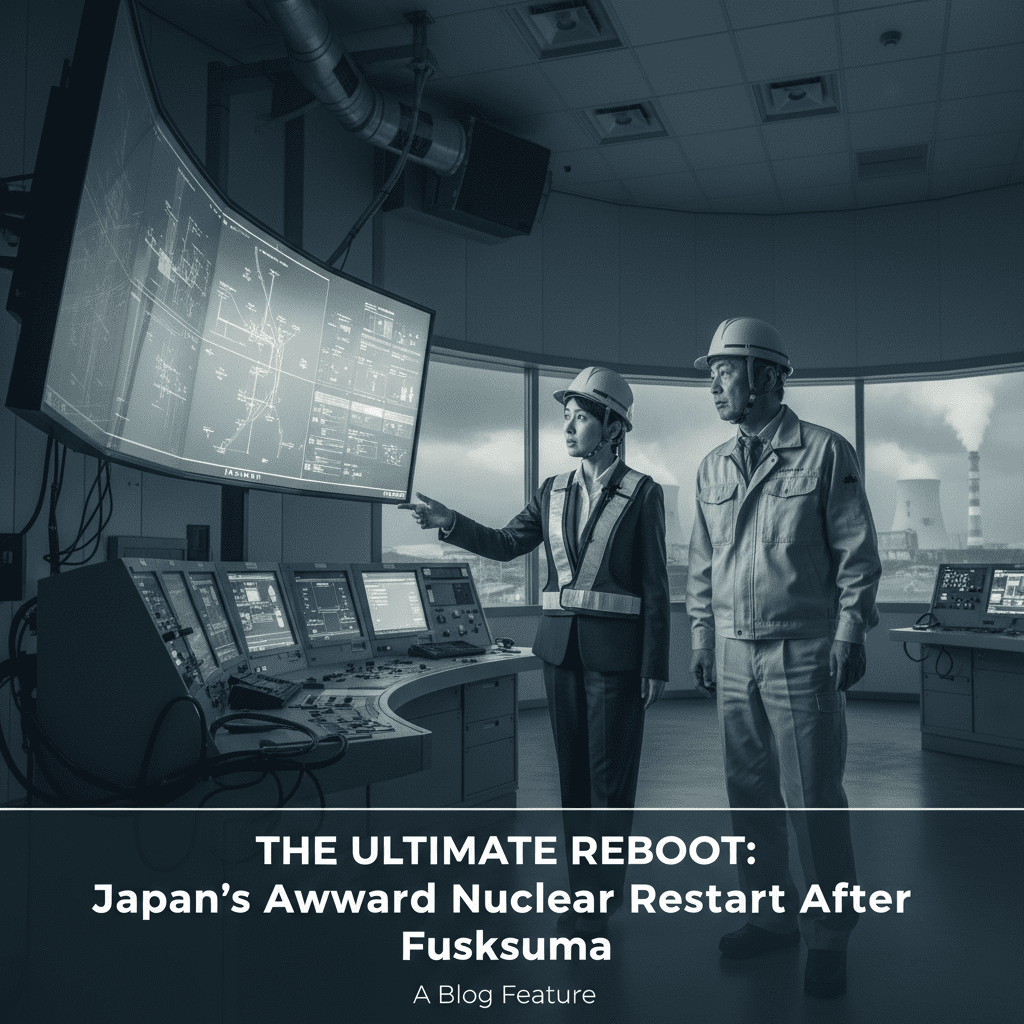
  • The Ultimate Reboot: Japan’s Awkward Nuclear Restart After Fukushima

    The Ultimate Reboot: Japan’s Awkward Nuclear Restart After Fukushima

    Remember the golden rule of IT support? When all else fails, turn it off and on again. It seems Japan has taken this advice to a national scale with its energy policy. After the harrowing Fukushima Daiichi incident in 2011, the country performed a system-wide shutdown on its nuclear reactors, effectively pulling the plug on a massive chunk of its power grid. For over a decade, those silent concrete domes were monuments to a national trauma. But now, facing a global energy crisis and ambitious climate goals, Japan is dusting off the old manuals for a complex and incredibly awkward reboot. The great japan nuclear restart fukushima-era shutdown is over, and the process is a masterclass in bureaucratic absurdity.

    The World’s Strictest Permission Slip

    You can’t just flip a switch on a nuclear reactor that’s been napping for ten years. First, you have to get past the Nuclear Regulation Authority (NRA), a body formed post-Fukushima with a safety checklist that makes a NASA pre-flight inspection look like a grocery list. Imagine trying to get a software update approved, but every line of code needs a unanimous vote from a town council, seismic stress tests, and a PowerPoint presentation on its feelings about tsunami walls. The paperwork alone could probably power a small city if you burned it. Each reactor restart is less a technical procedure and more a high-stakes bureaucratic opera, with local governments, citizen groups, and engineers all vying for the conductor’s baton.

    The ‘It’s Complicated’ Energy Relationship

    So, why go through all this trouble? Because Japan, like much of the world, is caught in an energy triangle of doom. The options are:

    • Fossil Fuels: Reliable, familiar, but expensive and actively trying to cook the planet. Relying on imported gas and oil is like basing your entire retirement plan on a friend’s vague promise to pay you back.
    • Renewables: The clean, green dream. But solar and wind are intermittent, and Japan’s mountainous geography makes large-scale deployment a logistical puzzle. It’s the brilliant but flaky artist of the energy world.
    • Nuclear Power: Immensely powerful, carbon-free, but comes with some serious historical baggage. It’s the ex you know you probably shouldn’t call, but who was also really good at paying their half of the electricity bill on time.

    Faced with these choices, Japan is begrudgingly swiping right on nuclear again. The decision to restart reactors isn’t born from a newfound love for atomic energy, but from the cold, hard logic of keeping the lights on and meeting carbon targets in a volatile world. The japan nuclear restart fukushima taught everyone was a hard lesson, but the new reality of energy security is forcing a pragmatic, if uneasy, reconciliation. It’s a story of a nation trying to debug its future, one colossal, complicated machine at a time.