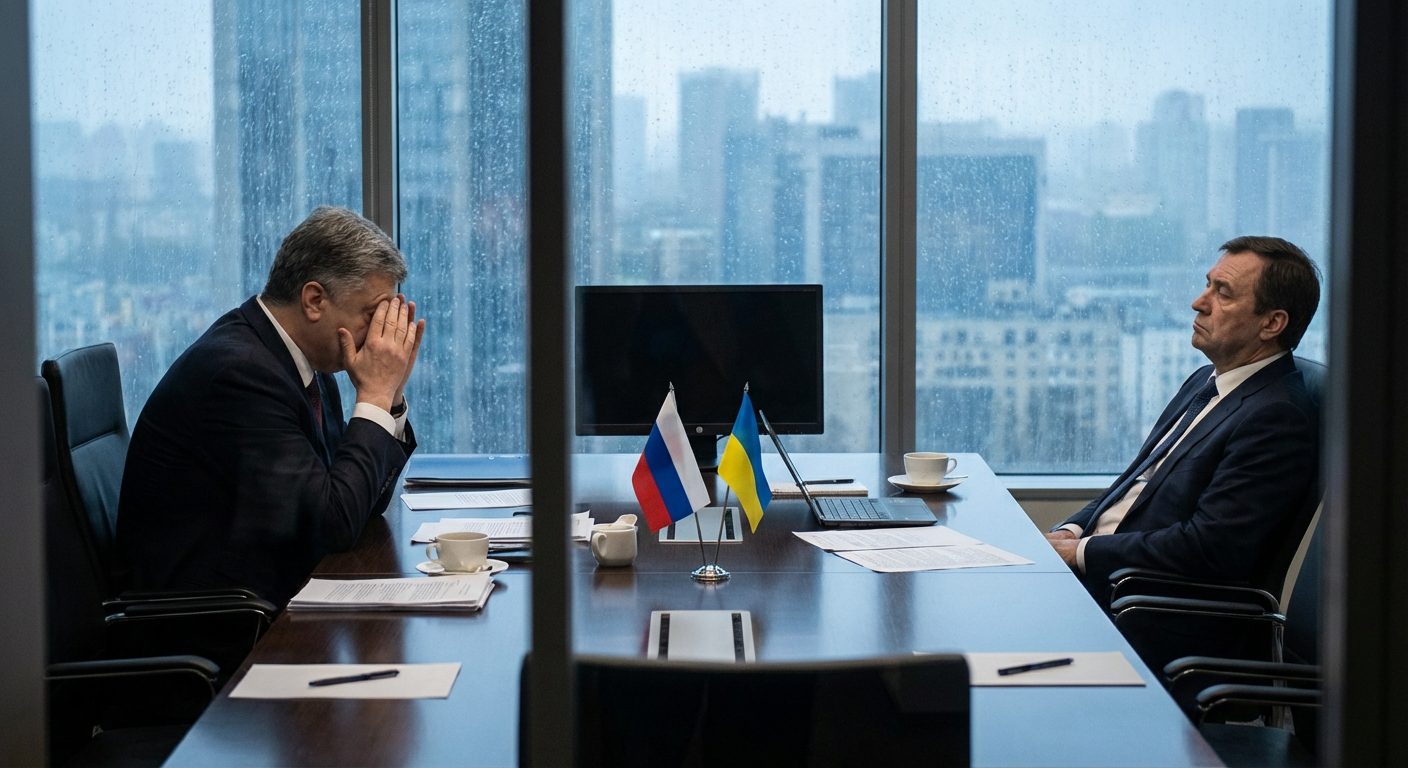
There are two clocks running in the world right now. One is the real-time, terrifyingly fast clock of the actual conflict. The other is the diplomatic clock, which appears to be powered by a hamster on a rusty wheel who takes frequent, union-mandated breaks. Welcome to the world of international peace negotiations, a place where language is engineered with the precision of a Swiss watch and the forward momentum of a glacier. If you’ve ever tried to get a straight answer from IT support about why the printer won’t connect to the network, you’re already halfway to understanding the art of diplomatic communication.
The Official Glossary of Saying Very Little
To the uninitiated, the communiqués from Russia-Ukraine peace negotiations can sound promising. But for seasoned watchers of bureaucracy, it’s a familiar code. Let’s translate a few key phrases:
- What they say: “The talks were constructive.”
What it means: “Nobody stormed out of the room in the first fifteen minutes, and we successfully agreed on the catering for the next round of talks.” - What they say: “We had a frank exchange of views.”
What it means: “Someone definitely pounded their fist on the table. Voices were raised. The translator is considering a career change.” - What they say: “Working groups have been established to address key issues.”
What it means: “We’ve kicked the can down the road to a series of sub-meetings that will produce reports no one has time to read. It’s the bureaucratic equivalent of forming a committee to choose the color of a bike shed.” - What they say: “We remain cautiously optimistic.”
What it means: “Absolutely nothing is agreed upon, but we have to say something positive for the cameras or our bosses will be displeased. Please send coffee.”
The Unofficial Project Plan
Watching the diplomatic process unfold is like watching a software development lifecycle where every developer is using a different programming language and the project manager has lost the login credentials. The phases are predictable: first, the agonizingly difficult scheduling phase (‘The Pre-Meeting Meeting’). Then comes the main event, a marathon of circular conversations (‘The Constructive Dialogue Loop’). This is followed by the inevitable ‘Leaked Draft Document’ that satisfies no one, and finally, the ‘We’ll Reconvene Shortly’ press conference, which could mean next Tuesday or next year.
It’s an infuriatingly slow and abstract process, especially when contrasted with the harsh reality on the ground. But like rebooting a router for the tenth time, it’s the prescribed process. It’s a system designed to prevent catastrophic failure by moving so slowly that it forces deliberation. It’s frustrating, absurd, and often feels like a bug in the global operating system. And yet, it’s the only one we’ve got. For now, we just have to keep refreshing the page and hoping the connection doesn’t time out.
Leave a Reply