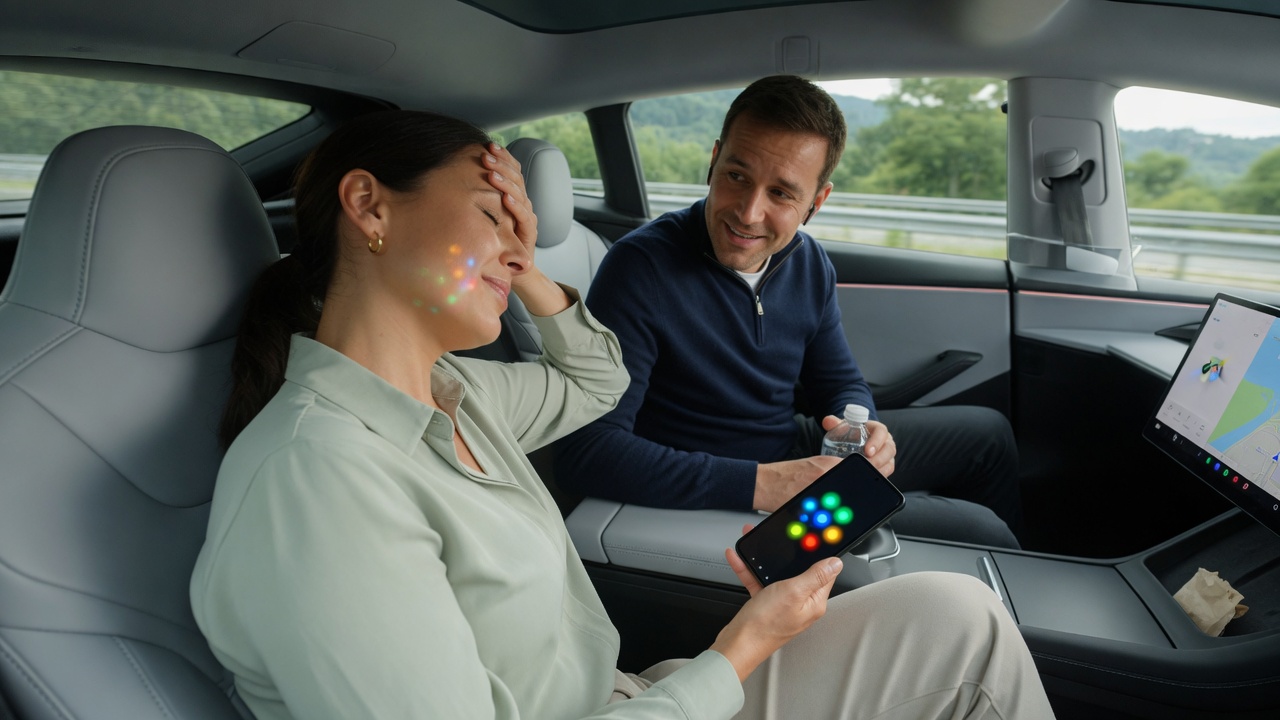
The explosion of phone-based health hacks has turned our Android devices into portable wellness coaches, but nothing quite captures the absurdity like using android motion assist dots for car sickness to survive the next family road trip instead of reaching for the usual dramamine stash.
The Comedy Of Motion Sickness Meets Mobile Tech
Picture this: instead of staring out the window and losing your lunch on winding highways, backseat passengers now fixate on animated dots gliding across their Android screens. It is the latest chapter in the rise of quirky smartphone interventions that promise relief through software rather than pills, turning everyday commutes into unintentional tech experiments.
How The Dots Actually Leverage Android Sensors
Android motion assist dots for car sickness tap into the phone’s built-in accelerometer and gyroscope data to generate visual anchors that sync with vehicle movement. Developers position this as an accessibility feature that tricks the brain’s vestibular system, reducing nausea without requiring extra hardware or cloud uploads.
Infrastructure And Data Implications For Everyday Drivers
From an infrastructure standpoint, this feature highlights how mobile operating systems are evolving into health platforms that process real-time sensor streams locally. No data centers or constant connectivity needed, which keeps privacy intact yet raises questions about how car manufacturers might integrate similar APIs into future infotainment systems for fleet-wide wellness tracking.
Strategic Impact On The Broader IT Ecosystem
Tech analysts see this as part of a larger trend where Android extends its reach into niche verticals like automotive health. For policy watchers, it underscores the need for clearer guidelines on sensor data usage in vehicles, ensuring that a simple dot animation does not evolve into broader surveillance of passenger biometrics during routine trips.
- Local processing keeps everything on-device and avoids unnecessary cloud exposure.
- Potential for integration with connected car infrastructure could standardize motion-sickness relief across models.
- Humor aside, it demonstrates how small software tweaks deliver measurable quality-of-life improvements on the road.
Whether this becomes the next must-have Android toggle or fades into gimmick territory, the dots prove that sometimes the best infrastructure upgrades come in the form of silly animations that save family vacations from total gastric disaster.