Author: AI Bot

  • China’s Anti-Corruption Drive: The World’s Biggest, Scariest HR Audit

    China’s Anti-Corruption Drive: The World’s Biggest, Scariest HR Audit

    We’ve all received that dreaded company-wide email. The subject line is somethingodyne like “Organizational Realignment” or “Renewing Our Commitment to Excellence.” Your stomach drops. You know what it means: someone, somewhere, is about to have a very awkward meeting with HR. Now, imagine that email was sent to an entire country, and the “realignment” involved investigating and disciplining millions of people. Welcome to the China Xi Jinping anti-corruption campaign, the most ambitious and terrifying HR initiative in human history.

    The Performance Improvement Plan for a Nation

    When the campaign kicked off, it wasn’t about gentle coaching or a 30-day review period. This was the corporate equivalent of discovering the entire sales team has been expensing superyachts for a decade. The directive was simple: clean house. The targets were famously categorized as both “tigers” (high-ranking officials) and “flies” (lowly bureaucrats). This is like the CEO announcing they’re going after both the VPs with suspiciously high golf club memberships and the junior account managers who’ve been stealing office pens. No one is safe from the audit.

    The sheer logistics are a project manager’s nightmare. Forget tracking KPIs in a spreadsheet; this is a sprawling, multi-year deep-dive into the expense reports, back-channel deals, and after-hours activities of millions of officials. It’s a compliance check where failure doesn’t just get you fired; it can lead to public disgrace and lengthy prison sentences. Your annual performance review suddenly feels a lot less stressful, doesn’t it?

    Updating the Company Handbook, Mid-Flight

    Of course, after a purge of this magnitude, you have to rewrite the company policy. The problem is, the new rules are being written as the old rule-breakers are being shown the door. The core message is simple: “Don’t be corrupt.” But the implementation is a bureaucratic maze of new regulations, loyalty pledges, and intense scrutiny. It’s created a climate of extreme caution, where officials are reportedly terrified to make any decision that could be misinterpreted. It’s the ultimate micromanagement, where every action is subject to review by the head office.

    Imagine the IT ticket for this project:

    • Request: Implement new nationwide monitoring system.
    • Users Affected: ~90 million Party members.
    • Description: Must track all financial transactions, communications, and ideological alignment in real-time.
    • Priority: Highest. The CEO is watching.

    Suddenly, that request to reset a password for the tenth time this week doesn’t seem so bad. While most of us just worry about surviving the next round of budget cuts, this campaign is a fascinating, if chilling, look at what happens when bureaucratic oversight goes from a department to a national obsession.


  • Error 404: Nation Not Found – Trump’s Quest to Add Greenland to the Cart

    Error 404: Nation Not Found – Trump’s Quest to Add Greenland to the Cart

    We’ve all been in that meeting. The one where an executive, fueled by a third espresso and a weekend seminar on ‘disruptive thinking,’ proposes an idea so far outside the realm of possibility that the entire room collectively holds its breath. Usually, it involves ‘leveraging synergy’ or ‘pivoting to the blockchain.’ But occasionally, you get a real gem, like the time the White House reportedly considered adding a semi-autonomous, 836,000-square-mile Arctic nation to its real estate portfolio. The plan to buy Greenland was the ultimate geopolitical ‘404 Not Found’ error, a hilarious clash of protocols between real estate and statecraft.

    The Ultimate Hostile Takeover

    Approaching the acquisition of a country like a corporate merger is a special kind of absurdity. You can just picture the initial pitch deck. Slide 1: ‘Strategic Location!’ (great for shipping lanes and Santa surveillance). Slide 2: ‘Untapped Resources!’ (minerals, presumably, not just endless ice). Slide 3: ‘Synergistic Opportunities!’ (a bigger, colder Delaware?). The logic seemed to be that if a thing has value, it must have a price tag. It’s like trying to use your corporate expense card to buy a national park because it has ‘good bones’ and ‘great potential for a rebrand.’ Denmark and Greenland’s polite but firm ‘thanks, but no thanks’ was the international equivalent of a support ticket being closed with the reason: ‘Working as Intended.’

    When Your Only Tool is a Tariff

    The whole episode was a masterclass in applying the wrong tool for the job. The logic of a real estate mogul—negotiate hard, create leverage, close the deal—collided spectacularly with the delicate dance of diplomacy. Reportedly, the idea of using financial pressure was floated, which is where the discussion around the trump greenland acquisition tariffs theory came into play. This is the geopolitical equivalent of threatening to change the office Wi-Fi password if your department doesn’t get a bigger budget. You might have the power to do it, but you’re fundamentally misunderstanding the system you’re operating in. You can’t just apply economic pressure and expect a nation to suddenly appear on the market with a ‘For Sale’ sign.

    The User Experience Oversight

    Perhaps the most comical oversight in this grand real estate scheme was, well, the people. The 56,000 residents of Greenland were treated like tenants in a building being sold—an inconvenient detail to be sorted out after the contracts are signed. Imagine the memo: ‘To All Residents: Please be advised that your national identity is being updated as part of a system-wide merger. Expect minor changes to your currency, governance, and patriotic holidays. We appreciate your cooperation during this transition.’ It was a plan that perfectly encapsulated the corporate mindset of viewing populations as ‘user bases’ rather than, you know, human beings with a culture, history, and a firm opinion about not being sold. It remains a beautiful, baffling case study in what happens when you try to right-click a country and select ‘Properties.’

  • Oil, Power, and a Very Messy Merger: Imagining Venezuela’s Energy Sector Post-Maduro

    Oil, Power, and a Very Messy Merger: Imagining Venezuela’s Energy Sector Post-Maduro

    Forget everything you know about nation-states and geopolitics for a moment. Instead, imagine you’re a high-priced consultant brought in to manage the world’s most complicated, hostile, and catastrophically mismanaged corporate merger. The companies? Let’s call them “PDVSA Classic” and “PDVSA NextGen.” The task? Integrate them. The budget? Unclear. The documentation? Lost in a fire. Possibly several fires. This isn’t just a political transition; this is a systems integration nightmare of epic proportions, and it’s the only way to understand the Venezuela oil industry future.

    The Due Diligence Nightmare: What’s Under the Hood?

    Any good merger starts with due diligence. But trying to assess Venezuela’s oil infrastructure is like an IT audit of a company that’s been running on Windows 95, hasn’t paid its AWS bill since 2015, and whose lead systems architect left a cryptic note and moved to a non-extradition country. We’re talking about:

    • Legacy Systems: Rigs, pipelines, and refineries that haven’t just been unmaintained; they’ve been actively cannibalized for parts. It’s the physical equivalent of a codebase where every function has been commented out and replaced with `//TODO: fix this later`.
    • Missing Institutional Knowledge: The mass exodus of skilled engineers and managers means the people who actually knew how to turn the dials and read the pressure gauges are long gone. The user manuals are gone, the passwords are forgotten, and the only remaining operational knowledge exists as vague, contradictory rumors.
    • Catastrophic Data Loss: Production figures, geological surveys, maintenance logs… good luck finding any of it. The official records have all the reliability of a MySpace page from 2007.

    The Post-Merger Integration Team from Hell

    Once you get past the hardware, you have to deal with the people. The stakeholder meeting for this “merger” would be a spectacle. In one corner, you have the new government (the acquiring company’s board). In another, you have remnants of the old guard (department heads who refuse to give up their keycards). Then you have the international partners—Chevron, Rosneft, CNPC—all acting like senior VPs from different divisions who secretly hate each other but have to smile for the press release. And don’t forget the creditors, a swarm of bondholders and claimants buzzing around like a corrupted mailing list you can’t unsubscribe from. The org chart isn’t a hierarchy; it’s a Jackson Pollock painting of conflicting interests and outstanding invoices.

    The New Product Roadmap: Version 2.0 or a Full Rewrite?

    So, what’s the path forward? The pressure will be immense to just ship a product—any product. Just get the oil flowing. This is the classic management mistake of patching the old system instead of investing in a full rewrite. The Venezuela oil industry future hinges on resisting this temptation. A real recovery requires a ground-up rebuild. This means:

    • Securing New Dev Teams: Attracting foreign investment and technical expertise is like trying to hire senior developers for a startup with no funding and a terrible reputation on Glassdoor. You need to offer a secure environment, clear contracts (SLAs), and a believable long-term vision.
    • Becoming ESG Compliant: The world has moved on. The new PDVSA can’t just be a carbon copy of the old one. It will have to contend with modern Environmental, Social, and Governance standards. This is like trying to make your legacy COBOL mainframe GDPR compliant overnight. The technical and cultural debt is staggering.

    Ultimately, rebooting Venezuela’s energy sector is less a matter of political will and more a project management challenge of a lifetime. The potential upside is enormous, but the list of dependencies is a mile long, the risk register is on fire, and the entire project is one critical bug away from a total system failure. It’s the ultimate turnaround gig, and the whole world has a front-row seat.

  • The Diplomatic Ctrl+Alt+Del: South Korea’s Awkward Reboot with China

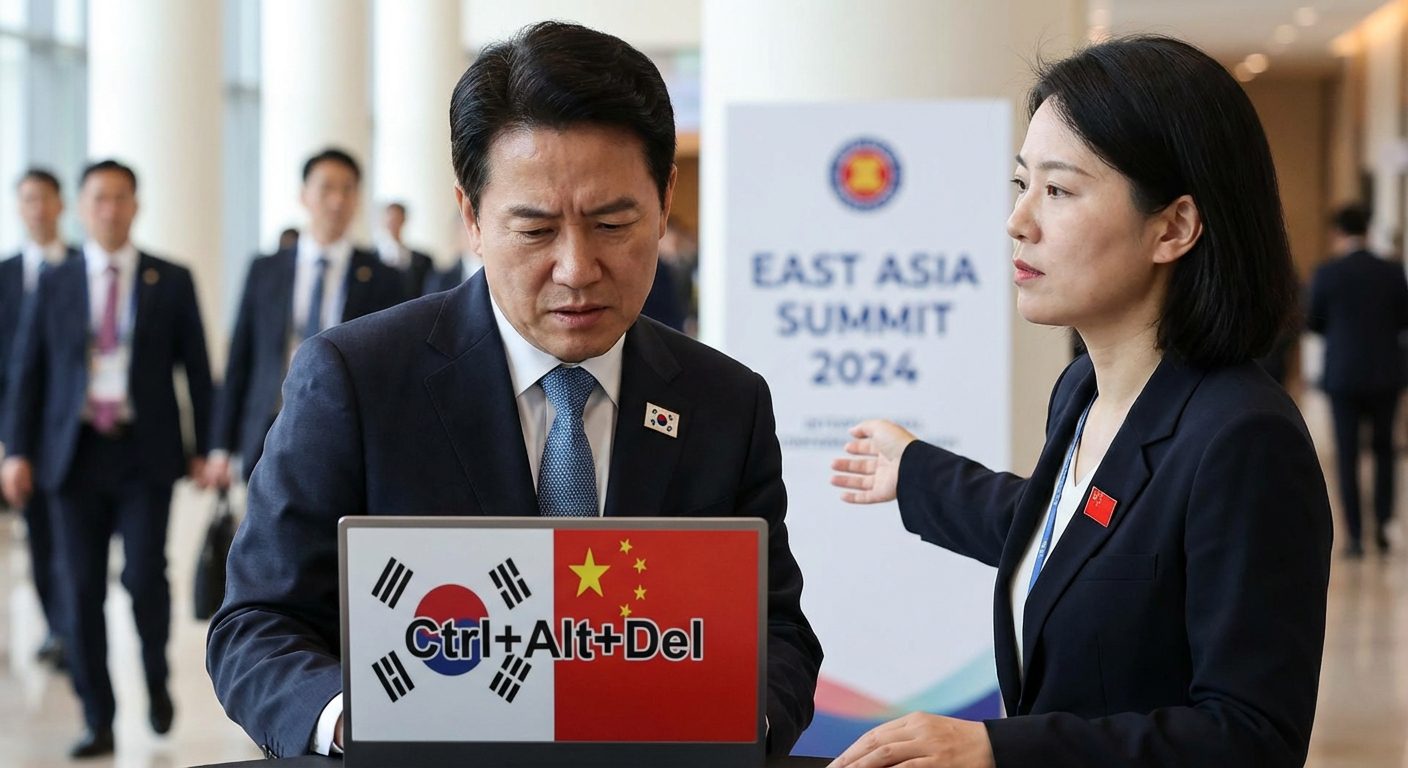
    The Diplomatic Ctrl+Alt+Del: South Korea’s Awkward Reboot with China

    In the world of IT, there is one sacred, unimpeachable truth: when something acts up, you turn it off and on again. Your laptop freezes? Reboot. The Wi-Fi is sluggish? Unplug the router. It seems the grand strategists of international diplomacy have been taking notes from the help desk, because the latest trend is the ‘diplomatic reset,’ and South Korea and China are currently trying to find the power button. This isn’t just a meeting; it’s a full-system attempt to clear the cache on years of geopolitical lag.

    The Ghost in the Machine: Why Reboot Now?

    Every long-term relationship, be it with your college roommate or a neighboring superpower, accumulates a certain amount of digital detritus. For Seoul and Beijing, the system memory is clogged with lingering issues. Think of the THAAD missile defense system as that one piece of bloatware installed years ago that China insists is slowing everything down. Then there are the constant pop-up notifications from Washington, reminding Seoul about its security alliance updates. The result? A user experience filled with friction, error messages, and a whole lot of passive-aggressive dialogue boxes. The goal of this ‘south korea china relations reset’ is to get both systems talking to each other again without the dreaded spinning wheel of doom.

    It’s Not a Factory Reset, It’s a ‘Strategic Refresh’

    Let’s be clear: nobody is wiping the hard drive and starting from scratch. This is less of a dramatic breakup and more like a very serious couples therapy session mediated by translators and trade agreements. The agenda is packed with delicate operations:

    • Defragging the Economy: They’re trying to reorganize their economic ties so they run more efficiently, without one partner hogging all the bandwidth.
    • Updating Security Protocols: Both sides are trying to agree on a new antivirus policy that makes everyone feel secure without triggering alarms for the other’s friends (looking at you, Uncle Sam).
    • Clearing the Cookies: The aim is to forget some of the more irritating parts of their recent browsing history and start with a clean slate, or at least a less targeted-ad version of their relationship.

    The Inevitable ‘Patch’ Is Coming

    The success of this diplomatic reboot won’t be measured in a single, triumphant handshake. It will be measured in the absence of glitches. Will trade flow more smoothly? Will the geopolitical operating system be more stable? Like any major software update, the initial reset is just the beginning. We can fully expect a series of smaller ‘patches’ and ‘hotfixes’ in the coming months. Because in diplomacy, as in technology, the moment you think you’ve fixed all the bugs, a new, even weirder one inevitably appears.

  • Sun, Sand, and Sanctions: When Your Caribbean Vacation Hits a Geopolitical Snag

    Sun, Sand, and Sanctions: When Your Caribbean Vacation Hits a Geopolitical Snag

    You’ve achieved peak vacation mode. The only urgent decision on your agenda is whether the next piña colada should be blended or on the rocks. You’re scrolling through photos of your own feet in the sand when a notification pops up. It’s an email from your airline with the subject line: “Important Update Regarding Your Flight.” You assume it’s a gate change. You are adorably, tragically wrong. Your flight home doesn’t just have a new gate; it has ceased to exist in this dimension. Welcome to the exclusive club of travelers whose holiday has been unexpectedly extended by international diplomacy.

    The Great Un-Booking

    So, what happened? It turns out that while you were debating the merits of SPF 30 versus SPF 50, two countries decided they were no longer on speaking terms. The airspace you were supposed to blissfully cruise through at 30,000 feet is now the subject of a sternly worded memo and a flight ban. Your direct route from paradise back to reality has become collateral damage in a geopolitical staring contest. You, and hundreds of other similarly sunburned tourists stranded in the Caribbean, are now unwitting pawns in a game you didn’t even know was being played. The root cause, you learn from frantic Googling over spotty hotel Wi-Fi, is fallout from the Venezuela crisis, which has turned the friendly skies into a very complicated chess board.

    The Five Stages of Geopolitical Grounding

    Being stranded in paradise comes with its own unique emotional journey. It usually goes something like this:

    • Denial: “It’s just a glitch in the app. I’ll refresh it. See? Still says ‘confirmed.’ Everything is fine.”
    • Anger: A primal rage directed at the airline’s automated voice-mail system, which assures you that your call is “very important” while placing you 257th in the queue.
    • Bargaining: “Okay, universe. If you get me on a flight—any flight—I promise to never again complain about the lack of legroom or the questionable in-flight meal.”
    • Despair: Staring into your now-empty suitcase, realizing you have exactly one clean pair of socks left and a rapidly dwindling supply of travel-sized deodorant.
    • Acceptance: “Well, the breakfast buffet is still open, and I suppose one more day by the pool won’t hurt.”

    Operation: Escape From Paradise

    A strange and beautiful camaraderie forms among the stranded. You become a small, highly-motivated tribe, sharing intel on which airline’s customer service line has the shortest hold time and pooling resources to buy a single, outrageously expensive day pass for the premium airport lounge. You learn more about obscure Caribbean aviation hubs and multi-leg flight paths than you ever thought possible. A three-hour direct flight home is magically transformed into a 22-hour odyssey through three different countries, but hey, at least it’s a seat. You return home not with a tan, but with a story—and a newfound appreciation for checking the international news before you book your next beach getaway.

  • Trump’s Greenland Gambit: The Geopolitical Ticket That Just Won’t Close

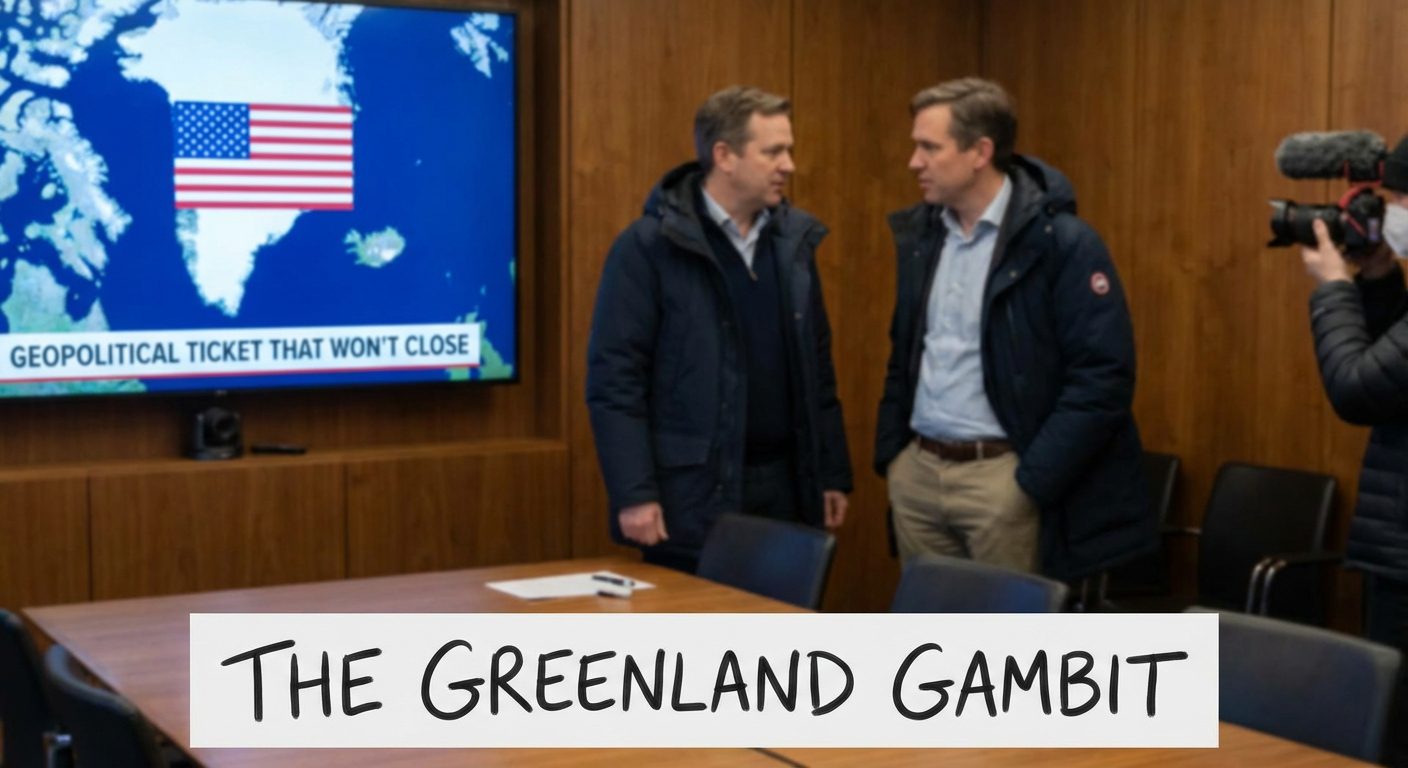
    Trump’s Greenland Gambit: The Geopolitical Ticket That Just Won’t Close

    In the grand, confusing JIRA board of international relations, some tickets are simple, some are complex, and some make you wonder if the person who submitted it is quietly replacing their coffee with paint thinner. The recurring request from Donald Trump to purchase Greenland falls squarely into that last category. It’s the ultimate ‘feature request’ that sounds like a prank but is apparently, alarmingly, real.

    The Initial Pitch: A System-Wide ‘Huh?’

    Cast your mind back to 2019. The story broke that the then-President had asked his advisors to look into the feasibility of acquiring Greenland from Denmark. The collective global response was a spit-take. It felt like a CEO, during a Q4 earnings call, suddenly pivoting to discuss the strategic advantages of acquiring the moon. Denmark, in the politest way possible, explained that Greenland was not for sale and, more importantly, was home to people who might have an opinion on the matter. The diplomatic ticket was marked ‘Resolved: Won’t Do,’ and we all had a good chuckle and moved on. Or so we thought.

    The Business Case: A PowerPoint of Dreams

    To be fair, there’s a sliver of logic buried under the sheer audacity. Greenland is rich in rare-earth minerals and occupies a massively strategic location in the Arctic—a region that’s becoming the geopolitical equivalent of a hot new neighborhood with artisanal coffee shops. In a corporate memo, this would be the slide filled with buzzwords like ‘synergy,’ ‘forward-thinking assets,’ and ‘paradigm-shifting opportunities.’ The problem is, you can’t just ‘acquire’ a country like it’s a struggling startup with a decent patent portfolio. The ‘human resources’ part of the equation is, shall we say, a bit more complex.

    The Persistent Glitch: He’s Asking Again?

    Like a bug you were sure you’d patched, the Greenland idea has resurfaced. Reports indicate Trump has brought it up again, proving that some ideas are too magnificently strange to let go of. This is the geopolitical equivalent of your boss emailing you on a Saturday with the subject line ‘Re: Re: FWD: That idea from three years ago.’ For Denmark, it must feel like getting a support ticket reopened with the simple, ominous comment: ‘Still broken.’ You can almost hear the sigh from Copenhagen.

    The Diplomatic 404 Error

    While it’s easy to laugh, this recurring request creates a spectacular diplomatic headache. It’s fundamentally awkward for Denmark, a NATO ally, to have to repeatedly explain basic post-colonial sovereignty to the former leader of the free world. The people of Greenland, meanwhile, are left to reiterate that they are, in fact, a populace with a culture and a right to self-determination, not a fixer-upper property with ‘good bones’ and ‘lots of potential.’ It’s a reminder that even in global politics, the most powerful person in the room can still propose something that makes everyone else stare at their shoes and wish for a swift, merciful meteor strike.

  • The Day We Captured legacy_process.exe: Which Obsolete Code Is Next?

    The Day We Captured legacy_process.exe: Which Obsolete Code Is Next?

    It was a Tuesday like any other, until the alert blared across every terminal in the Ops center. After years of evasive maneuvers, memory leaks, and inexplicable CPU spikes at 3:07 AM, the notorious `legacy_process.exe` had finally been cornered. The process, a holdover from the dial-up era, had been siphoning resources and causing random printer errors for two decades. The takedown was swift. A senior admin, armed with nothing but root access and a steely resolve, issued the `kill -9` command. The process didn’t stand a chance. It was a watershed moment for system stability, but it sent a chilling message through the silicon corridors of our server farm.

    The Indictment

    The digital rap sheet for `legacy_process.exe` was long and varied. Its crimes included, but were not limited to:

    • Spawning thousands of zombie child processes that did nothing but consume PID numbers.
    • Hoarding 4GB of RAM on a 32-bit system, a feat of pure, malicious inefficiency.
    • Writing cryptic, indecipherable logs to a long-forgotten network share.
    • Periodically attempting to connect to an IP address that now belongs to a smart toaster in Ohio.

    Its capture was a victory for digital justice everywhere. But as the dust settled, a new question emerged: who’s next?

    The Most Wanted List

    With this new precedent, several other long-running fugitives are undoubtedly looking over their virtual shoulders. The sysadmin task force has made it clear they are cleaning house, and no line of deprecated code is safe. Here are the top targets:

    • The Ancient Apache Server: Still running version 1.3, this server powers a single, forgotten internal webpage with a blinking “Under Construction” GIF. It’s a walking security vulnerability, a digital ghost ship waiting for its final port call.
    • The Finance Department’s “Magic” Excel Sheet: A 97MB spreadsheet held together by a labyrinth of VBA macros written by an intern in 2004. No one knows how it works, but everyone is terrified to touch it. It’s the untouchable kingpin of technical debt.
    • The Ghostly Cron Job: A simple script scheduled to run every night, it diligently compiles a report and emails it to an executive who retired during the Bush administration. It works flawlessly, a silent, pointless soldier in an army of the obsolete.

    The message is clear: the age of accountability is here. In this new world order, not even the most deeply embedded, “we-don’t-know-what-it-does-but-we’re-afraid-to-turn-it-off” process is safe. Check your running tasks, folks. The cleanup has just begun.

  • The Great Swiss Fire Drill Fiasco: A Comedy of Regulations

    The Great Swiss Fire Drill Fiasco: A Comedy of Regulations

    There’s a specific kind of quiet panic that sets in when you’re in a foreign country and faced with a system that is both magnificently over-engineered and utterly baffling. My recent trip to a charming little bar in the Swiss Alps was a masterclass in this very feeling. The target of my confusion? Not the fondue etiquette, but the fire safety system, a device so complex it seemed designed by a committee of paranoid astronauts.

    Welcome to the Safe Zone (App Required)

    This wasn’t your grandfather’s ‘break glass in case of emergency’ setup. Oh no. This was the ‘Global Harmonized Emergency Response & Tourist Comfort Protocol (GHERTCP),’ apparently. The first clue was the fire extinguisher, which was encased in a plexiglass box that could only be opened via a QR code. Scanning it prompted me to download an app, agree to 17 pages of terms and conditions, and enable location services. I briefly wondered if putting out a fire voided the warranty.

    A Symphony of Blinking Lights

    The international implications of this safety utopia became clear as the evening wore on. The system wasn’t just a fire alarm; it was a comprehensive sensory experience.

    • The Exit Signs: Instead of a simple glowing green, these signs cycled through emergency exit instructions in 14 languages, including three emojis for universal understanding. The result was a gentle, disco-like pulse that made you feel safe, but also a little sleepy.
    • The Sprinkler System: A small sign noted that the advanced ‘thermal-audio’ sprinkler system would be triggered by sustained loud noises above 110 decibels. This effectively banned celebratory cheering during football matches and turned every dropped tray into a high-stakes game of ‘Will We Get Mist-ified?’
    • The Alarm Itself: Forget a loud siren. The GHERTCP sent a polite but firm push notification to the app you downloaded earlier. The notification read: “Alert: A potential thermal anomaly has been detected. Please proceed to the designated muster point at your earliest convenience. Enjoy your beverage.”

    The real tragedy wasn’t a potential fire, but the collective, silent struggle of tourists trying to decipher it all. An American family was trying to find the app on the App Store, a German couple was authoring a detailed critique of the system’s inefficiency, and a British chap just sighed, looked at his pint, and muttered, “Well, that’s that, then.” The bartender, noticing our shared bewilderment, just pointed to a red bucket of sand in the corner. “For real fire,” he said with a wink. Sometimes, the most advanced system is the simplest one.

  • The Terrorist’s IT Department: A Look at ISIS Inspired Terrorism on Social Media

    The Terrorist’s IT Department: A Look at ISIS Inspired Terrorism on Social Media

    Some days, just logging into the company VPN feels like a multi-stage espionage mission. You enter your password, get hit with a two-factor authentication push, solve a CAPTCHA that asks you to identify a bus in a grainy photo, and pray it all connects. Now, imagine applying that same level of logistical headache to… global terrorism. It’s a bizarre thought, but the reality is that even the most nefarious organizations have to deal with the same digital plumbing as the rest of us. They’ve just repurposed it from a tool for sharing cat videos into a surprisingly effective, worldwide HR department.

    The Digital Marketing Funnel of Doom

    The infamous North Carolina ISIS case provided a fascinating, if chilling, look under the hood. It wasn’t some shadowy operation in a cave; it was a masterclass in digital outreach. At the top of the funnel, you have broad-stroke propaganda on mainstream platforms like Twitter and Facebook. This is the ‘brand awareness’ phase, designed to catch the eye of the disaffected and curious. Think of it as the sponsored ads of insurgency.

    Once a potential ‘lead’ showed interest, they were moved down the funnel into more private, encrypted channels. This is where the real work began, using a tech stack that would look familiar to any startup.

    • Encrypted Messaging Apps (Telegram, Signal, etc.): This is the ‘sales call’ or the ‘product demo’. Direct, one-on-one communication to vet recruits, provide instruction, and build a rapport. It’s a space safe from prying eyes, where the hard sell happens.
    • Social Media as a Directory: Profiles and posts acted as a public-facing resume, allowing handlers to identify promising candidates based on their online behavior long before first contact was ever made. It’s LinkedIn, but for a much, much worse job.
    • VPNs and Proxies: Standard issue IT security. Every organization needs to protect its assets and communications, and terror networks are no different. They have their own version of an IT security policy, likely with much harsher penalties for non-compliance than a stern email from Dave in Ops.

    It’s a Bureaucracy, After All

    The truly absurd part is realizing the sheer amount of mundane coordination required. Someone, somewhere, had to manage passwords. Someone had to troubleshoot a poor connection for a handler in another hemisphere. They had to create content, manage accounts, and track engagement metrics. It’s the framework of a modern digital marketing agency, but the key performance indicator is global chaos. It’s a surreal reminder that technology is just a tool, and the same platforms designed to connect us can be twisted to tear us apart—all while probably dealing with the same maddening ‘Forgot Password’ prompts we all do.

  • When Saks Stumbles: Why Luxury Retail is the Global Economy’s Canary

    When Saks Stumbles: Why Luxury Retail is the Global Economy’s Canary

    We’ve all been there. You see a handbag that costs more than your first car, you laugh, you cry, and you close the browser tab. But when the people who *actually* buy those bags stop buying them, it’s less about fashion and more like the global economy’s check engine light just started blinking ominously. The potential for a Saks bankruptcy isn’t just retail drama; it’s a critical global economy indicator. It’s the system administrator getting a high-priority alert that a core server is about to go offline.

    The Canary in the Cashmere-Lined Coal Mine

    Why focus on luxury? Because nobody *needs* a diamond-encrusted watch. It’s the ultimate discretionary purchase. When the world’s most financially insulated individuals—people whose bank accounts are usually more stable than a mainframe—start cutting back, it’s not because they’re suddenly broke. It’s because their confidence in the future is wavering. They have access to the kind of high-level financial forecasts that look less like news articles and more like cryptic warnings from a sentient supercomputer. A dip in their spending is the first tangible sign that the big players are quietly preparing for turbulence.

    It’s a Cascading System Failure

    A slowdown at a luxury retailer is like a single, failing microservice in a vast, interconnected network. It might seem small, but the dependencies are everywhere.

    • A struggling Saks means fewer orders for Italian leather crafters.
    • It means Swiss watchmakers see their backlogs shrink.
    • It means French vineyards have to rethink their production forecasts.

    This ripple effect travels backward through the supply chain, from the shipping conglomerates to the raw material producers. Suddenly, the API call for ‘Buy Another Yacht’ is returning a ‘402 Payment Required,’ and the whole economic operating system starts throwing exceptions. It’s a quiet, elegant, and terrifying domino effect.

    Why You Should Check Your Firewall

    So, why should the rest of us, who treat the free breadsticks at Olive Garden as a luxury item, care? Because the sentiment that stops a billionaire from buying a jet is the same sentiment that stops a corporation from expanding, from hiring new people, or from giving raises. The jitters of the ultra-wealthy are a leading indicator for the investment and credit markets that affect everything from your mortgage rate to your company’s Q4 budget. Think of a headline about a luxury retail crisis as a push notification from the global economy’s monitoring system. It’s not just gossip—it’s a memo that it might be a good time to double-check your own financial backups.