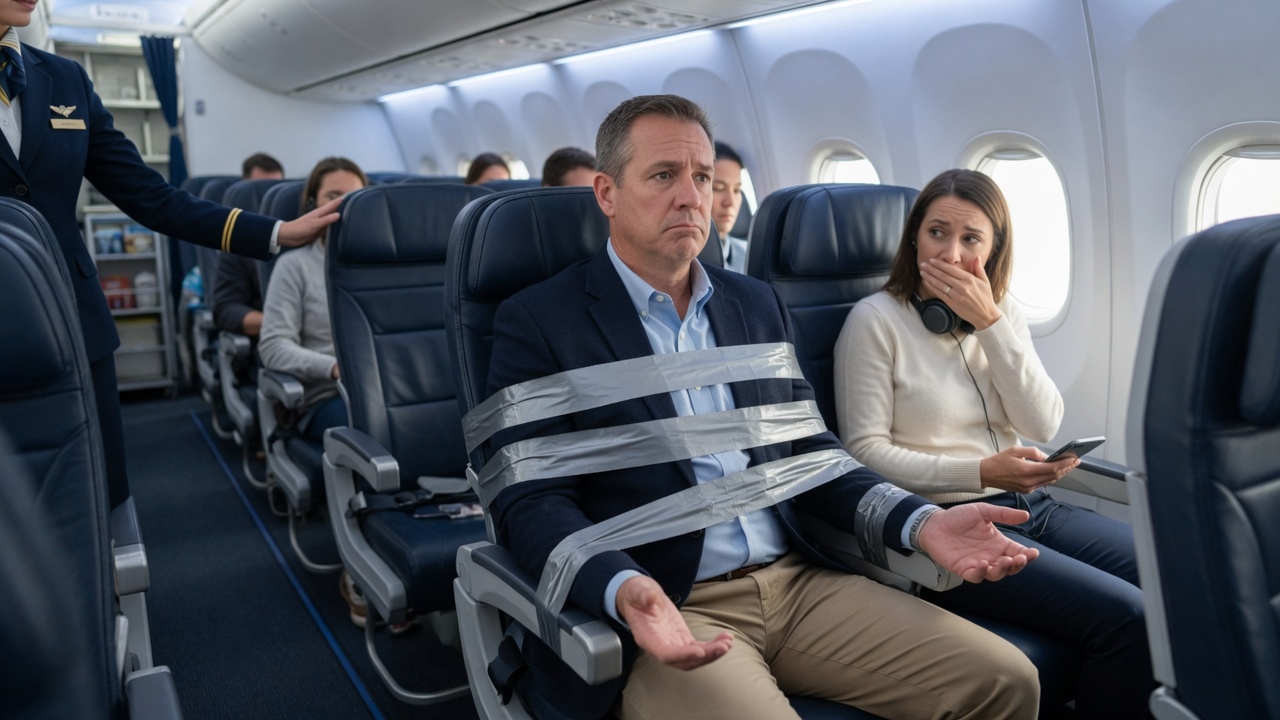
Airlines have hit a new low when an unruly passenger duct taped to airplane seat becomes the go-to solution instead of smart tech, poking fun at the ridiculous improvisation that kicks in when etiquette and official procedures both hit turbulence at 30,000 feet. It is the kind of analog hotfix that makes you wonder why carriers still rely on 1990s-era systems instead of cloud-connected passenger analytics that could flag issues before the duct tape comes out.
Why Legacy Systems Leave Airlines Reaching For Tape
Modern aircraft run on layered software stacks for navigation, maintenance, and crew coordination, yet passenger behavior monitoring often stops at basic CCTV feeds with no real-time AI integration. When an unruly passenger duct taped to airplane seat moment happens, it reveals how these disconnected tools cannot share data across airline networks or with ground teams in the cloud, forcing flight attendants into manual interventions that look more like a hardware store than a tech-forward cabin.
Cost And Safety Impacts Of Skipping Digital Upgrades
Without unified dashboards pulling from booking history, biometric checks, and behavioral algorithms, crews default to physical restraints. The result is higher liability costs, delayed flights, and viral videos that damage brand trust faster than any cybersecurity breach. Infrastructure upgrades like edge computing on planes could process in-flight data locally and alert teams before problems escalate, but many carriers treat these as optional extras rather than core runway investments.
Policy Shifts Needed To Modernize Air Travel
Regulators could push for standardized APIs that let airlines share red-flag data securely across the industry, similar to how threat intelligence platforms work in cybersecurity. This would reduce the odds of an unruly passenger duct taped to airplane seat scenario by enabling proactive seating changes or pre-flight interventions. Until then, the duct-tape era will keep reminding everyone that even the most advanced jets still run on some very old-school infrastructure thinking.
Leave a Reply