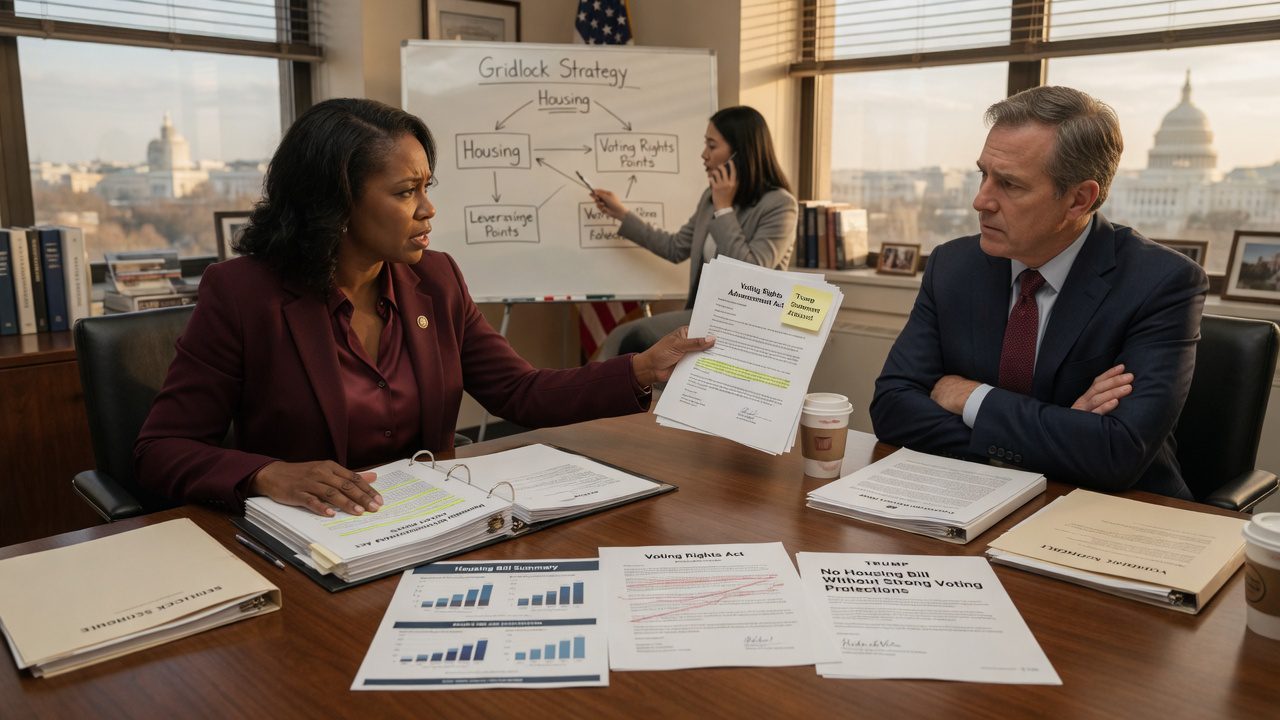
Trump Ties Housing Bill to Voting Act Fueling Gridlock
In a move that underscores the deepening partisan divides in Washington, former President Donald Trump has linked a key housing affordability bill to the stalled Voting Rights Act, creating yet another layer of legislative gridlock. This strategy, often referred to as ‘Gridlock 101,’ highlights how modern politics prioritizes leverage over compromise.
The Housing Bill at Stake
The proposed housing legislation aims to address skyrocketing home prices and rental costs across the United States. With inflation and interest rates impacting millions, the bill includes measures for increased federal funding for affordable housing projects, tax incentives for developers, and reforms to zoning laws. Proponents argue it could ease the crisis in major metro areas where tech workers and families struggle to find suitable homes.
However, Trump’s insistence on tying its passage to voting rights reforms has thrown negotiations into chaos. The Voting Act, which seeks to expand access to ballots and counter perceived suppression tactics, remains a flashpoint between Democrats and Republicans.
Understanding Gridlock 101
Gridlock 101 refers to the basic tactic of using must-pass legislation as bargaining chips. By conditioning support for popular measures like housing relief on unrelated priorities, leaders force opponents into difficult positions. In this case, Democrats face pressure to either dilute voting protections or watch housing initiatives fail.
This approach is not new but has intensified in recent Congresses. Historical examples include debt ceiling fights and infrastructure packages held hostage for policy concessions. The result? Stalled progress on critical issues affecting everyday Americans.
Key Players and Positions
- Republicans: Emphasize election integrity and argue the Voting Act opens doors to fraud.
- Democrats: Push for broader access and see housing as a separate economic priority.
- Trump’s Influence: His statements rally the base while complicating bipartisan talks.
Analysts note that such tactics erode public trust and delay solutions in sectors like real estate and technology infrastructure.
Broader Implications
The gridlock extends beyond Capitol Hill. Tech companies reliant on talent mobility face challenges as housing shortages persist in hubs like Austin and Seattle. Remote work trends may accelerate, but long-term economic growth suffers without legislative action.
Voters in swing states watch closely, with polls showing frustration over inaction on both housing affordability and electoral reforms. This could shape midterm outcomes and future policy agendas.
In conclusion, Trump’s linkage strategy exemplifies Gridlock 101, prioritizing political points over practical governance. Until compromise emerges, Americans bear the costs of inaction on vital fronts.
Leave a Reply