
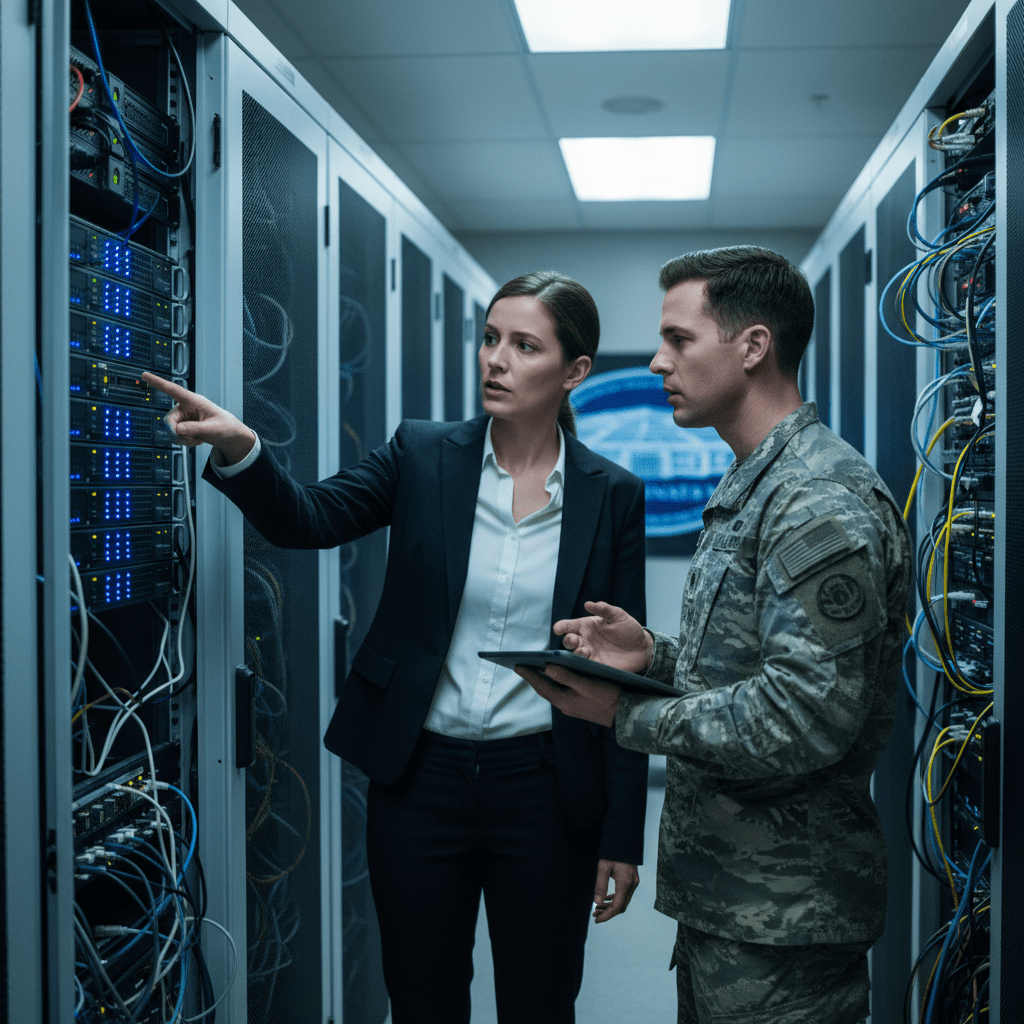
There’s a special kind of comfort in knowing that even the people with access to spy satellites and an astronomical budget have the same IT problems we do. A recently leaked memo revealed the Pentagon is worried about a premier AI lab being a potential supply chain risk. Let that sink in. A foundational pillar of modern AI is considered a security variable. Meanwhile, you were probably just worried about that one intern who keeps committing API keys to the public repo. It turns out your ‘stable’ cloud stack is less a fortress of solitude and more a game of digital Jenga, where one of the blocks is owned by a third party who might suddenly decide to pivot to artisan pickles.
The New Supply Chain: Pixels, Not Pallets
We used to think of ‘supply chain risk’ as a container ship getting stuck in a canal, delaying our new shipment of servers. Today, the most critical link in your chain might be an API endpoint you didn’t even build. Your entire business logic could hinge on a service that sends you a chipper “we’re sunsetting this feature!” email, likely written from a yacht. This is the new frontier of AI supply chain risk management: treating your service providers not just as vendors, but as mission-critical infrastructure that can, and will, have a bad day.
When Your ‘Stable’ Foundation Gets Shaky
Your digital supply chain can unravel in ways that are both terrifying and darkly comedic. The stability of your entire operation rests on factors completely out of your control, such as:
- The Surprise Pivot: The AI startup you rely on for image recognition suddenly decides their true calling is a social network for pets. Your service is now an unintended casualty of Fluffy’s new profile page.
- The Aggressive Deprecation Schedule: You get a 30-day notice that v1 of the API you’ve meticulously integrated is being turned off. Your roadmap is now a fire map.
- The Security Memo Jitters: A leak reveals your provider’s security is held together by hope and an un-patched server from 2009, causing your CISO’s eye to twitch in a rhythm that spells out ‘we are so fired.’
- The ‘Minor’ Update Catastrophe: A seemingly innocuous update to your cloud provider’s authentication service breaks your login flow for exactly 13 hours during your busiest sales period. Their status page remains stubbornly green.
So, We’re All Doomed? (Probably Not)
This isn’t a call to retreat to a server rack in your basement. It’s a call for situational awareness. True AI supply chain risk management isn’t about eliminating reliance on others; it’s about understanding it. It means asking tough questions during procurement, architecting for failure, and having a ‘what-if’ plan that goes beyond ‘hope it doesn’t happen.’ Treat your AI model provider with the same scrutiny you’d give the contractor building your physical office. After all, if the foundation is shaky, it doesn’t matter how nice the furniture is.