
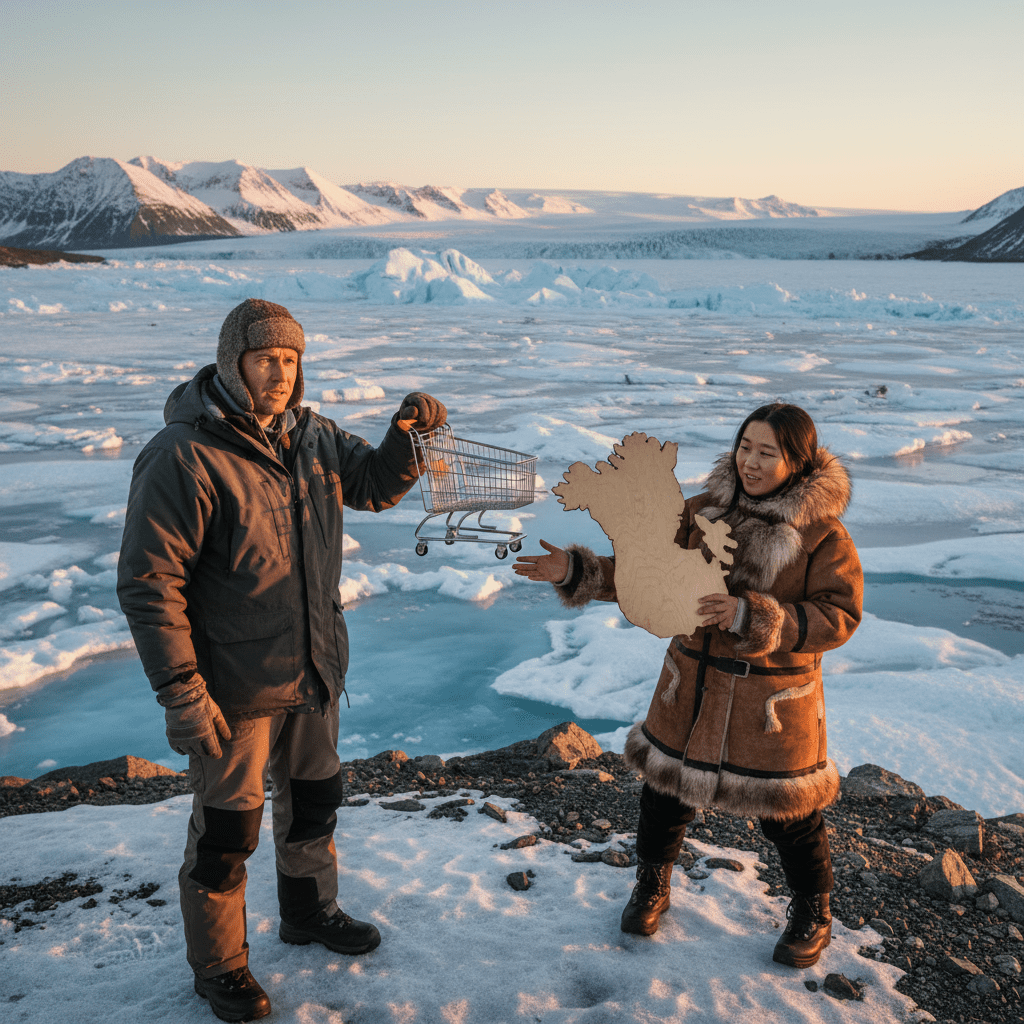
There are moments in international relations that feel less like sober statecraft and more like someone tried to apply a video game cheat code to the real world. Case in point: the time the United States casually floated the idea of buying Greenland. It’s the geopolitical equivalent of seeing a cool car and asking the driver’s boss if it’s for sale. It reveals a fundamental, and frankly hilarious, misunderstanding of how the whole ‘countries’ thing works in the 21st century.
The Ultimate Real Estate Window Shopping
On paper, you can almost see the bizarre logic. From a purely strategic standpoint, Greenland is a prize. It’s a massive island with untold natural resources, sitting astride critical Arctic shipping lanes. It’s the ultimate fixer-upper with great bones and a killer view. The problem is, this isn’t a game of Risk. You can’t just trade three continents for a strategically important island. The ‘Greenland acquisition’ idea treats a nation like a line item on a balance sheet, overlooking one tiny, inconvenient detail: the people who actually live there.
Sovereignty: The System’s Terms of Service Everyone Skips
The core of the absurdity lies in the concept of sovereignty. Greenland isn’t just an empty plot of land owned by Denmark; it’s a self-governing country with its own parliament, culture, and national identity. The proposal to buy it was like submitting a help desk ticket to purchase a colleague’s entire department, assuming their manager could just sign it over. The response from both Greenland and Denmark was the diplomatic equivalent of a system error message: “404 Nation Not Found (for sale).” They politely but firmly pointed out that countries aren’t commodities. You can’t buy a people, their history, or their right to self-determination, no matter how much you’re willing to offer.
A Glitch in the Global Matrix
Ultimately, the Greenland saga was a wonderful, weird lesson in international relations. It highlighted the clash between an old-world, colonial mindset of territorial transactions and the modern reality of national identity. It was a reminder that the world map is not a real estate catalog. While the idea of a Greenland acquisition has faded into a historical punchline, it serves as a perfect example of what happens when grand strategy forgets to check with, you know, humanity. It’s a geopolitical fever dream that reminds us all: before you try to buy something, it’s probably a good idea to make sure it’s actually for sale.