
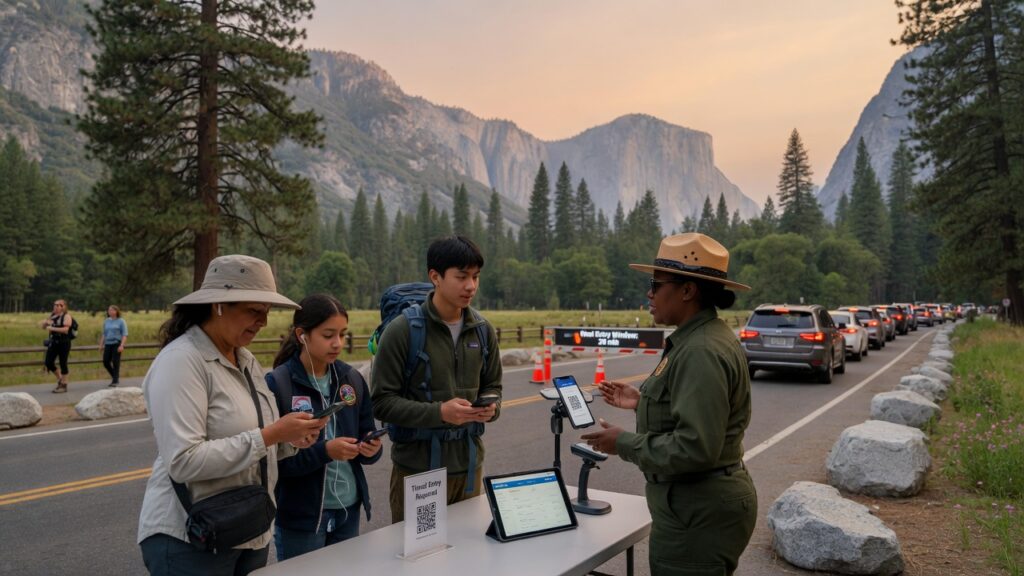
Yosemite’s Ticketmaster Revolution: Taming Park Chaos with Tech
Yosemite National Park, once a serene escape into granite cliffs and ancient sequoias, has devolved into a scene of gridlocked traffic and overwhelmed trails. With visitor numbers surging past 4 million annually, park officials are turning to digital ticketing systems reminiscent of Ticketmaster to restore order. This shift marks a pivotal moment where technology collides with wilderness preservation, raising questions about accessibility, commercialization, and the future of public lands.
The Overcrowding Crisis Unfolds
Post-pandemic travel booms have exposed Yosemite’s infrastructure limits. In peak summer months, Yosemite Valley resembles a concert venue at capacity, with cars idling for hours and parking lots overflowing onto meadows. Rangers report increased incidents of trail erosion, wildlife disturbances, and even litter from frustrated visitors unable to find basic amenities.
Data from the National Park Service (NPS) shows a 30% spike in visitation since 2019, driven by social media-fueled “Instagram hikes” and remote work flexibility. Without intervention, experts warn of irreversible damage to fragile ecosystems, including the Merced River’s water quality and giant sequoia groves.
This chaos isn’t unique to Yosemite—similar strains hit Zion, Acadia, and Rocky Mountain National Parks—but Yosemite’s iconic status has made it the testing ground for bold tech solutions.
Enter Digital Ticketing: A Ticketmaster-Inspired Model
In response, Yosemite has piloted a reservation system requiring timed-entry permits for popular areas like Yosemite Valley and Half Dome. The platform, built on scalable cloud infrastructure similar to live-event ticketing giants, uses algorithms to cap daily visitors at sustainable levels around 20,000.
Users access the system via the NPS app or website, selecting time slots much like purchasing concert seats. Dynamic pricing adjusts based on demand, with peak weekends costing more to deter casual crowds. Integration with mobile payments and QR code scanning streamlines entry, reducing wait times at gates by up to 40% according to early trials.
Tech partnerships play a key role. Companies like Recreation.gov, which handles federal recreation bookings, have upgraded their backend with AI-driven demand forecasting. This predicts surges from weather apps and flight data, allowing proactive slot releases. It’s a far cry from paper permits of old, embracing the same backend tech that powers Ticketmaster’s verified fan programs.
The Tech Behind the Transformation
Beyond basic reservations, emerging tools enhance the experience. AI chatbots within the app provide real-time trail conditions and suggest lesser-known alternatives to ease pressure on hotspots. Geofencing alerts notify visitors when areas approach capacity, nudging them toward educational content on Leave No Trace principles.
Blockchain elements are even being explored for permit authenticity, preventing scalping—a notorious Ticketmaster issue—through non-fungible tokens (NFTs) tied to visitor IDs. Data analytics dashboards help park managers monitor carbon footprints from vehicle traffic, informing future EV charging expansions.
This tech infusion aligns with broader trends in “smart parks.” Sensors embedded in trails track foot traffic, feeding into machine learning models that optimize everything from restroom staffing to emergency response. For tech enthusiasts, it’s an opportunity to gamify visits: apps could award badges for sustainable behaviors, fostering a community around responsible tourism.
Balancing Access and Preservation
Critics argue that ticketed nature commodifies the wild, potentially excluding lower-income families who can’t navigate apps or afford dynamic fees. Accessibility advocates push for free community passes and multilingual support to mitigate digital divides.
Yet proponents highlight environmental wins. Reduced vehicle numbers have already lowered noise pollution, benefiting species like the Yosemite toad. Revenue from fees funds trail repairs and habitat restoration, creating a self-sustaining model.
Comparisons to Ticketmaster’s controversies are inevitable—scalpers, technical glitches, and exclusivity complaints. However, Yosemite’s system incorporates waitlists and lotteries for high-demand dates, aiming for fairness over pure profit.
Broader Implications for National Parks and Tourism Tech
Yosemite’s experiment could ripple across the 63 national parks. If successful, expect widespread adoption of unified digital platforms, possibly powered by major tech firms eyeing the $1 trillion outdoor recreation economy.
This evolution reflects a larger societal shift: nature as a managed resource in the digital age. Virtual reality previews of trails might one day reduce physical visits, while augmented reality apps overlay historical info without physical signage.
For developers and startups, opportunities abound in building inclusive booking tech, eco-friendly transport integrations like autonomous shuttles, and privacy-focused visitor tracking.
Looking Ahead: Can Tech Save the Wild?
Yosemite’s chaos underscores that unchecked access threatens the very beauty drawing crowds. By borrowing from event management tech, parks are pioneering a hybrid model—part wilderness, part curated experience.
Success hinges on iteration: listening to user feedback, refining algorithms for equity, and ensuring technology enhances rather than replaces the awe of nature. As more parks follow suit, one thing is clear: the great outdoors now requires a digital ticket, blending conservation with innovation for generations to come.
The question remains whether these systems will democratize or gatekeep our natural heritage. For now, Yosemite leads the charge, proving that even the wildest places need a little tech orchestration.