
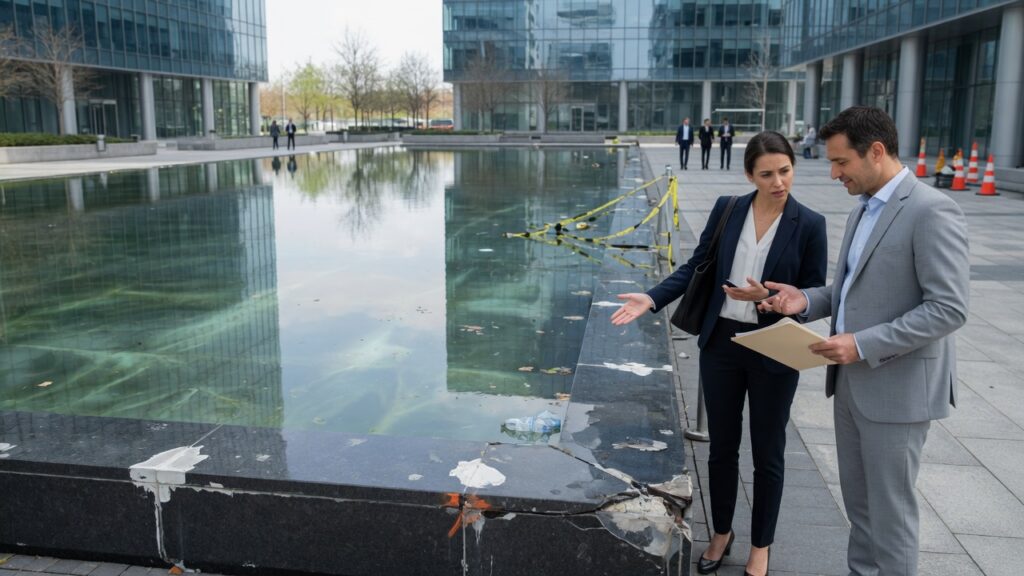
The botched renovation of the Reflecting Pool at a national landmark illustrates how bureaucratic construction failures can mirror home renovation disasters, where one defective installation nullifies established rules and compliance frameworks, ultimately prompting the DOJ to drop related vandalism charges.
Infrastructure Failures and Their Ripple Effects
Construction missteps at iconic sites often expose deeper issues in project oversight, procurement, and execution. When deliverables fall short of engineering standards, legal accountability can shift dramatically, much like how a single faulty component in a large-scale IT rollout can invalidate entire security protocols or service-level agreements.
Policy and Compliance Implications
Such outcomes force agencies to reassess enforcement priorities. Data from federal infrastructure audits show that project overruns exceeding 30 percent frequently correlate with revised legal strategies, reducing the viability of charges when foundational work itself violates specifications.
Parallels to IT and Data Center Deployments
Similar dynamics appear in technology infrastructure. A poorly executed data center migration or cloud integration can trigger cascading compliance failures, leading organizations to abandon punitive measures in favor of remediation. This reflects the same principle where systemic installation errors override initial contractual penalties.
- Review of vendor contracts to include performance benchmarks.
- Implementation of phased testing protocols before full activation.
- Integration of real-time monitoring tools to detect deviations early.
Strategic Recommendations for Future Projects
Agencies managing critical infrastructure must prioritize modular design and independent verification to prevent failures that erode legal standing. In both physical and digital domains, robust governance frameworks reduce the risk of outcomes where project flaws dictate policy reversals.