
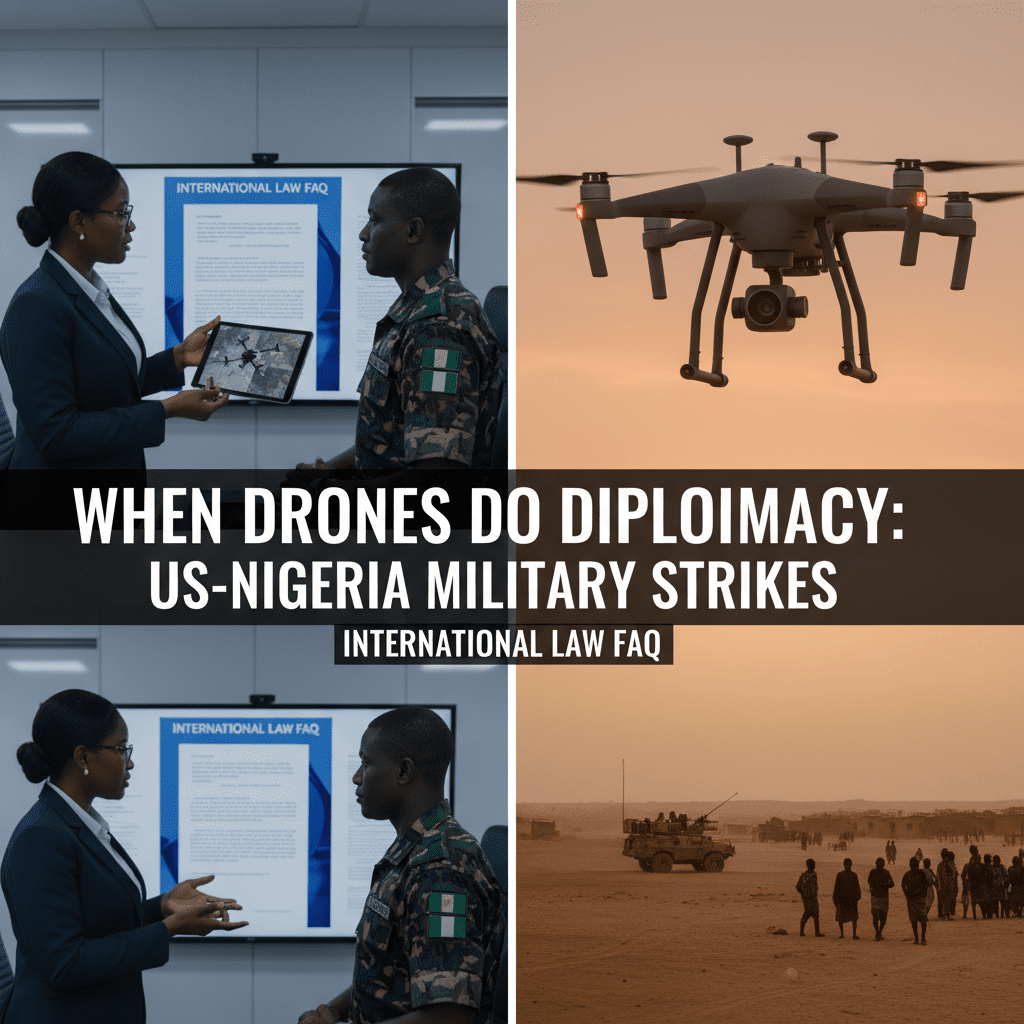
There was a time when international relations involved sternly worded letters, ambassadors being recalled, and perhaps a tense meeting over lukewarm coffee. Now, it seems the new diplomatic normal involves a Predator drone loitering at 25,000 feet. The recent discussions around potential US military strikes in Nigeria aren’t just about geopolitics; they’re about the quirky, bureaucratic absurdity of modern statecraft, where international law feels less like a treaty and more like a user agreement no one has read.
The ‘Unwilling or Unable’ Doctrine: A Diplomatic Hall Pass?
At the heart of this new method is the legal framework, which is a masterpiece of corporate-style justification. The argument often goes that a host nation is ‘unwilling or unable’ to deal with a threat within its own borders. This is the international law equivalent of your IT department saying they can’t fix your laptop, so they’re giving Global Admin rights to a third-party contractor they found on the internet. What could go wrong?
This creates a fascinating diplomatic dance:
- The Request: The US doesn’t send a formal declaration of war. It’s more like submitting a ticket: ‘Permission to resolve security issue in your sovereign airspace, ticket #451-B.’
- The Response: Nigeria then has to navigate the PR minefield of either admitting it can’t handle its own business or looking uncooperative in the ‘Global War on Things We Don’t Like.’
- The Action: Regardless of the response, the drone often ends up flying anyway, followed by a press release filled with carefully selected legal buzzwords. It’s the ultimate ‘we’re making necessary security updates to your system’ notification.
Sovereignty as a Service (SaaS)
What we’re witnessing is the evolution of sovereignty from a hard-and-fast rule to a kind of cloud-based service with a very complicated Service Level Agreement (SLA). The US-Nigeria military strikes conversation highlights that a nation’s borders are less like a brick wall and more like a firewall with a few selectively open ports. International law is scrambling to keep up, patching the code after the exploit has already been used. It’s less about grand legal principles and more about finding the right loophole in the terms of service. Welcome to Diplomacy 2.0, where the most powerful tool isn’t a treaty, but a well-aimed Hellfire missile and an even better-worded memo.