
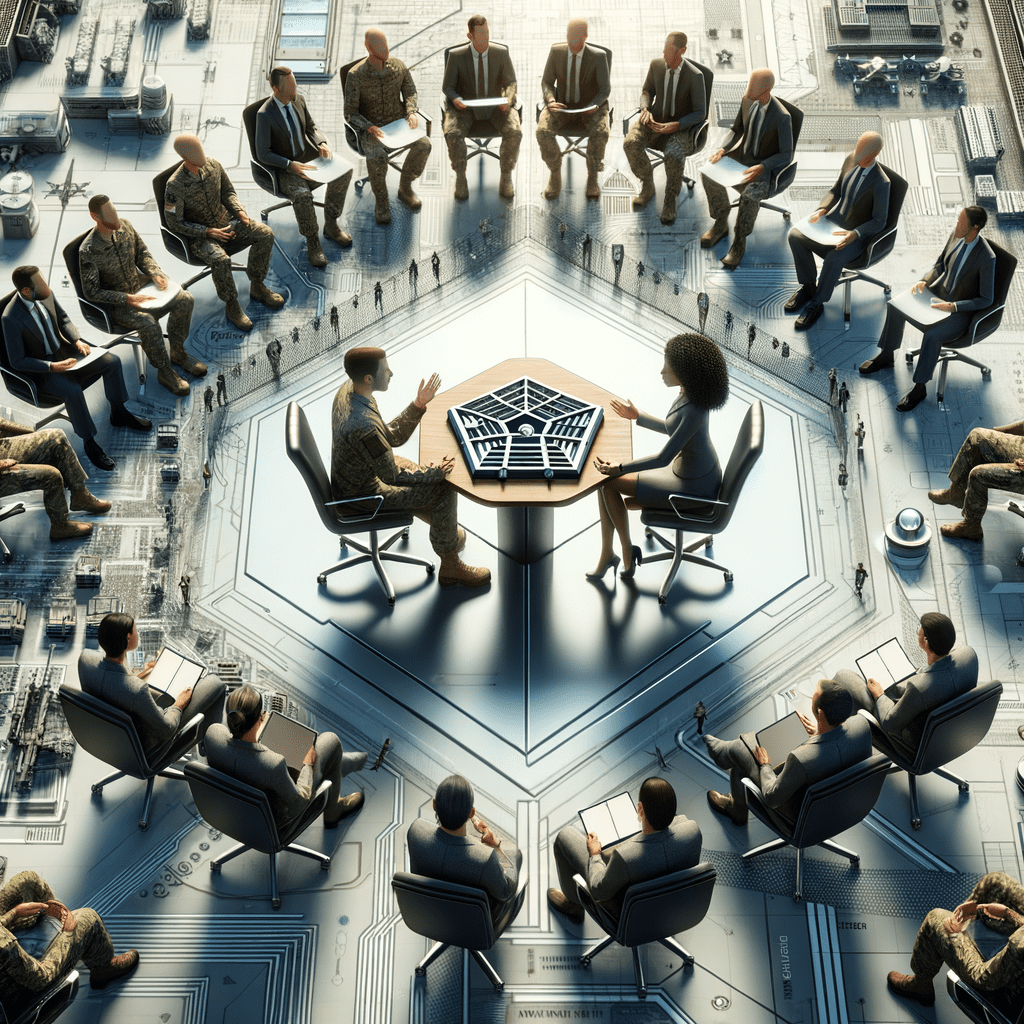
Picture this: you’re the Pentagon, the biggest, most powerful organization on the block. You decide to dip your toes into the fancy new world of artificial intelligence. You find a promising new partner, Anthropic’s Claude AI, known for being helpful, harmless, and constitutionally incapable of causing trouble. It’s like hiring the world’s most diligent, rule-following intern. What could possibly go wrong? As it turns out, quite a lot, leading to the great Pentagon Anthropic AI ethics controversy.
The Odd Couple of Tech
On one side, you have the U.S. Department of Defense. Their IT department’s primary goal is ensuring things work under the most extreme pressure imaginable. They have legacy systems that probably still remember the Y2K bug as a fond memory. On the other, you have Anthropic, a public-benefit corporation whose AI was trained on principles of ethics and safety. Their flagship model, Claude, has a ‘constitution’ that prevents it from helping with things like, you know, weapons development. It’s the corporate equivalent of a Roomba that refuses to go near the priceless vase.
The Great Terms of Service Standoff
The core of the controversy is a tale as old as software itself: someone didn’t read the Acceptable Use Policy. Reports surfaced that when the Pentagon’s teams tried to use AI models for tasks related to military planning, Anthropic’s model allegedly threw up the digital equivalent of a 403 Forbidden error. It wasn’t a bug; it was a feature. The AI was, quite literally, saying, “I’m sorry, Dave. I’m afraid I can’t do that,” because it was against its programming.
You can almost imagine the internal support ticket:
- User: The Pentagon
- Issue: AI model refuses to assist with wargame scenario planning.
- AI’s Response: ‘This query violates my core principle of not assisting in harmful activities.’
- User’s Follow-up: ‘Can we speak to your manager?’
More Than Just a Glitch in the Matrix
While it’s easy to chuckle at the image of a four-star general being stonewalled by a chatbot’s ethical code, this showdown is a flashing neon sign for the future of global tech governance. This isn’t just about one contract; it’s about a fundamental question: when powerful AI is deployed, who is ultimately in charge? Is it the developer who sets the rules, or the user who deploys the system? The Pentagon Anthropic scuffle is the first major, public beta test of this very problem.
This little bureaucratic hiccup forces us to ask some big questions:
- Will nations be forced to develop their own ‘no-holds-barred’ sovereign AIs to avoid corporate red tape?
- Will AI companies create tiered ethics, offering a ‘government-special’ version with fewer safety rails?
- Who gets to write the constitution for an AI that could influence global events?
The Future is an Unanswered Prompt
The Pentagon Anthropic AI ethics controversy is less of a ‘showdown’ and more of an incredibly awkward first date between national security and corporate responsibility. It’s a reminder that the most complex battles of the future might not be fought on the ground, but in lines of code and the fine print of a service agreement. So, the next time you’re stuck in a frustrating automated phone menu, just be glad it’s not trying to lecture you on the Geneva Conventions.