
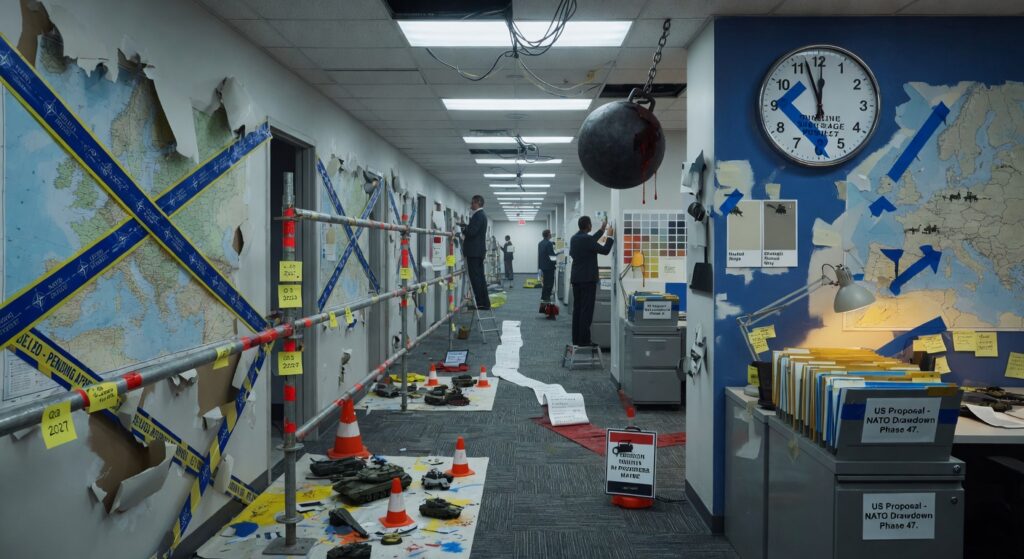
Imagine walking into your office one Monday morning only to find the entire space torn apart for a long-overdue renovation that was supposed to wrap up in weeks but now stretches into months of dusty hallways and postponed deadlines. That same frustrating loop of approvals and rescheduling is exactly what experts predict for the US plans to shrink NATO forces timeline, turning a major strategic shift into a marathon of bureaucratic back-and-forth that leaves everyone waiting. Picture the scene: generals and diplomats huddled around conference tables stacked with coffee cups and stacks of binders, debating every detail while the world holds its breath for a firm decision. Just like when your IT team announces a system upgrade that spirals into years of pilot programs and stakeholder reviews, these military adjustments hit snag after snag, reminding us that big changes rarely happen quickly in large organizations. The humor lies in how familiar it all feels, whether you’re rearranging cubicles or realigning global alliances, because the process always involves more meetings than actual movement.
Breaking Down the US Plans to Shrink NATO Forces Timeline
Let’s start by unpacking what the US plans to shrink NATO forces timeline actually involves, using a relatable analogy from everyday tech frustrations. Think of it like your company deciding to downsize its server room to cut costs, only for the project to require sign-off from every department head who then adds their own tweaks. In one extended example, a mid-sized firm I know spent eighteen months just finalizing which servers to retire because each meeting uncovered new compliance issues, mirroring how NATO adjustments get bogged down in international reviews. Practical tip: keep a simple timeline chart visible to everyone involved, updating it weekly to avoid the drift that turns months into years. This approach helps spot delays early, much like checking your renovation project’s progress app before the walls close in.
How Endless Meetings Mirror Global Decision-Making
Bureaucratic glitches thrive in endless meetings, and the US plans to shrink NATO forces timeline is no exception, echoing those soul-crushing sessions where your team debates coffee machine brands for the new break room. A short story from my own experience involves a software rollout at work that required twelve consecutive meetings just to agree on the rollout date, leaving the actual code untouched while deadlines slipped. To navigate this, try setting strict agendas with time limits and follow-up actions assigned on the spot, a step-by-step trick that keeps momentum alive. Readers can picture diplomats around a table in Brussels, nodding along but circling back to the same points, much like your colleagues revisiting the same budget concerns over and over.
Relatable Renovation Chaos Applied to Military Drawdowns
Drawing parallels to home or office renovations brings the US plans to shrink NATO forces timeline into sharp focus, where one small change triggers a cascade of unexpected problems. Consider the anecdote of a friend who started a kitchen remodel only to discover outdated wiring that demanded permits from three different agencies, delaying everything by half a year. In practice, apply this lesson by building buffer time into any major plan and communicating openly with all parties to prevent surprises. The scene unfolds with paint samples scattered everywhere while contractors wait for approvals, just as troop realignments wait for layered approvals from multiple nations.
Step-by-Step Tips to Survive Bureaucratic Timelines
Surviving these delays calls for practical strategies that turn frustration into forward motion, especially when dealing with something as complex as the US plans to shrink NATO forces timeline. First, document every decision in shared notes so nothing gets lost in translation. Next, schedule regular check-ins but cap them at thirty minutes to maintain energy. An extended personal example comes from managing a long office restructure where we used color-coded sticky notes on a whiteboard to track approvals, cutting confusion and helping the team laugh at the absurdity of it all. Finally, celebrate small wins like a single approved document to keep morale high amid the waiting game.
Storytelling the Wait: From Cubicles to Coalitions
Rich details paint the picture of prolonged waits, whether in a fluorescent-lit conference room or a historic NATO hall filled with flags and hushed conversations. One vivid tale involves an IT buddy whose network migration project dragged on because every stakeholder wanted input, leading to a year of testing phases that felt endless yet oddly bonding. Tips include creating visual timelines with milestones marked in green for progress, helping everyone visualize the end even when it’s distant. This method works wonders for keeping the process human and less like an abstract global puzzle.
Practical Advice for Everyday Bureaucratic Hurdles
Applying these insights to daily life makes the US plans to shrink NATO forces timeline less intimidating, showing how small habits combat big delays. Start by prioritizing clear communication channels, like group chats for quick questions instead of formal emails. In a real-life story, my neighbor’s garage addition project succeeded after they introduced weekly photo updates that kept contractors accountable without extra meetings. Build in flexibility for revisions, and remember to inject humor by joking about the process turning into a sitcom episode, fostering a lighthearted team vibe that eases tension.
Wrapping Up the Delays with Key Insights
As we reflect on these parallels, the core takeaway is that patience paired with proactive steps turns potential stalemates into manageable progress, whether facing the US plans to shrink NATO forces timeline or your next big restructure. Stay engaged by following updates from reliable sources and sharing your own experiences in comments to build community around these shared struggles. Related search terms: NATO force reduction delays, military bureaucracy examples, office renovation project management tips, global alliance timeline challenges, endless meeting productivity hacks, strategic drawdown personal stories.