
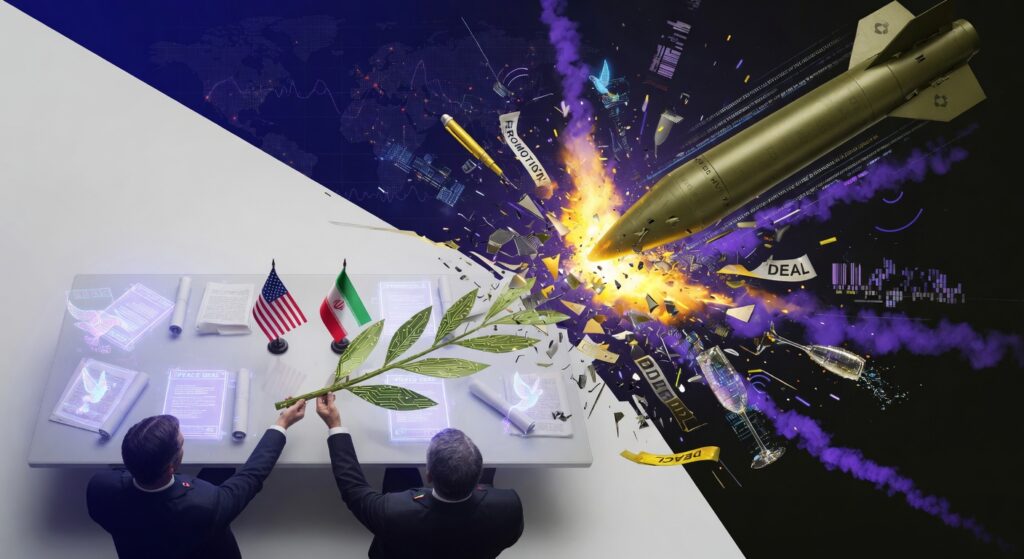
Picture this: you’re in a dimly lit conference room, the kind with flickering fluorescent lights that hum like a bad server rack, and your boss slides a glowing performance review across the table promising a promotion while simultaneously handing you a write-up for that one email you sent at 2 AM. That’s the vibe of US Iran strikes during peace deal negotiations explained in the grand theater of global diplomacy, where peace talks and sudden strikes dance an absurd tango that feels ripped straight from IT support hell. Just like trying to debug a system that’s both upgrading and crashing, these mixed signals leave everyone scratching their heads, wondering if the next ping will be a handshake or a shutdown. In this post, we’ll unpack the comedy of errors with relatable stories from the cubicle trenches, offering tips on navigating such chaos without losing your sanity or your job.
The Workplace Parallel: Reprimands Meet Promotions in Everyday Bureaucracy
Imagine Sarah from accounting, who gets called into a meeting expecting her long-awaited raise only to hear about a minor policy slip from last quarter. The boss smiles warmly, talks about future growth, then drops the hammer on a “learning opportunity.” It’s the same head-scratching absurdity as US Iran strikes during peace deal negotiations explained, where diplomatic overtures get interrupted by unexpected actions. In real life, this plays out in open-plan offices everywhere—think of the time my colleague Dave was praised in the all-hands for his innovative fix on the database, only to get an automated HR email flagging his overtime as a compliance issue. The lesson? Document everything, like keeping a personal log of interactions, so when the system glitches, you’ve got the receipts to clarify the mixed message.
US Iran Strikes During Peace Deal Negotiations Explained Through Historical Glitches
Flash back to tense hotel lobbies in Vienna or Geneva, where negotiators sip lukewarm coffee while backchannels buzz with conflicting intel, much like a network admin juggling firewall rules that contradict each other. One moment, envoys are sketching out frameworks on whiteboards; the next, reports of strikes ripple through like a rogue update breaking the entire build. Take the anecdote of a mid-level diplomat who described pacing a marble hallway, phone in hand, as peace drafts circulated only for alerts of aerial activity to derail the momentum—echoing how your team’s sprint planning gets torpedoed by an emergency patch. Practical tip: Always have a contingency plan, whether it’s alternative communication channels in diplomacy or backup VPNs in the office, to keep the conversation flowing despite the interruptions.
Decoding Mixed Signals Like Debugging Faulty Code
Breaking down US Iran strikes during peace deal negotiations explained reveals layers of intent versus perception, similar to interpreting vague Slack messages from upper management. Step one: Identify the baseline—read the room or the cables for the promised “promotion” equivalent, like agreed-upon de-escalation points. Step two: Spot the contradictions, such as public statements clashing with on-ground actions, just as a promised feature rollout gets delayed by sudden budget cuts. In my own tech support days, I once handled a ticket where a user was assured system stability during an upgrade, only for a critical strike-like outage to hit mid-process; the fix involved cross-referencing logs step-by-step, asking clarifying questions like “What exactly changed since the last stable state?” Apply this to global talks by tracking public announcements against verified reports, building a mental timeline to separate noise from signal.
Real-Life Example: The Office Coffee Machine Crisis Mirrors Diplomatic Stumbles
Consider the legendary tale of the office coffee machine that was promised an upgrade to a fancy espresso model during the quarterly meeting, only for it to be “temporarily” replaced with a basic drip due to an unforeseen supply chain hiccup—sound familiar to peace overtures shadowed by strikes? Colleagues gathered around the sad machine, joking about the betrayal, much like analysts parsing news of talks alongside reports of incidents. The practical advice here is to foster open feedback loops: schedule regular check-ins to address the mismatch early, preventing small glitches from escalating into full-blown morale crashes. This approach turns the absurd tango into a manageable waltz, whether in foreign policy or your department’s resource allocation.
Practical Tips for Navigating the Tango in Both Arenas
Start by staying informed without overwhelm—set up alerts for key developments in US Iran strikes during peace deal negotiations explained, akin to monitoring system dashboards. Next, build alliances, like chatting with cross-functional teammates to gather diverse perspectives on mixed messages. Then, practice patience with a dose of humor: laugh at the bureaucracy, as it lightens the load when a promised promotion timeline slips. Finally, advocate clearly but calmly, using data-backed examples from your work history to realign expectations, much as envoys might reference past agreements to steer talks back on track.
Another Extended Anecdote: The Server Migration That Almost Wasn’t
Picture the all-nighter spent prepping for a seamless server migration, complete with stakeholder buy-in and celebratory donuts, only for a last-minute security alert to force a rollback that felt like a diplomatic strike mid-negotiation. The team huddled in the break room, rehashing every decision, until someone suggested a phased rollout with built-in pauses for review. This mirrors how prolonged talks can benefit from incremental steps rather than all-or-nothing pushes, helping avoid the whiplash of conflicting actions and fostering trust through transparency.
Bridging the Absurdity with Humor and Resilience
At its core, these situations thrive on the unexpected, turning high-stakes moments into relatable farces where everyone involved feels like they’re debugging life itself. Embrace the light side by sharing war stories over virtual coffee chats, turning potential frustrations into team-building gold. Remember, just as in global stages or corporate hallways, consistency wins out over time—keep showing up prepared, and the tango eventually finds its rhythm.
- US Iran diplomacy timeline 2023
- workplace mixed signals career advice
- peace negotiations case studies
- navigating office politics with humor