
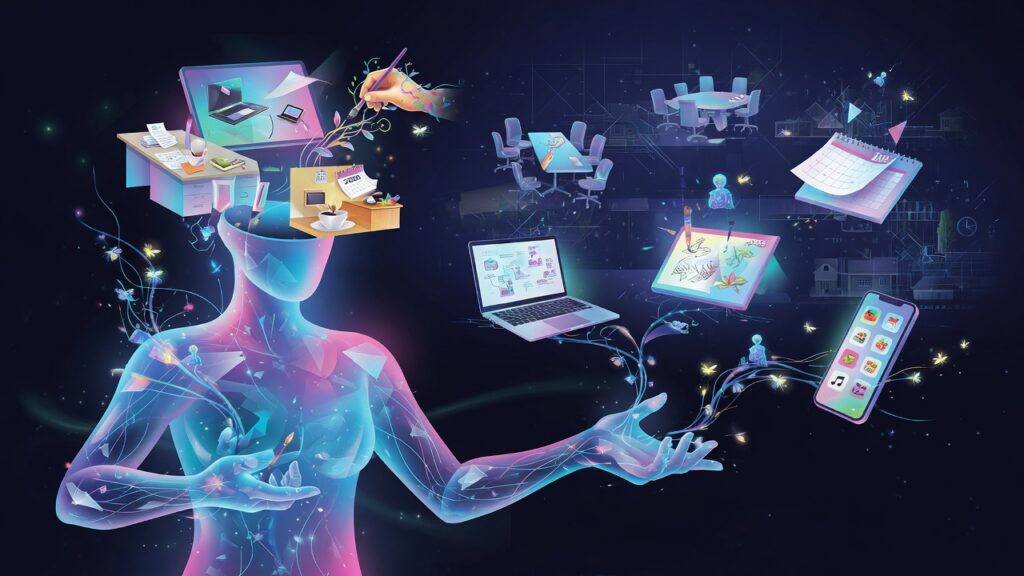
In boardrooms, design studios, and living rooms around the world, a quiet revolution is underway. AI agents—autonomous systems capable of reasoning, planning, and executing multi-step tasks—are moving from research labs into mainstream use. Unlike today’s chatbots that respond to single prompts, these agents can manage entire workflows, from booking complex travel itineraries to debugging codebases or orchestrating marketing campaigns.
From Assistants to Agents
The shift began with large language models that could hold coherent conversations. The next leap came when developers gave these models tools: calendars, browsers, code interpreters, and APIs. Suddenly, an AI could not only suggest a solution but also implement it. Early examples include research agents that synthesize papers and generate reports, or coding agents that turn a product brief into a working prototype.
What makes 2025 different is reliability. New techniques in planning, memory, and verification allow agents to maintain context across dozens of steps while catching their own mistakes. Companies are already reporting 30–50% reductions in time spent on repetitive knowledge work.
Real-World Impact Across Industries
- Software Development: Agents now handle routine pull requests, write tests, and refactor legacy code, freeing engineers to focus on architecture and innovation.
- Marketing & Content: One agent can research trends, draft campaigns, A/B test headlines, and schedule posts across platforms.
- Personal Productivity: Individuals are delegating travel planning, financial tracking, and even health research to personal agents that learn their preferences over time.
Challenges on the Horizon
With greater autonomy comes greater responsibility. Key questions remain around transparency, data privacy, and accountability when an agent makes a mistake. Leading labs are responding with “agent sandboxes,” audit logs, and human-in-the-loop controls. Regulation is also evolving, with several governments drafting frameworks that require clear disclosure when AI agents interact with humans or make decisions on their behalf.
What This Means for You
The most successful professionals won’t be those who resist AI, but those who learn to direct it. Prompt engineering is giving way to “agent orchestration”—the skill of defining goals, constraints, and success metrics so agents deliver maximum value.
As these systems mature, the line between human and machine collaboration will blur further. The winners in the coming decade will be those who treat AI agents not as magic buttons, but as tireless, intelligent teammates.
The future isn’t about replacing people—it’s about amplifying what people can achieve when they have an entire team of specialized agents working alongside them 24/7.