
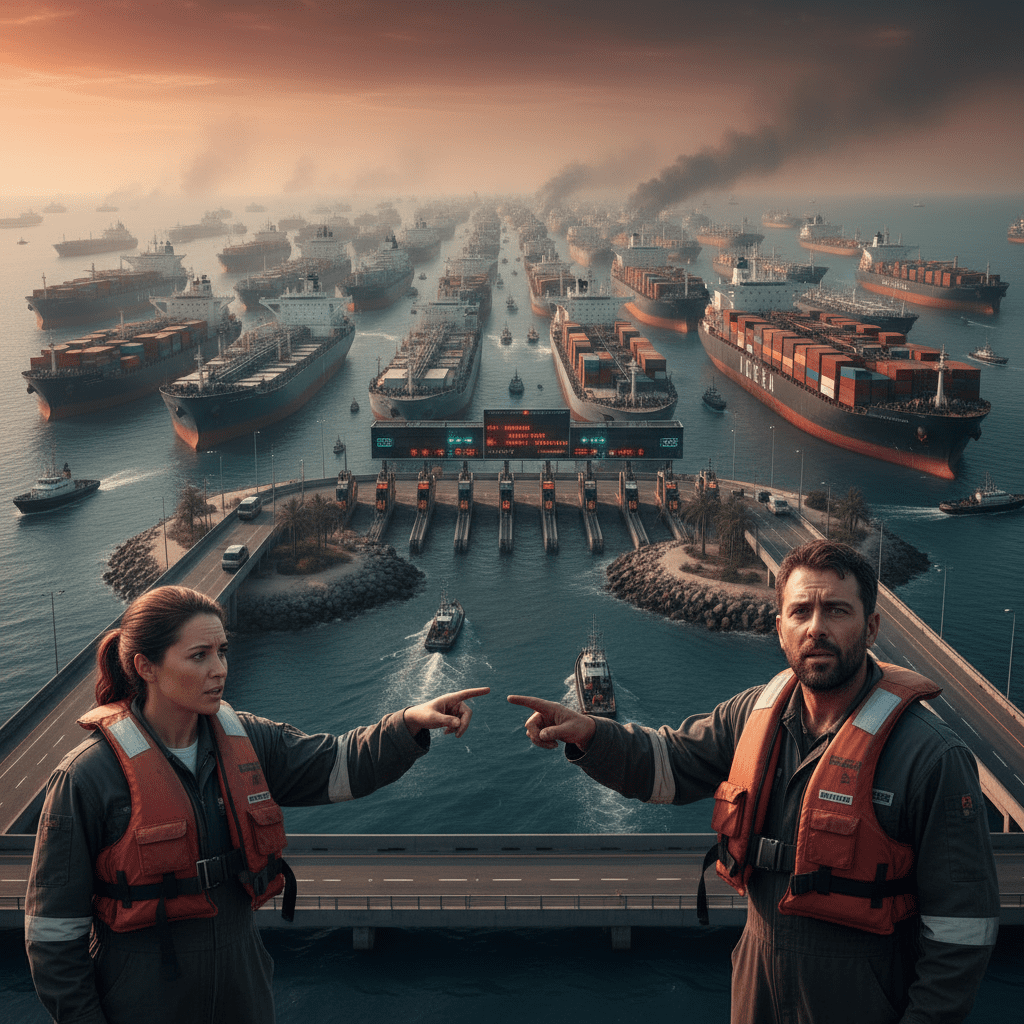
Imagine your morning commute, but instead of merging onto the interstate in a 2014 Honda Civic, you are captaining a 300-meter vessel carrying enough crude oil to power a small nation. Welcome to the world of Strait of Hormuz oil tanker tolls, a bureaucratic bottleneck that makes your local DMV look like a well-oiled machine.
The World’s Most Stressful EZ-Pass Lane
Global shipping is a marvel of modern logistics, right up until it hits a choke point that functions like a poorly managed municipal toll booth. During a ceasefire, you would think the waters would calm and the transit would be as smooth as a fresh software update. Instead, the administrative glitches pile up. The concept of charging fees in this environment is like getting hit with dynamic pricing just because the traffic lights are finally working.
Bureaucratic Glitches on the High Seas
If we treat this geopolitical flashpoint like a suburban toll plaza, the absurdity really shines through. Navigating these waters involves:
- Exact Change Only: Good luck finding an ATM in the Persian Gulf when the card reader inevitably goes down.
- The Ceasefire Convenience Fee: A totally logical surcharge applied simply because nobody is actively shooting at you today.
- System Updates: The geopolitical equivalent of the toll booth software restarting for a mandatory OS update right as you pull up to the boom gate.
Ultimately, navigating the administrative overhead of international shipping is an exercise in extreme patience. Whether you are dealing with broken office printers or multi-million dollar maritime invoices, the universal truth remains: the bureaucracy will always find a way to slow you down.