
There’s a special kind of dread that descends when a meteorologist points a large, menacing finger at a swirling purple blob on a weather map. It’s the same feeling you get watching a diplomat issue a “strongly worded condemnation.” In both scenarios, you know a lot of frantic, slightly absurd posturing is about to happen. The chaotic ballet of a government trying to manage a few inches of frozen water is, I submit, the perfect microcosm of international relations. The only difference is that one involves salt trucks and the other involves sanctions.
The Pre-Emptive Posturing
Long before the first flake falls, the grandstanding begins. The mayor holds a press conference, standing grimly before a fleet of pristine salt trucks, assuring the public that “we are prepared.” This is the municipal equivalent of a nation rolling tanks through its capital during a military parade. It’s pure deterrence theater. Meanwhile, citizens engage in their own strategic stockpiling, clearing grocery store shelves of milk, bread, and eggs as if preparing for a protracted siege. This bread-and-milk diplomacy is a clear signal to Old Man Winter: we will not be starved into submission.
The First Flake Offensive
When the first flakes finally arrive, the situation escalates. Local news channels deploy reporters to stand by empty highways, pointing at the ground and saying, “As you can see, it’s starting to stick.” This is the “monitoring the situation” phase of a global crisis. The first fender-bender on the overpass is the inciting incident, the shot heard ’round the cul-de-sac. Immediately, the Emergency Broadcast System kicks in with a list of school closings scrolling at a pace that suggests a far graver emergency. The non-aggression pact between commuters is officially dissolved.
Plow Alliances and Jurisdictional Disputes
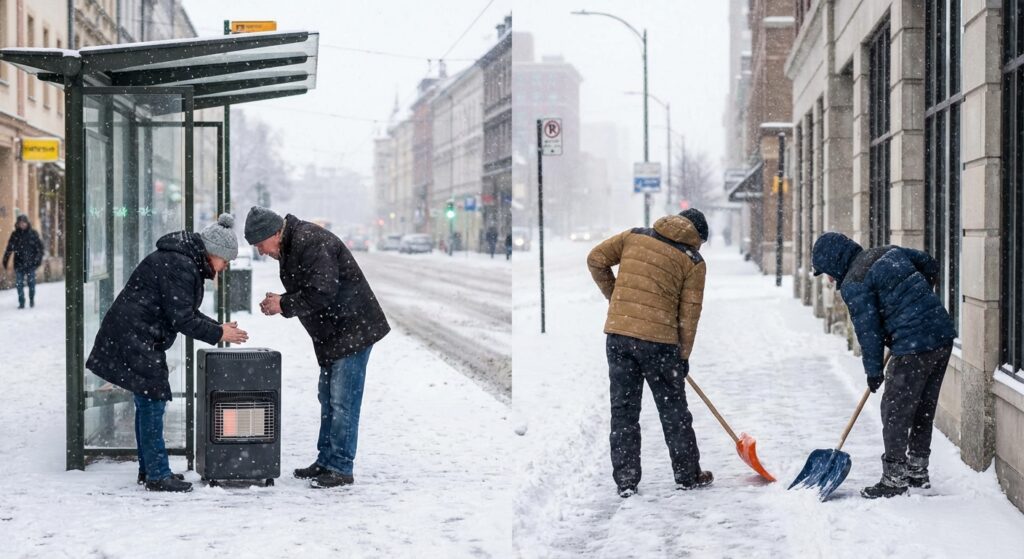
Now we enter the complex world of treaties and alliances. The massive state Department of Transportation plows clear the main arteries—the superpowers of the road network. But they will not, under any circumstances, venture into the sovereign territory of a residential side street. That’s a local issue. This leads to bitter jurisdictional disputes. You watch the city plow clear your neighbor’s road across the street, which is technically a different “zone,” while yours remains a pristine, unconquered tundra. Neighbors with snowblowers form their own ad-hoc coalitions, forging short-term alliances based on mutual interest and shared driveways.
The Great Thaw and Reconstruction
Eventually, a fragile peace is negotiated by the sun. The great thaw begins. But the conflict has left its scars. Giant, blackened snowbanks line the roads like grim war memorials. The armistice reveals a new enemy: potholes the size of small principalities. The post-storm era is all about rebuilding and remembering. We share war stories of “The Great Blizzard of ‘24” and silently judge those who still haven’t shoveled their sidewalks, a clear violation of societal treaties. We are weary, but we have survived, ready to do it all over again when the next purple blob appears on the horizon.