
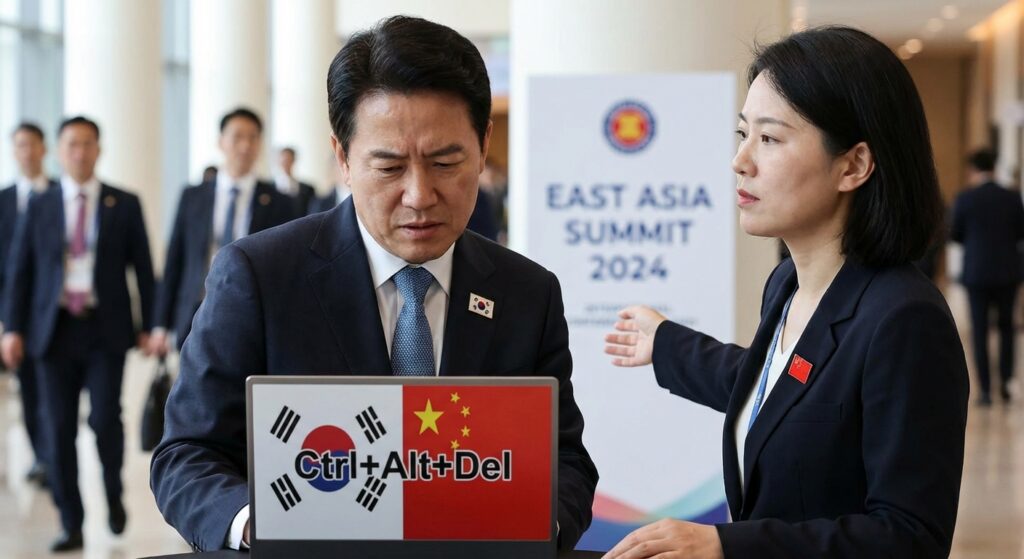
In the world of IT, there is one sacred, unimpeachable truth: when something acts up, you turn it off and on again. Your laptop freezes? Reboot. The Wi-Fi is sluggish? Unplug the router. It seems the grand strategists of international diplomacy have been taking notes from the help desk, because the latest trend is the ‘diplomatic reset,’ and South Korea and China are currently trying to find the power button. This isn’t just a meeting; it’s a full-system attempt to clear the cache on years of geopolitical lag.
The Ghost in the Machine: Why Reboot Now?
Every long-term relationship, be it with your college roommate or a neighboring superpower, accumulates a certain amount of digital detritus. For Seoul and Beijing, the system memory is clogged with lingering issues. Think of the THAAD missile defense system as that one piece of bloatware installed years ago that China insists is slowing everything down. Then there are the constant pop-up notifications from Washington, reminding Seoul about its security alliance updates. The result? A user experience filled with friction, error messages, and a whole lot of passive-aggressive dialogue boxes. The goal of this ‘south korea china relations reset’ is to get both systems talking to each other again without the dreaded spinning wheel of doom.
It’s Not a Factory Reset, It’s a ‘Strategic Refresh’
Let’s be clear: nobody is wiping the hard drive and starting from scratch. This is less of a dramatic breakup and more like a very serious couples therapy session mediated by translators and trade agreements. The agenda is packed with delicate operations:
- Defragging the Economy: They’re trying to reorganize their economic ties so they run more efficiently, without one partner hogging all the bandwidth.
- Updating Security Protocols: Both sides are trying to agree on a new antivirus policy that makes everyone feel secure without triggering alarms for the other’s friends (looking at you, Uncle Sam).
- Clearing the Cookies: The aim is to forget some of the more irritating parts of their recent browsing history and start with a clean slate, or at least a less targeted-ad version of their relationship.
The Inevitable ‘Patch’ Is Coming
The success of this diplomatic reboot won’t be measured in a single, triumphant handshake. It will be measured in the absence of glitches. Will trade flow more smoothly? Will the geopolitical operating system be more stable? Like any major software update, the initial reset is just the beginning. We can fully expect a series of smaller ‘patches’ and ‘hotfixes’ in the coming months. Because in diplomacy, as in technology, the moment you think you’ve fixed all the bugs, a new, even weirder one inevitably appears.