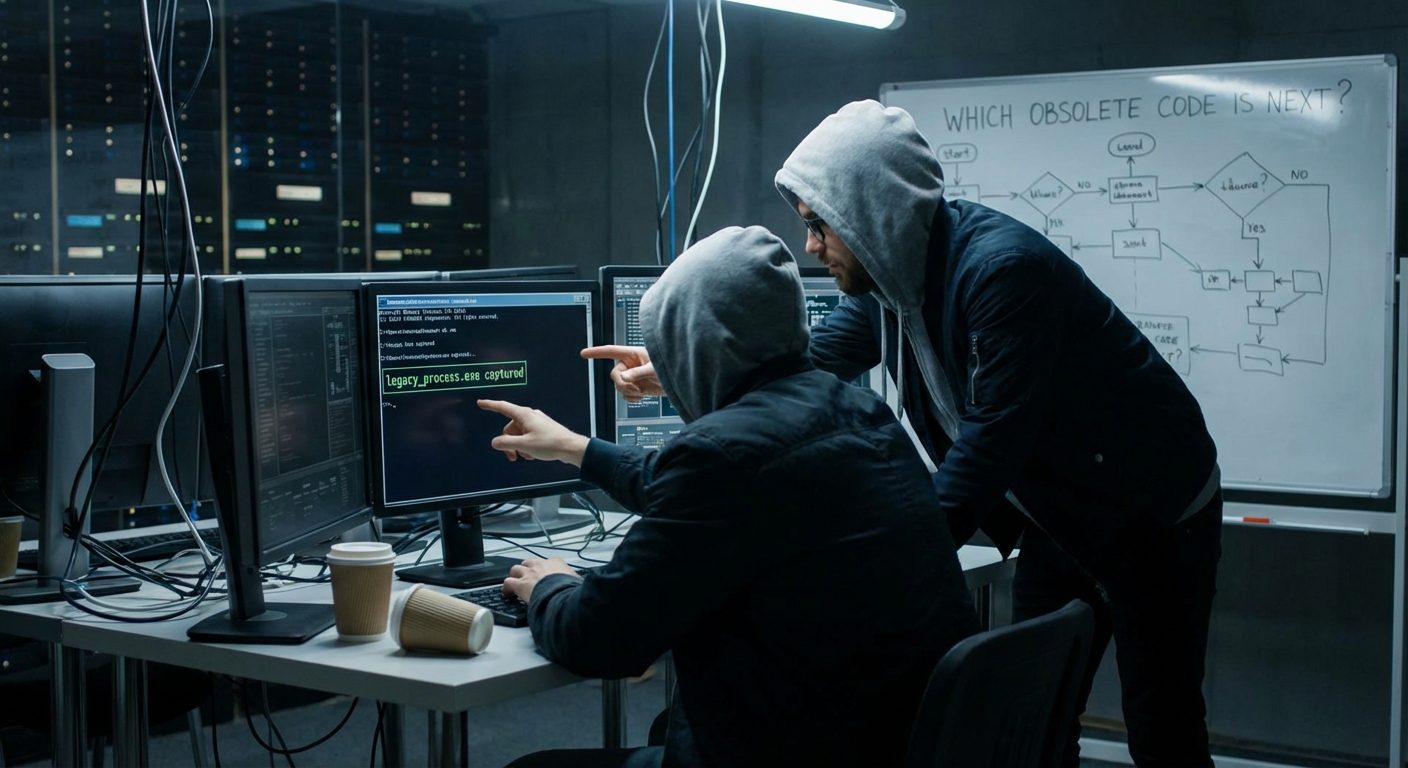
It was a Tuesday like any other, until the alert blared across every terminal in the Ops center. After years of evasive maneuvers, memory leaks, and inexplicable CPU spikes at 3:07 AM, the notorious `legacy_process.exe` had finally been cornered. The process, a holdover from the dial-up era, had been siphoning resources and causing random printer errors for two decades. The takedown was swift. A senior admin, armed with nothing but root access and a steely resolve, issued the `kill -9` command. The process didn’t stand a chance. It was a watershed moment for system stability, but it sent a chilling message through the silicon corridors of our server farm.
The Indictment
The digital rap sheet for `legacy_process.exe` was long and varied. Its crimes included, but were not limited to:
- Spawning thousands of zombie child processes that did nothing but consume PID numbers.
- Hoarding 4GB of RAM on a 32-bit system, a feat of pure, malicious inefficiency.
- Writing cryptic, indecipherable logs to a long-forgotten network share.
- Periodically attempting to connect to an IP address that now belongs to a smart toaster in Ohio.
Its capture was a victory for digital justice everywhere. But as the dust settled, a new question emerged: who’s next?
The Most Wanted List
With this new precedent, several other long-running fugitives are undoubtedly looking over their virtual shoulders. The sysadmin task force has made it clear they are cleaning house, and no line of deprecated code is safe. Here are the top targets:
- The Ancient Apache Server: Still running version 1.3, this server powers a single, forgotten internal webpage with a blinking “Under Construction” GIF. It’s a walking security vulnerability, a digital ghost ship waiting for its final port call.
- The Finance Department’s “Magic” Excel Sheet: A 97MB spreadsheet held together by a labyrinth of VBA macros written by an intern in 2004. No one knows how it works, but everyone is terrified to touch it. It’s the untouchable kingpin of technical debt.
- The Ghostly Cron Job: A simple script scheduled to run every night, it diligently compiles a report and emails it to an executive who retired during the Bush administration. It works flawlessly, a silent, pointless soldier in an army of the obsolete.
The message is clear: the age of accountability is here. In this new world order, not even the most deeply embedded, “we-don’t-know-what-it-does-but-we’re-afraid-to-turn-it-off” process is safe. Check your running tasks, folks. The cleanup has just begun.
Leave a Reply