
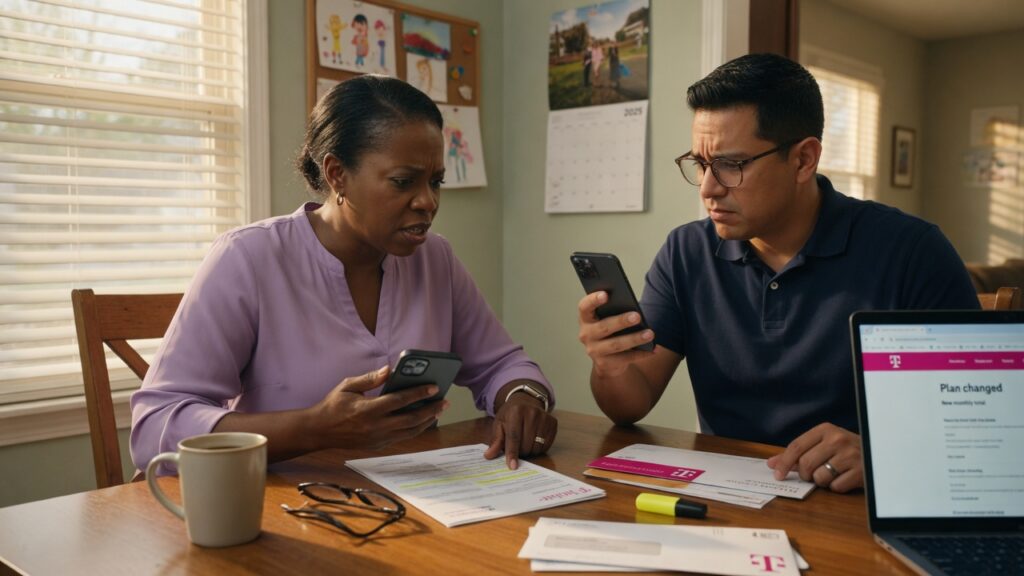
T-Mobile Forces Bill Hike on 8M Customers with Unwanted ‘Upgrade’
T-Mobile is facing widespread backlash after announcing changes that will automatically shift roughly 8 million customers to new rate plans, resulting in higher monthly bills for many. Marketed as an “upgrade” to newer unlimited options with added perks, the move has left users feeling blindsided by what amounts to a forced price increase.
The Details Behind the Switch
Starting in early 2025, T-Mobile began migrating customers from legacy plans like Magenta and older unlimited tiers to Essentials Saver or Go5G equivalents. While the carrier highlights benefits such as increased high-speed data allotments and bundled streaming credits, the reality for many is a $5 to $15 monthly hike per line. Affected users report seeing the changes reflected in their accounts without prior opt-in consent.
T-Mobile claims the transition improves network prioritization and introduces features like international roaming passes. However, critics note that these additions primarily benefit heavy travelers or power users, leaving average consumers paying more for services they rarely use.
Who Is Affected and Why It Feels Forced
The 8 million impacted customers largely include those on older postpaid plans who have not upgraded in recent years. T-Mobile’s automated system enrolls eligible lines unless users actively call to opt out—a process many describe as cumbersome and poorly communicated.
“I received an email saying my plan was ‘improved,’ but my bill jumped $12,” one Reddit user shared. “No one asked if I wanted this.” Similar stories have flooded social media, with hashtags like #TMobileHike trending as customers share screenshots of unexpected charges.
This approach differs from past voluntary migrations, where incentives like bill credits encouraged upgrades. Here, the lack of choice has fueled accusations of predatory practices in an already consolidated wireless market.
T-Mobile’s Official Stance
In a statement, T-Mobile defended the changes as necessary to simplify its offerings and align customers with its most advanced plans. “We’re investing billions in our network and want every customer to benefit from the latest technology,” a spokesperson said.
The company points to its price-lock guarantee for existing customers on certain plans, but notes that legacy unlimited options fall outside this protection. Analysts suggest the move could boost average revenue per user (ARPU) by 3-5% as T-Mobile seeks to offset slowing subscriber growth.
Customer Backlash and Social Media Storm
Online forums and review sites are filled with complaints. Trustpilot ratings for T-Mobile have dipped in recent weeks, with many citing the forced migration as the primary reason for dissatisfaction.
Consumer advocacy groups are urging the FCC to investigate whether the changes violate transparency rules. “Customers deserve clear opt-in options, not automatic upgrades that increase costs,” said a representative from the National Consumers League.
Some users have successfully reverted by contacting support, but others report being told the old plans are no longer available, pushing them toward competitors.
What Customers Can Do Now
- Review your account via the T-Mobile app or website for migration notices.
- Contact customer service to inquire about grandfathered options or retention offers.
- Compare plans from Verizon and AT&T, which have also raised prices but often with more transparent communication.
- Consider switching to prepaid or MVNO carriers like Mint Mobile for potential savings.
Experts recommend documenting all communications and monitoring bills closely over the next few billing cycles.
Broader Implications for the Telecom Industry
This episode highlights ongoing tensions in the wireless sector, where carriers balance network investments against customer retention. As 5G and future technologies demand capital, similar “upgrades” may become more common.
T-Mobile’s strategy could set a precedent, but it risks eroding trust in a market where loyalty is already low. With the DOJ scrutinizing telecom mergers, public perception matters more than ever.
In the end, the “upgrade nobody wants” underscores a key lesson: convenience for the carrier shouldn’t come at the expense of consumer choice. Customers are watching closely to see if T-Mobile adjusts course or doubles down on the changes.