
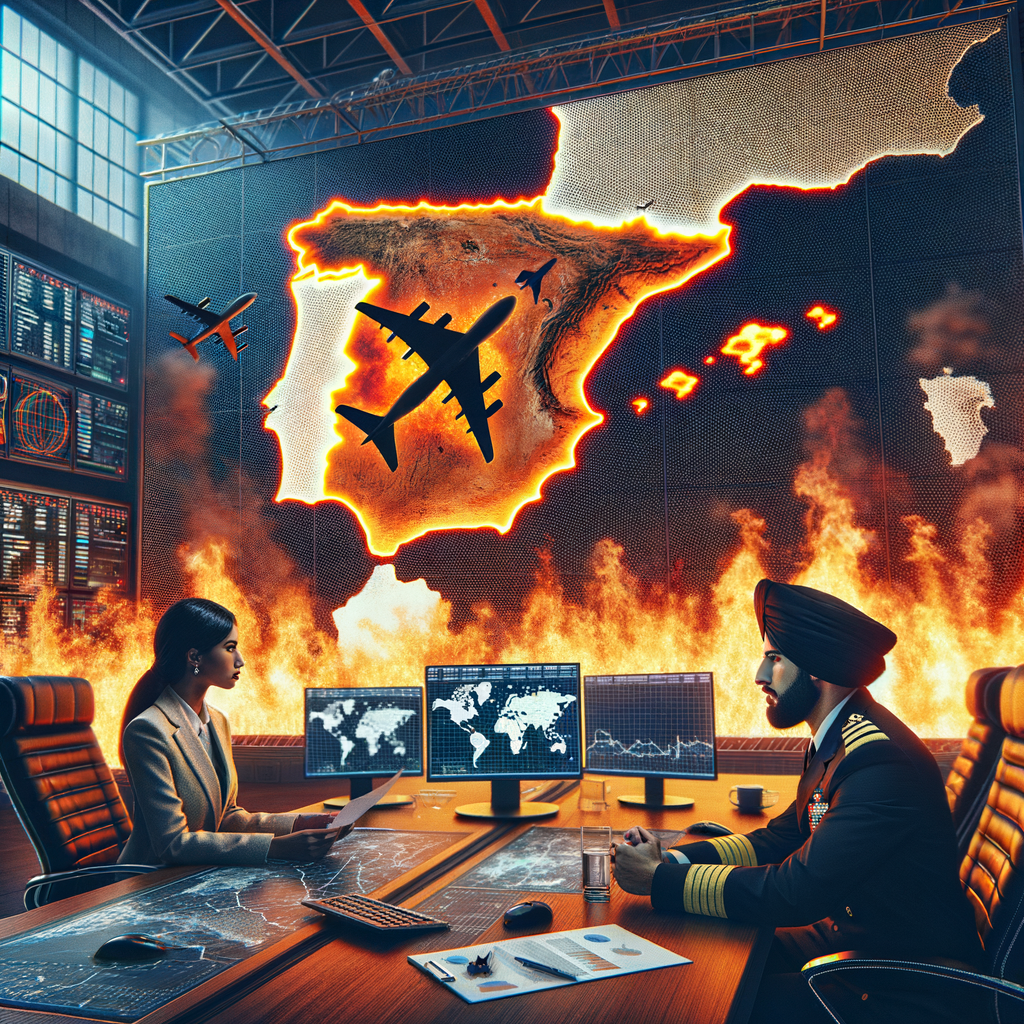
Picture this: it’s Monday morning, and you get a high-priority ticket. The request? Block all traffic from a specific source. Simple enough. You write a quick firewall rule, push it to production, and grab another coffee. Now, imagine you’re the network admin for the entire country of Spain, and the ‘traffic’ is every single aircraft originating from Israel. Suddenly, your simple deny rule involves air traffic controllers, international treaties, and a whole lot of jet fuel.
Spain’s recent decision to close its airspace to Israeli aircraft is, in essence, the world’s largest, most kinetic firewall rule. It’s geoblocking on a scale that makes your average WAF look like a flimsy screen door. The request was clear: DENY SRC_GEO=[Israel] DST_GEO=[Spain]. The protocol isn’t TCP/IP; it’s Air Travel. The response code isn’t a digital ‘403 Forbidden’; it’s a very real “you literally cannot fly here.”
Geoblocking Best Practices vs. Geopolitical Realities
As network and security professionals, we use geoblocking for very specific reasons. So how does this real-world, nation-state version stack up against our digital best practices?
- The ‘Why’: We implement Geo-IP blocks for security, to enforce content licensing, or for data sovereignty compliance like GDPR. Spain’s ‘why’ is a complex geopolitical stance. The change request wasn’t logged in Jira; it was announced in a press conference.
- The Enforcement: We rely on IP address databases and CDN edge nodes. Their enforcement stack includes radar, fighter jets, and strongly worded diplomatic letters. The penalties for a breach are slightly more severe than getting your IP blacklisted.
- The Workaround: Annoyed that you can’t watch your favorite show abroad? You fire up a VPN. The workaround for an airspace ban? You fly around. The ‘latency’ added isn’t a few extra milliseconds; it’s hours of flight time and thousands of dollars in fuel. It’s the ultimate, most expensive ‘rerouting’ imaginable.
When Packets Have Passengers
This whole situation is a hilarious, if slightly terrifying, reminder that the systems we design in the digital world are often just abstractions of real-world concepts of borders, access, and control. We talk about ‘packet loss,’ but here, a ‘dropped packet’ involves a multi-ton aircraft with hundreds of people needing a new flight plan. It highlights the ultimate network security best practice: always, always consider the impact of the rule you’re implementing.
So the next time you’re frustrated with a finicky firewall or a misconfigured access control list, take a deep breath. At least you’re not troubleshooting a policy that affects international aviation. And you can probably fix it without causing a diplomatic incident.