
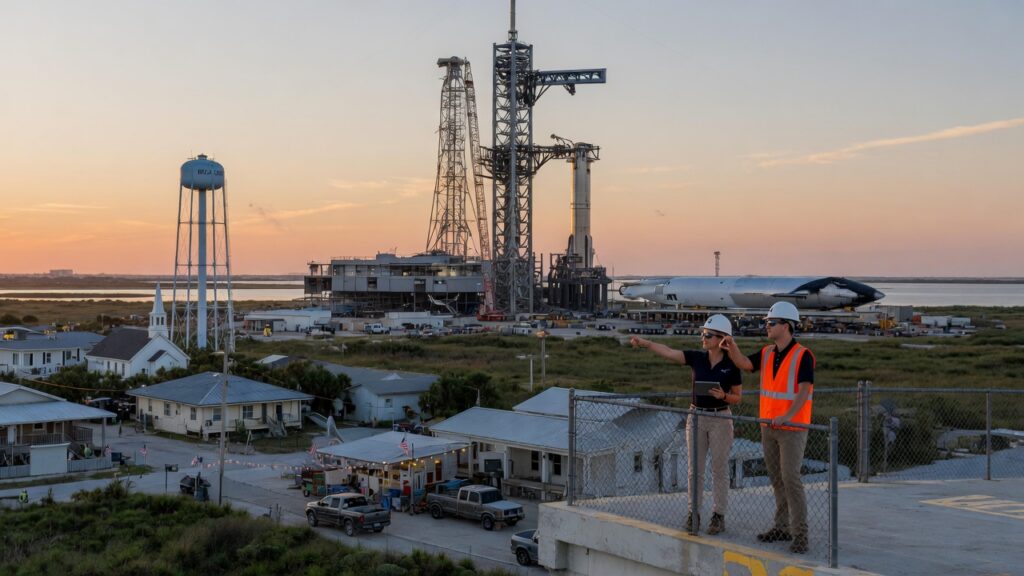
When a $100 billion SpaceX Louisiana launch facility drops into a quiet bayou town, the comedy writes itself: imagine upgrading your local Wi-Fi router while someone installs the universe’s biggest rocket pad next door. The project promises orbital glory but collides with real-world construction headaches like swampy soil, power grid strains, and the eternal small-town question of whether the new traffic lights can handle rocket traffic.
Connecting Massive Private Budgets To Louisiana Life
SpaceX’s eye-watering investment turns sleepy parishes into high-stakes construction zones, where residents trade crawfish boils for conversations about reinforced launch pads. The humor lies in the mismatch—grand plans for the biggest launch site on Earth run into the same delays that plague any local road project, only with far more zeros attached.
IT Infrastructure Demands Of A Mega Launch Site
Beyond concrete and steel, the facility requires serious tech backbone: massive data centers for real-time telemetry, cloud platforms to simulate launches, and cybersecurity protocols to protect proprietary rocket software from prying eyes. Local utilities will face data-center-level power loads, forcing upgrades that echo the challenges of building hyperscale facilities in unexpected places.
Software, Networks, And Cybersecurity Challenges
Launch control systems demand ultra-low-latency networks and redundant cloud backups, while the entire operation must guard against sophisticated cyber threats targeting space infrastructure. It’s like running a global SaaS platform, except the downtime could send hardware into the Gulf instead of just frustrating users.
Policy Implications And Real-World Impact
This project highlights how private space ambitions reshape local tech policy, from zoning for sensitive IT equipment to workforce training in aerospace software skills. The outcome could boost regional data infrastructure but risks leaving small towns managing giant tech footprints without matching expertise.