
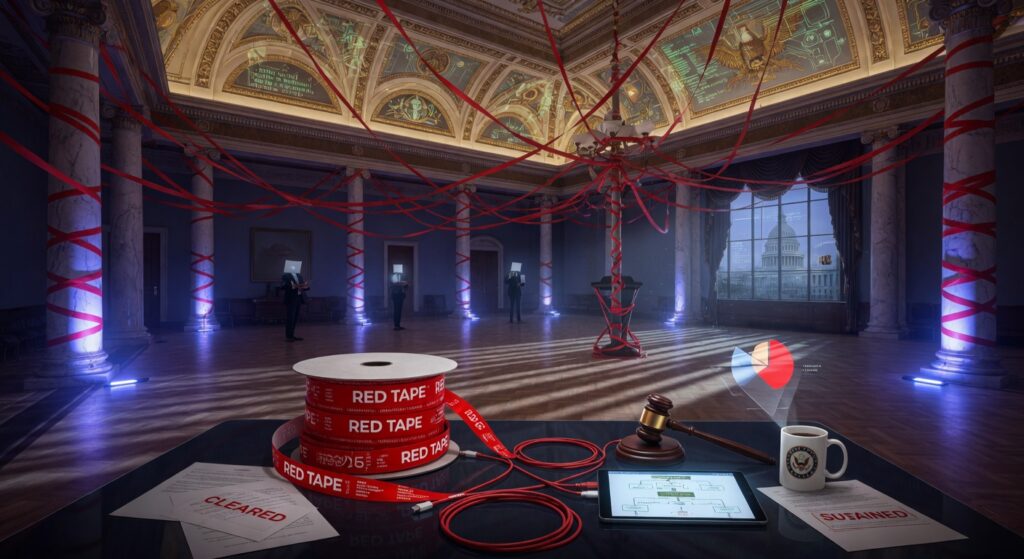
Picture this: a grand ballroom in the heart of Washington, D.C., decked out with chandeliers sparkling like forgotten dreams, security teams poised for action, and suddenly a single referee-like figure steps in with a whistle, halting millions in funding over some dusty procedural rule. That’s the essence of the senate parliamentarian ballroom funding ruling, a quirky congressional twist that turns billion-dollar decisions into a game of bureaucratic hopscotch. As someone who’s spent years dodging similar red tape in corporate IT departments, I can’t help but chuckle at how these hidden referees pop up everywhere, turning what should be straightforward upgrades into epic sagas of paperwork and sighs. In this post, we’ll unpack the senate parliamentarian ballroom funding ruling, connect it to relatable office struggles, and share practical tips drawn from real-life anecdotes to help you spot and sidestep those invisible barriers in your own world.
Breaking Down the Senate Parliamentarian Ballroom Funding Ruling
Let’s start with the core drama of the senate parliamentarian ballroom funding ruling. Imagine the Senate floor as a massive conference room where everyone agrees on the need for enhanced security at a high-profile event, complete with fancy decor and protective measures. Yet one unelected official, acting as the ultimate rule-keeper, flags a loophole in budget reconciliation that nixes the funds faster than you can say “budget approval.” It’s like when your office IT team requests new servers for a team event space only to have the compliance officer cite an outdated policy about “non-essential enhancements.” The ruling highlights how procedural quirks can override common sense, leaving planners scrambling for alternatives like reallocating from other line items or hosting virtual equivalents. In my own experience at a mid-sized tech firm, a similar “referee” moment happened when we tried funding a secure client demo room; a single memo about legacy firewall rules delayed everything by weeks, teaching me to always map out rule loopholes early.
How Obscure Congressional Loopholes Echo Office Bureaucracy
Those obscure congressional loopholes in the senate parliamentarian ballroom funding ruling aren’t just D.C. drama—they’re mirrors of the everyday glitches we face in cubicle land. Think about it: just as a parliamentarian can block security funds over a technicality in Senate procedures, your company’s procurement system might reject a simple software license because it doesn’t match a 20-year-old vendor code. To navigate this, start by documenting every potential rule before pitching ideas. Step one: review past approvals for patterns. Step two: build a quick flowchart of decision-makers. In one short story from my buddy’s logistics company, they lost funding for a warehouse security upgrade due to a misfiled form category, much like the ballroom case, but recovered by appealing with cross-referenced precedents, saving the project and their sanity.
Relatable IT Struggles with Hidden Decision Referees
Ever had a project derailed by an unseen approver who emerges like a phantom from the org chart? The senate parliamentarian ballroom funding ruling exemplifies this perfectly, where one person’s interpretation halts progress on what seems like a no-brainer security enhancement. In real life, this plays out when your team wants to add extra locks to the server room for an upcoming all-hands meeting, only for facilities to invoke an energy conservation clause. Practical tip: schedule pre-meetings with potential referees to align on interpretations. My personal anecdote involves a data center expansion where an overlooked policy on “aesthetic modifications” (yes, for servers!) added months of delays; we turned it around by framing the request as compliance with safety standards, complete with photos and metrics, proving that storytelling beats bureaucracy every time.
Practical Tips to Dodge Red Tape in Big Decisions
Turning the lessons from the senate parliamentarian ballroom funding ruling into actionable advice, here’s a step-by-step guide for handling similar hurdles at work. First, identify your internal parliamentarian by listing all stakeholders and their veto powers. Second, prepare contingency plans, like splitting requests into smaller, rule-compliant chunks. Third, use data visuals to make your case irresistible. For example, in a nonprofit I consulted with, a ballroom-style gala security budget got tangled in donor reporting rules, but they succeeded by breaking it into phased implementations with clear ROI stories. Always test small pilots first to build momentum and avoid the full nixing effect.
Storytelling Examples from Everyday Bureaucratic Glitches
Let’s dive deeper with a vivid scene: you’re in a fluorescent-lit office kitchen, coffee in hand, pitching a secure event space upgrade to your boss when suddenly the finance lead appears with a binder of regulations thicker than a phone book. This mirrors the senate parliamentarian ballroom funding ruling where security funds vanished over procedural fine print. Extended anecdote time—back in my startup days, we aimed to fund a team-building ballroom rental with basic security add-ons, but an HR policy on “extracurricular spending” killed it outright. We pivoted to an in-house virtual event, learned to embed security in core budgets, and even shared the tale in onboarding to warn new hires about spotting loopholes early.
Step-by-Step Advice for Navigating Rule Loopholes
Armed with insights from the senate parliamentarian ballroom funding ruling, follow this checklist for smoother sailing. Step 1: Audit your processes quarterly for hidden rules. Step 2: Collaborate cross-departmentally to preempt objections. Step 3: Leverage humor in presentations to humanize the ask, like joking about “referee whistles” to lighten the mood. A real-life tip that worked wonders in my network admin role: create a shared wiki of past rulings and workarounds, turning potential disasters into team knowledge bases. This approach not only resolves immediate issues but builds resilience against future bureaucratic curveballs.
Key Takeaways and Your Next Steps in Beating the System
Wrapping up our journey through the senate parliamentarian ballroom funding ruling and its bureaucratic parallels, remember that these hidden referees add comedy and chaos to even the grandest plans, but with proactive mapping and relatable storytelling, you can turn red tape into opportunities. Key takeaways include always questioning the “why” behind rules, documenting anecdotes for future pitches, and fostering a culture where glitches become shared laughs rather than roadblocks. Call to action: audit one process in your office this week and share your findings with a colleague—together, we’ll keep the ballrooms (and budgets) secure and flowing smoothly.
Related Search Terms Readers Might Enjoy
- congressional budget loopholes explained
- office bureaucracy survival tips
- how parliamentarian rulings affect funding
- navigating workplace red tape humorously
- IT project approval horror stories