
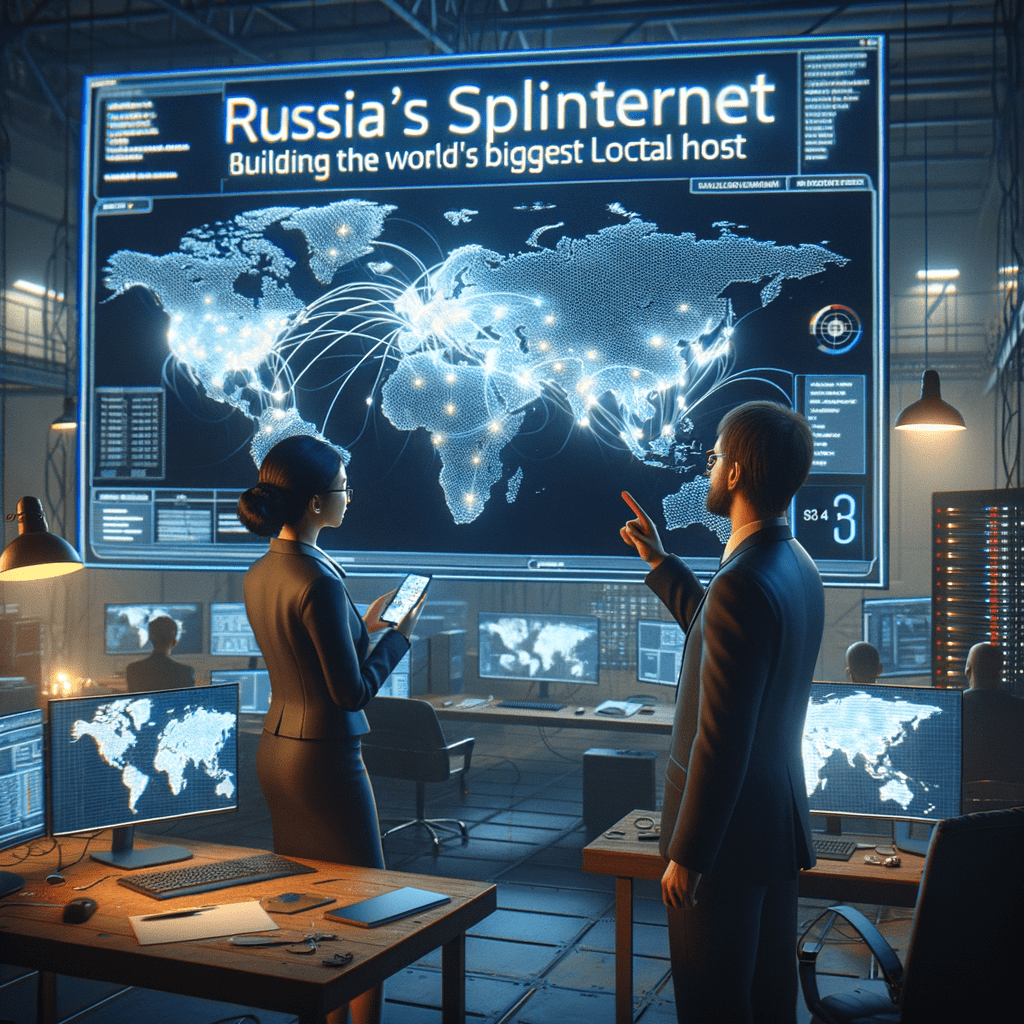
Have you ever gotten so frustrated with a group chat that you just wanted to mute it, leave, and start your own, more exclusive chat with only your approved friends? Well, Russia is doing the geopolitical version of that with the entire internet. They’re trying to unplug from the global web and create their own isolated network, a project known as the ‘sovereign internet’ or RuNet. It’s a move that effectively turns a whole country into the world’s biggest, most complicated localhost.
So, How Do You Unplug an Entire Country?
You can’t just find the country’s router and pull the plug—though the image is hilarious. The internet is a decentralized web of cables, servers, and protocols. Russia’s plan is to seize control of all the digital on-ramps and off-ramps within its borders. Think of it as a nationwide firewall managed by a very strict bouncer. The government is creating its own Domain Name System (DNS), which is basically the internet’s phonebook. Instead of connecting you to Google.com, their DNS might just shrug and say, “Never heard of it. Have you tried Yandex? It’s lovely this time of year.” The goal is for Russian internet traffic to stay *inside* Russia, creating a digital bubble.
The Russia Internet Blackout Impact: What Actually Happens?
So, what’s the impact of this massive internet blackout experiment? It’s less of a ‘blackout’ and more of a ‘weird, state-sponsored content swap.’ The effects are pretty significant, both inside and outside the digital walls.
- For Russian Citizens: Access to global platforms like Instagram, Facebook, and many news sites could vanish. Instead, they’ll be gently nudged toward state-approved domestic alternatives. It’s like your cable package suddenly dropping every channel except for the local public access station and a state-run shopping network.
- For Global Companies: Doing business in Russia becomes a technical nightmare. Your company’s cloud services, software updates, and communication platforms might suddenly hit a digital brick wall. The IT support ticket would be a classic: “Cannot connect to Moscow office. Suspect entire country is firewalled.”
- For the Internet Itself: This contributes to the ‘Splinternet’—a world where the web is fractured into several national or regional internets. It’s the end of the global village and the beginning of several, disconnected digital cul-de-sacs.
Have You Tried Turning It Off and On Again?
The sheer technical absurdity of this project is where the real comedy lies. Imagine the meetings. Imagine the memos. This isn’t just a simple network configuration; it’s a bureaucratic and logistical marathon. Tests of the system have reportedly caused massive outages and disruptions, which is the national equivalent of your dad ‘fixing’ the Wi-Fi and accidentally cutting off everyone’s connection. The attempt to replicate the entire global internet—from search engines to social media to encyclopedias—is a monumental task prone to bugs, 404 errors, and the kind of user interface design that only a committee could love. At the end of the day, Russia’s Splinternet is a fascinating, if worrying, case study in what happens when geopolitics meets IT support on an unbelievable scale.