
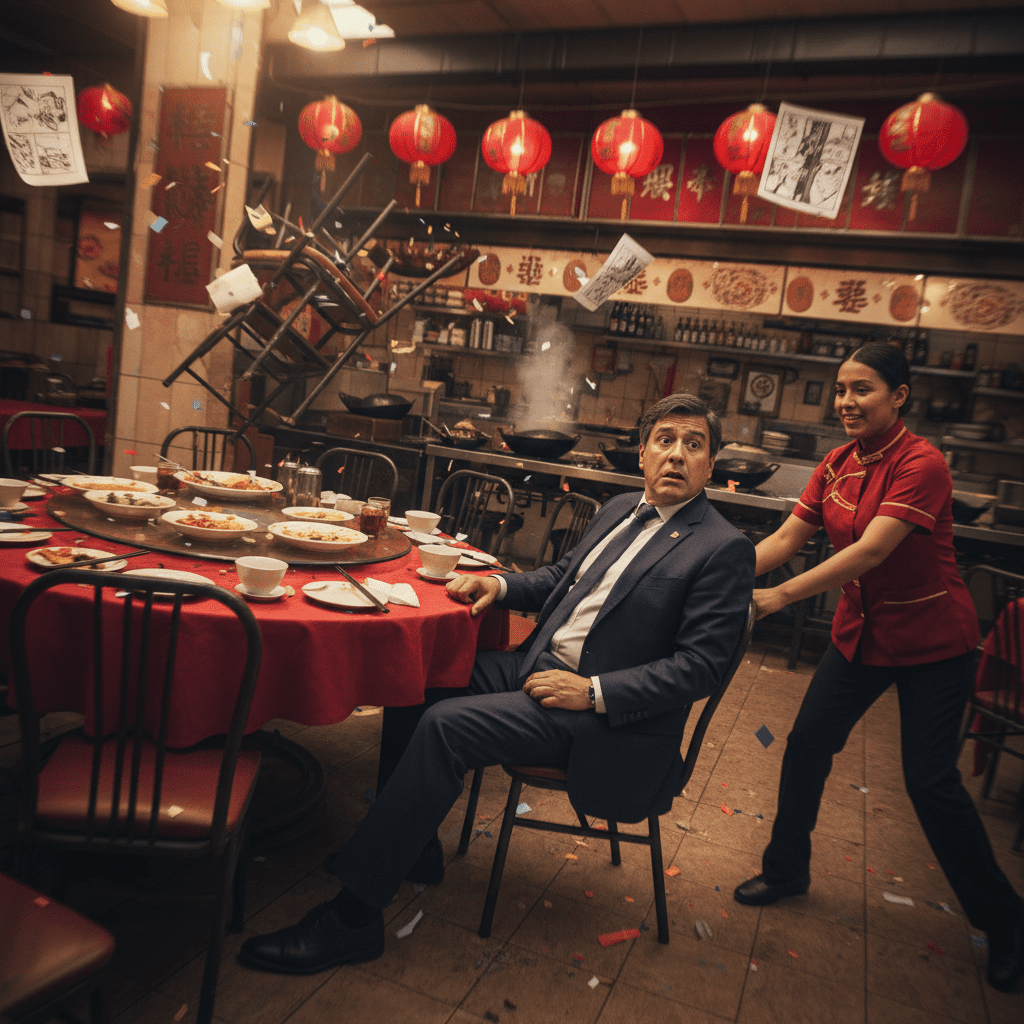
Some countries have stable political systems. Others seem to be running on a server that requires a hard reboot every 18 months. Peru, bless its heart, has turned the presidential reboot into an Olympic sport. The latest system crash, charmingly dubbed ‘Chifa-gate,’ is a masterclass in how complex political machinery can be short-circuited by something as wonderfully mundane as a meeting over Chinese food.
The System’s Dubious Error Log
First, a quick definition for the uninitiated: ‘Chifa’ is the glorious fusion of Peruvian and Chinese cuisine. It’s delicious, ubiquitous, and apparently, the backdrop for political intrigue. The scandal revolved around then-President Martín Vizcarra, who was accused of obstruction of justice related to government contracts awarded to a little-known singer. The damning evidence? Leaked audio recordings of Vizcarra and his aides planning their story, allegedly over a meal or two. It’s the political equivalent of your IT department discovering the root cause of a network failure was someone tripping over the power cord in the server room. The problem is serious, but the cause is almost comically simple.
A Feature, Not a Bug
For outsiders, a president getting impeached over a food-related scandal sounds bizarre. For Peruvians, it’s just Tuesday. The country’s political OS has a built-in feature called ‘presidential vacancy due to moral incapacity,’ a constitutional clause so vague it can be triggered by anything from a corruption scandal to looking at Congress the wrong way. This has led to a spectacular game of musical chairs in the presidential palace. Let’s review the recent patch history:
- Pedro Pablo Kuczynski: Resigned in 2018 to avoid impeachment.
- Martín Vizcarra: Impeached in 2020 (that’s our Chifa-gate guy).
- Manuel Merino: Lasted five days before resigning amid massive protests.
- Francisco Sagasti: Served as a caretaker president to finish the term.
- Pedro Castillo: Impeached and arrested in 2022 after trying to dissolve Congress.
This isn’t a string of bad luck; it’s a systemic feedback loop. A fragmented congress, deep-seated corruption, and this constitutional eject button create a state of perpetual instability. It’s like running legacy code from the 90s on modern hardware—you’re just waiting for the next blue screen of death. Chifa-gate wasn’t the root cause of the crash; it was just the final, oddly specific command that executed the program.