
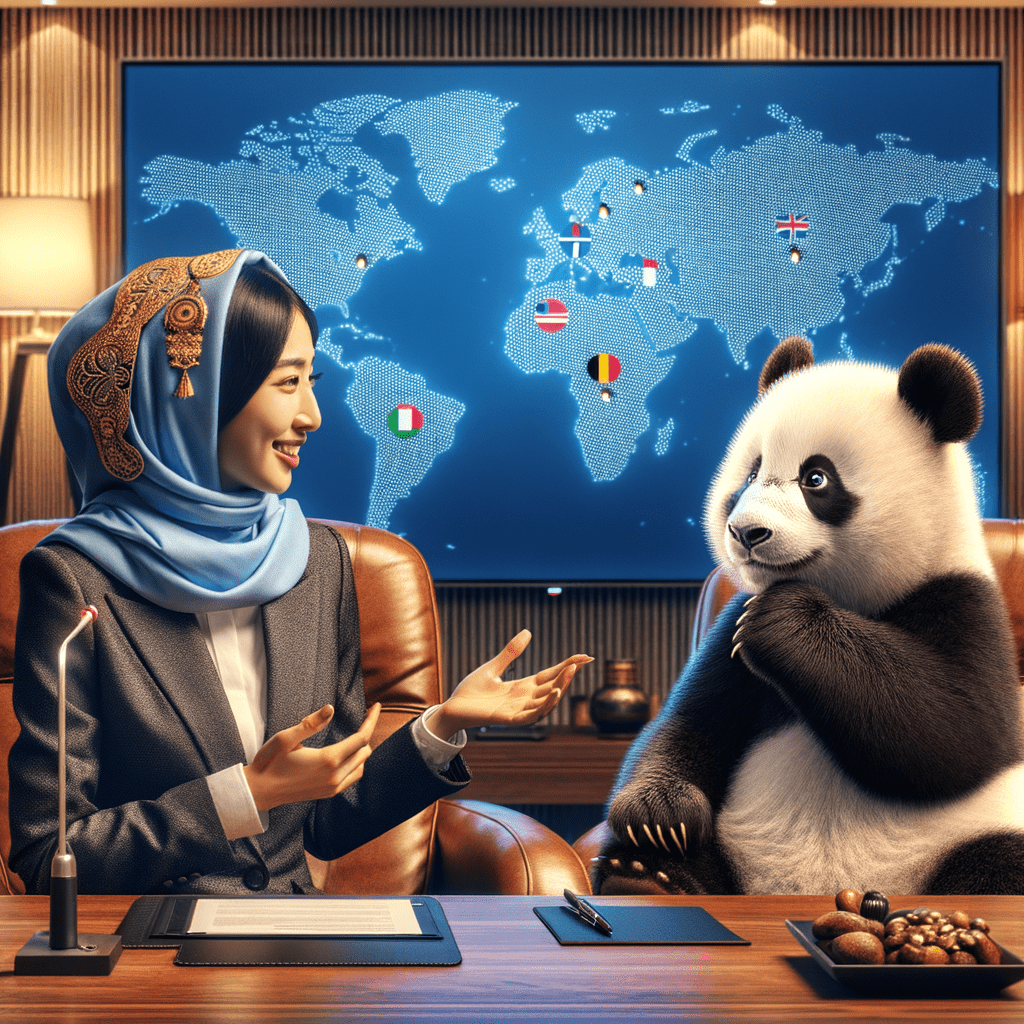
In the high-stakes world of international relations, you’d expect negotiations to be dominated by stern-faced diplomats in drab suits, poring over trade agreements and security pacts. But what if I told you one of the most effective diplomatic tools was a 250-pound, perpetually sleepy mammal with a penchant for bamboo? Welcome to the wonderful, slightly absurd world of Panda Diplomacy, where global politics gets a whole lot cuter.
The Ultimate Subscription Service
So, what exactly is this furry foreign policy? At its core, ‘panda diplomacy’ is China’s practice of sending giant pandas to other nations as diplomatic gifts. It’s the ultimate goodwill gesture, a living, breathing symbol of friendship. Think of it as the world’s most exclusive subscription box. You don’t actually *own* the panda; you lease it for a cool million dollars a year per bear. And yes, any cubs born on your soil are still considered Chinese citizens, subject to return. The paperwork must be a nightmare. Can you imagine the line items? ‘Bamboo Consumables: Market Price.’ ‘Enrichment Toy Depreciation.’ ‘Existential Napping Surcharge.’ It’s a masterclass in soft power, disarming potential adversaries with overwhelming cuteness.
A Tale of Two Nations: Panda Diplomacy China Japan Relations
Nowhere is this dynamic more visible than in the complex history of panda diplomacy China Japan relations. The relationship between these two powers can be, to put it mildly, a bit tense. But pandas have often served as a fluffy, black-and-white barometer of their political climate.
- The Honeymoon Phase: In 1972, to celebrate the normalization of diplomatic ties, China gifted Japan two pandas, Kang Kang and Lan Lan. The Japanese public went absolutely wild. It was less a diplomatic exchange and more like the arrival of rock royalty. This single act generated immense public goodwill, achieving more than a thousand speeches ever could.
- The Cooling Off: Fast forward a few decades. When political tensions flare up over territorial disputes or historical grievances, the panda pipeline can suddenly develop ‘logistical issues.’ The planned arrival of a new panda might be delayed, or a beloved bear’s loan agreement might not be renewed. The departure of Xiang Xiang from Tokyo’s Ueno Zoo in 2023 was treated like a national tragedy, a subtle but powerful reminder that the friendship, like the panda’s stay, is conditional.
These adorable ambassadors become powerful pawns. Their presence signals warmth and cooperation, while their absence can feel like a diplomatic cold shoulder. It’s a brilliant strategy; no one wants to be the politician responsible for getting the pandas taken away.
Why Does It Work? The Unassailable Logic of Cuteness
The genius of panda diplomacy is that it operates on an emotional, human level. A panda cannot make a controversial statement at a press conference. It cannot be caught in a scandal (unless you count ‘eating too much bamboo’ as scandalous). It is a politically neutral vessel of pure, unadulterated charm. By loaning out these national treasures, China projects an image of itself as a gentle, benevolent partner, even while engaging in hard-nosed geopolitics behind the scenes.
So the next time you see a viral video of a panda sneezing or tumbling clumsily down a slide, remember what you’re really watching. It’s not just an adorable animal; it’s a masterclass in international strategy, a furry instrument of foreign policy, and a walking, bamboo-munching symbol of how global power really works. The world stage is a chess board, and China is playing with the cutest pieces.