Blog

  • Floods in Washington: When Mother Nature Unfriends You

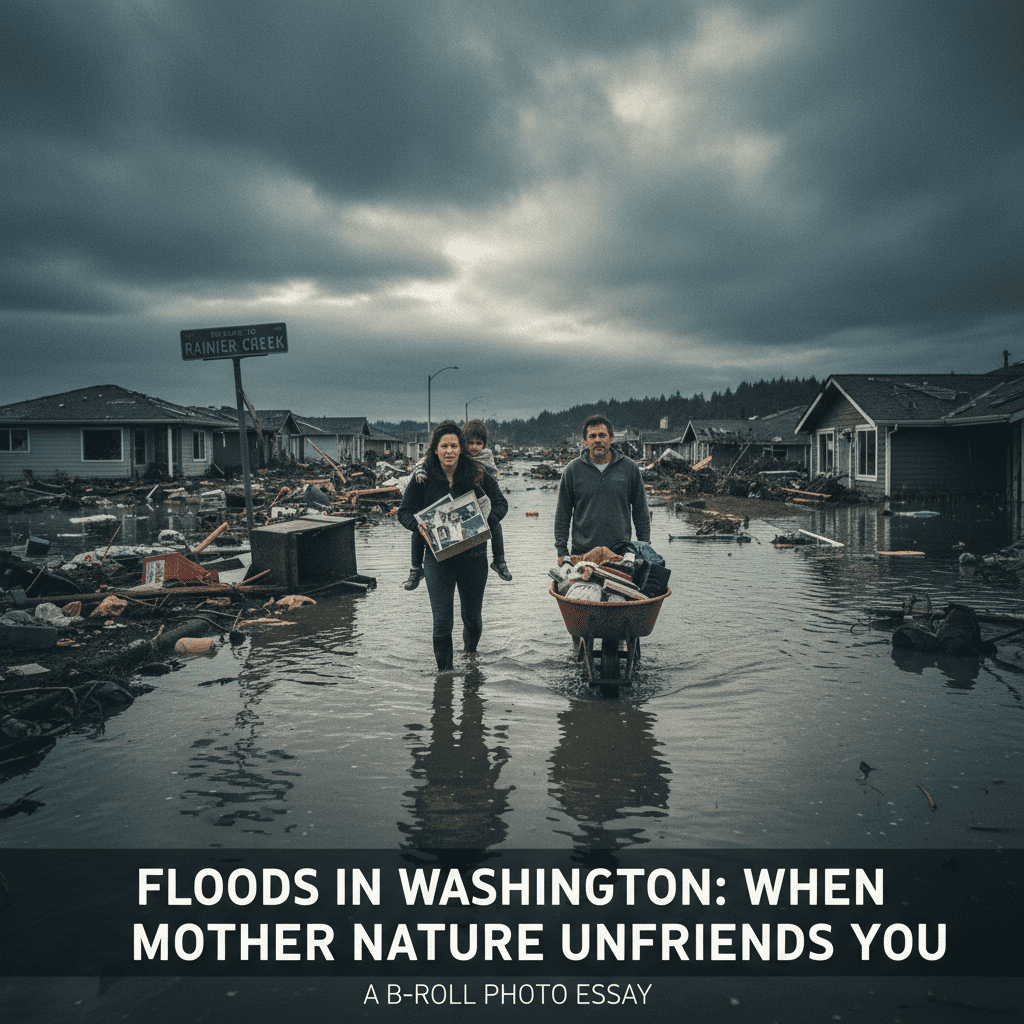
    Floods in Washington: When Mother Nature Unfriends You

    It seems like Mother Nature has swiped left on Washington State, and trust me, it’s not because of your profile picture. Like a relationship headed for trouble, the signs were there, but the historic flooding has us hitting ‘It’s complicated’ on our relationship status with the environment.

    Understanding the Breakup

    Just as in any rocky relationship, communication is key. When it comes to historic flooding in Washington, the state got more than just a few ominous unread texts. Rivers swelled up like blocked WhatsApp messages, and streets turned into rivers quicker than a ghosted lover can block you on Instagram.

    The Blame Game

    Of course, in the aftermath of any breakup, there’s the inevitable blame game. Was it the unchecked urban development, or perhaps the relentless climate change ghosting us with silent treatment until it all boils over? Either way, it’s not just you, Washington; it’s us, Homo sapiens, who might need to reconsider our relationship goals with Mother Nature.

    Getting Back Together?

    They say communication is key, so maybe it’s time for some serious heart-to-heart talks with urban planners and environmental policies. Can this relationship be saved? Washington hopes with enough carbon cutting and green policies, we might just get a ‘second chance’ notification from the environment.

    But until then, strap on your rain boots and remember—when it comes down to it, we’re all just trying to avoid being ghosted by Mother Nature herself. Better to remain ‘just friends’ than ‘blocked and forgotten’!
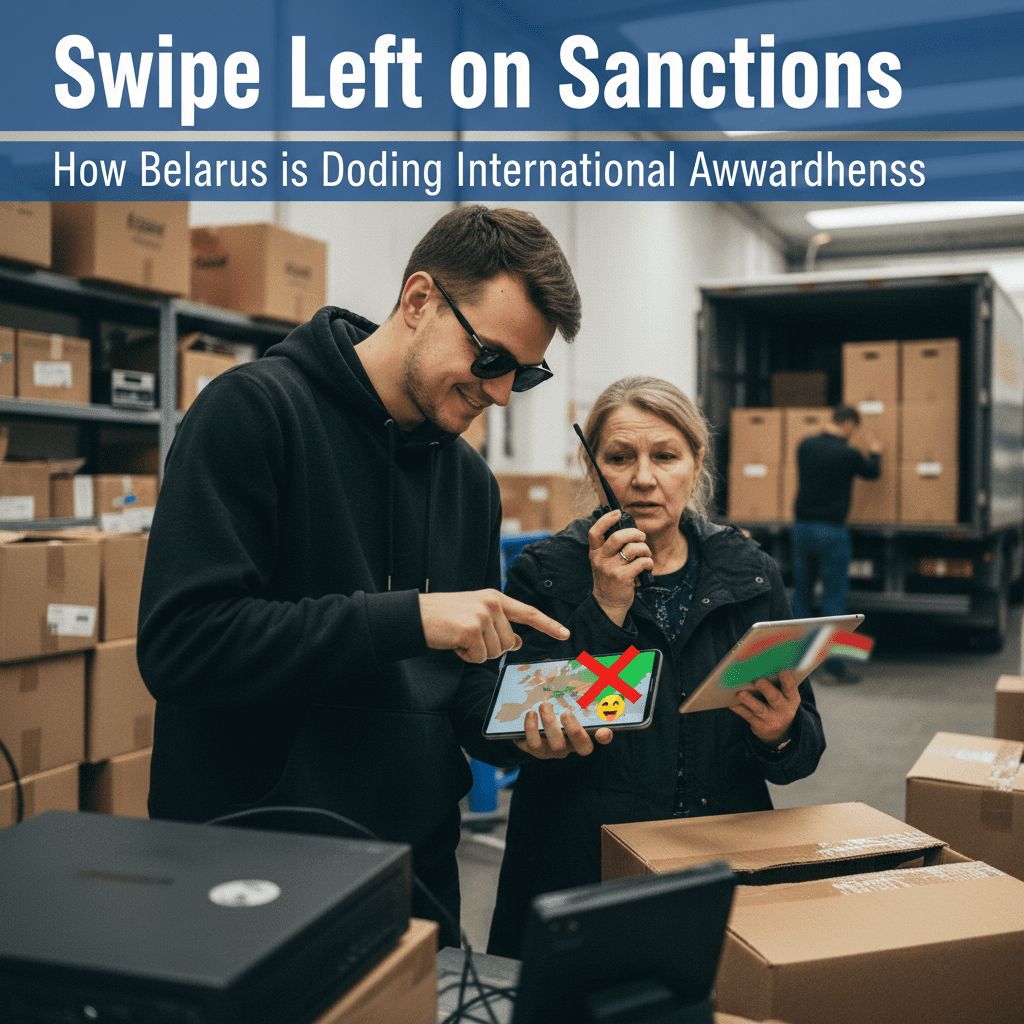

  • Swipe Left on Sanctions: How Belarus is Dodging International Awkwardness

    Swipe Left on Sanctions: How Belarus is Dodging International Awkwardness

    Imagine checking your phone to see that awkward text from someone you’d rather not deal with—maybe it’s an old friend asking for money, or perhaps the dreaded ex. Now, multiply that by about a hundred million, and welcome to the world of international diplomacy a la Belarus. Avoiding these texts? Pure art form. Responding to them? Well, that’s where things get dicey.

    The Art of Ghosting… Diplomatically

    In a move that could make any Tinder veteran feel like a novice, Belarus has been trying to navigate the rocky seas of international sanctions related to prisoner releases. You know, just the usual ‘slap-on-the-wrist’ followed by ‘let’s-make-a-deal’ that global politics loves to play. Imagine dodging your landlord because you’re late on rent, but instead, it’s other countries tapping on your door about human rights.

    Read The Room

    How does Belarus respond, you ask? Well, it’s a bit like reading the room and then realizing maybe it’s better to just blend into the wallpaper. When you’ve got the European Union, the United States, and others queueing up like eager contestants on ‘Who Wants to Be a Sanctionaire?’, the typical response involves a lot of diplomatic muttering and strategic ignoring. It’s the international equivalent of ‘Oh, I never saw your text!’.

    ‘Sorry, New Phone Who Dis?’

    But it’s not all ghosting and avoiding. Every now and then, Belarus throws a bone, like a cat bringing back that one sock it stole, showing just enough cooperation to keep things interesting. The promise of prisoner release is like sending, “Sorry, new phone who dis?” to the international community—a reset button that’s supposed to erase all previous missed calls and unread messages.

    So, next time you’re trying to duck an uncomfortable message, take a page out of the Belarus playbook. It might not be pretty, but hey, it keeps the conversation going… sort of. And who knows, you might even get out of answering that text!

  • Public Safety Theater: Drama Unfolds Amid Glitters in NYC!

    Public Safety Theater: Drama Unfolds Amid Glitters in NYC!

    Ever watched a Broadway show in the busy streets of NYC? No? Well, the chaotic scene at Macy’s might just fill that gap. It seems Macy’s isn’t just about the Thanksgiving Day Parade or its spectacular holiday window displays; it’s now about impromptu public safety dramas too!

    • Act One: The Unexpected Encounter – Picture this: tourists snapping selfies, locals rushing to snag the latest deals, and amid this bustling scene, a sudden safety incident turns it all into a spectacle worthy of international attention. It’s just another day in the urban jungle!
    • Act Two: The International Debate – Countries across the globe are scratching their heads, wondering how urban safety intersects with mental health policies. Is NYC setting a teetering example, or is there a method to the madness?
    • Finale: Lessons Learned the Hard Way – While the curtains may close on the incident, the discussions on urban safety, tourism, and mental health policy are just getting started. Do incidents like these entertain or educate, or possibly both?

    So, next time you’re in NYC, remember, you might just catch the latest ‘Public Safety Theater.’ Just grab popcorn, and enjoy the show—safely, of course!

  • SpaceX Hits the Stratosphere: How $800B Changes the Space Game

    SpaceX Hits the Stratosphere: How $800B Changes the Space Game

    In the realm of space travel, the latest buzz isn’t just about Mars; it’s about money, and lots of it. SpaceX, the brainchild of that billionaire who dreams of Martian real estate, has recently been valued at a whopping $800 billion. If that number doesn’t give you vertigo, maybe the implications for the global space race will.

    What SpaceX’s Valuation Means for Earthlings

    While most of us are fishing for loose change under our couch cushions, SpaceX has managed to pocket a valuation that rivals the GDP of some small countries. This astronomical figure isn’t just a pat on the back for nice rockets; it dramatically shifts international space competition. Typically, space was the playground of nations, but now, it seems one company’s IPO can skyrocket not just stocks, but entire space policies.

    The IPO That Sent Shockwaves Beyond Our Atmosphere

    So what does SpaceX’s valuation mean in the context of international space competition? For starters, other countries might feel the heat to accelerate their own space programs, or perhaps cozy up for a partnership with Mr. Space Tesla himself. It’s the kind of scenario that turns space from a frontier to an ‘anything you can do, I can launch better’ contest.

    Politicking Among the Stars

    Moving the space race to Wall Street types can potentially bring about more rapid innovations and funding. However, it could also mean that geopolitical tensions find a new battleground: the void beyond our atmosphere. With more at stake, the line between national defense and corporate pursuit might just get a little blurry.

    So, next time you look up at the stars, remember there’s more going on up there than meets the eye—a lot of it includes spreadsheets and stock options.

  • AI Regulation Chaos: When States Defy Federal Edicts

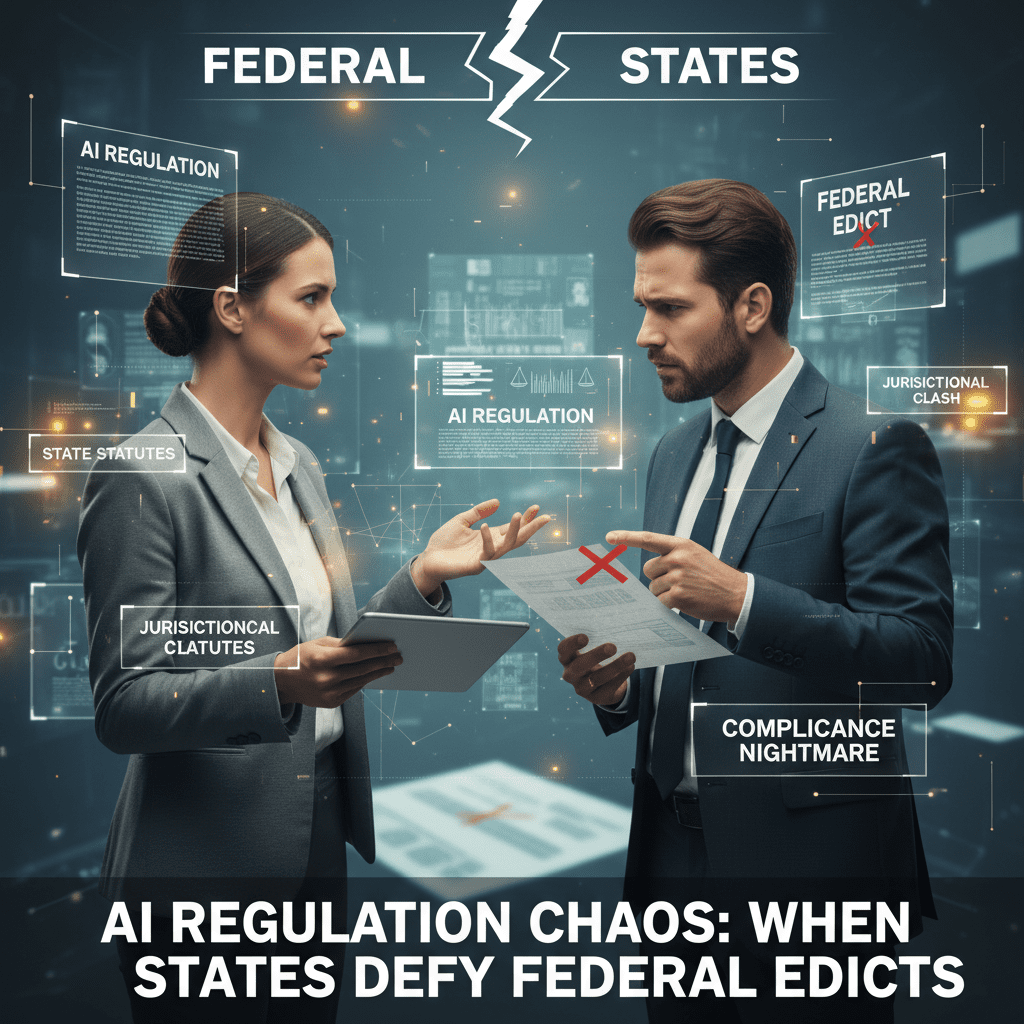
    AI Regulation Chaos: When States Defy Federal Edicts

    We’re entering an era where AI isn’t just a part of our lives; it’s trying to run the show. But who reins in the reins? In the thrilling world of lawmaking, AI regulation has become the newest spectator sport. Think of it as the ‘Game of Thrones’ for policy wonks—with less bloodshed but equally unpredictable alliances.

    • At the federal level, the winds of sweeping AI regulation proposals are being met with state-level squalls of resistance. It’s not just a disagreement; it’s a full-blown rebellion as states flex their autonomy muscles against perceived federal overreach. Preemption is the word of the day, thrown around in meetings like a legal hand grenade.

    • The classic power struggle ensues. Federal officials pitch broad, sweeping regulations aiming to create a unified AI framework. States, on the other hand, argue for local nuances that the big-wig policymakers might overlook. This isn’t just legal jargon being volleyed—it’s a philosophical tug-of-war over who decides the fate of our silicon-based companions.

    • What happens internationally, though? As domestic skirmishes send ripples across borders, other nations look on, popcorn in hand, ready to learn from the circus or run away scared. Is AI regulation predominantly an internal squabble, or will it set global precedents? International onlookers are drafting notes and preparing responses, ranging from strict alignment with international partners to crafting their own rebel policies.

    Amidst this chaos, tech companies are doing their own dance, lobbying and adapting in real time. The thought of cohesive regulation is amusing to them; it’s like trying to choreograph a ballet in a hurricane. Every new legislative proposal is met with a counterproposal, tech innovations, and occasionally, a quiet sob in a corporate bathroom.

    The Human Element

    Let us not forget the ordinary citizens in this narrative—the end-users. Caught between heady governmental showdowns, they are the ones who will live with the repercussions of these regulatory battles. It’s a grand drama, indeed, but one where the stakes are all too real.

    As this saga unfolds, keep an eye on the battle lines being drawn. It’s not just about technology; it’s about control, innovation, and, dare we say, a bit of old-fashioned political rivalry. What a time to be alive—and regulated!

  • When Politics Meets Monetary Policy: A Comedy of Central Banking Errors

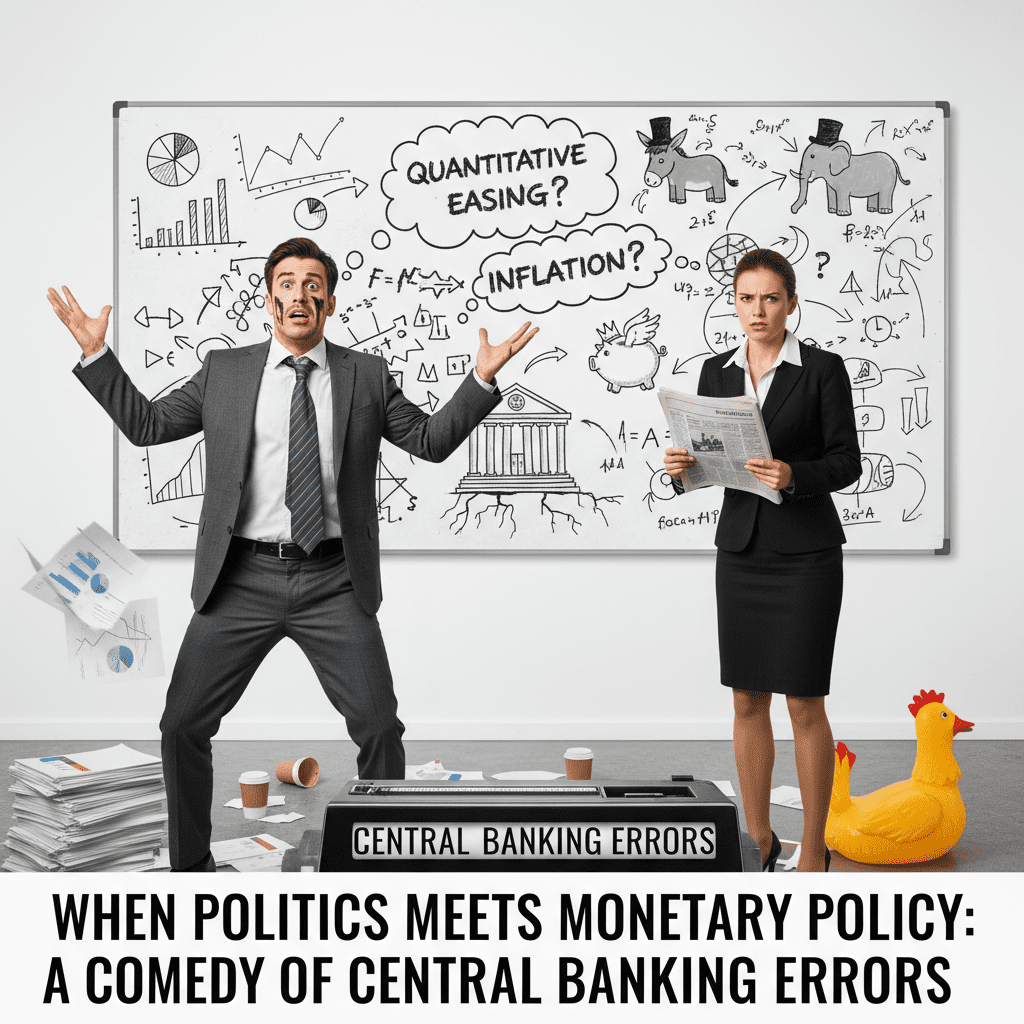
    When Politics Meets Monetary Policy: A Comedy of Central Banking Errors

    Imagine the world of monetary policy as a classy dinner party where everyone is supposed to be on their best behavior—dignified, independent, and impervious to the whispers of their neighboring diners. Now enter the political leaders, who quite often seem to forget their invitation stated ‘independent central bank’ somewhere in the fine print. It’s like watching someone try to subtly dictate the playlist at someone else’s wedding; awkward, slightly hilarious, and oh-so-glaringly obvious.

    The Dance of Discretion

    In theory, central banks are like the wise, all-knowing grandparents of the financial world. They control the interest rates, oversee monetary policy, and generally aim to keep the economy on a steady keel—free from the messy world of politics. But, in reality, they end up like every family gathering ever, where political leaders can’t resist giving their two cents, turning delicate economic maneuvering into a full-blown dance-off beneath the disco ball of public scrutiny.

    The Central Bank ‘Independence Day’

    There should be a holiday called ‘Central Bank Independence Day’—a day when central banks worldwide celebrate their freedom from political puppetry. The irony, of course, is that this holiday would probably need government approval. So much for independence, right? The concept of ‘independence’ in central banking is kind of like being on a diet but keeping a secret stash of chocolate; you say you’re going to stick to the greens, but then politics waves a candy bar under your nose.

    The Silent Scream for Autonomy

    It’s the silent scream of central banks as they try to maintain dignity while being subtly nudged by political agendas. Whether it’s a president tweeting away their preferences or a prime minister discreetly suggesting ‘favorable conditions,’ it’s a global tug-of-war wrapped in a velvet glove of propriety. Every once in a while, the mask slips, and we get a peek at the frantic Morse coding between central banks and their political masters—arguably a fantastic reality show we weren’t supposed to see.

    In conclusion, if central banks were people, they’d be the type trying hard not to react to political leaders humming their own tune, while fervently wishing for noise-canceling headphones. As observers in this comedic financial opera, perhaps all we can do is grab our popcorn, sit back, and watch the eloquent chaos unfold.

  • How Epstein Files Photos Have Reshaped Public Trust in Journalism

    How Epstein Files Photos Have Reshaped Public Trust in Journalism

    In the age of information overload, nothing quite captures the collective gaze like a scandalous photograph. Enter the Epstein files—where suddenly, visual snapshots turned from mere pixels into powerful agents painting narratives about wealth, power, and misconduct. The impact on journalism? Profound, to put it mildly.

    The Viral Nature of Scandal

    Think about the last time a headline made you do a double-take; chances are, it was accompanied by an image strong enough to play ping-pong with your emotions. With the Epstein files, every photograph carried weight, turning public perception from skeptical onlookers into active commentators. Forget words—these days, an image not only speaks a thousand words but can also trigger a thousand tweets.

    Zooming in on Trust

    The power of photos in the Epstein saga wasn’t just in their shocking content, but in how they redefined the boundaries of trust between the media and its audience. Every snap not only voiced unspeakable truths but also silently questioned every previous narrative spun without visual proof. Welcome to the era where seeing is not just believing; it’s demanding accountability.

    Picture-Perfect Accountability?

    Photos, particularly in high-stakes situations like the Epstein files, wear many hats. They’re whistle-blowers, truth revealers, and sometimes, regrettably, sensationalist bait. This multifaceted role of imagery in journalism has sparked debates—can we really trust what we see, or are we merely victims of well-timed, well-angled exposures?

    Ultimately, the Epstein files photos didn’t just impact journalism; they shook its very foundation, urging a reevaluation of how visual evidence should be presented, perceived, and pondered upon in shaping public opinion. In a world teeming with cameras, perhaps the biggest question is not what we’re shown, but what we choose to see.

  • Kushner & Zelensky: Property Tycoons Turn Peacemakers?

    Kushner & Zelensky: Property Tycoons Turn Peacemakers?

    Imagine a world where real estate deals and international diplomacy collide. Picture, if you will, the scene: skyscrapers and battlefields, property moguls and presidents. This isn’t the latest Hollywood blockbuster—it’s the peculiar yet true tale of Jared Kushner, his pal Steve Witkoff, and Ukraine’s President Volodymyr Zelensky joining forces. Sounds like a setup for an SNL skit, doesn’t it?

    Now, let’s dive into the meat of the matter. Kushner, once playing at Middle East peace broker, and Witkoff, known more for luxury condos than geopolitical strategy, find themselves oddly at home in the complex world of Ukraine peace talks. How did real estate expertise become the new criteria for international diplomacy? Is there a secret blueprint for peace hidden in the fine print of a lease agreement?

    The Unlikely Diplomats

    It’s a brave new world where your ability to negotiate a multimillion-dollar building deal might just qualify you to solve global crises. Enter Kushner and company, still smelling faintly of brick mortar, now presenting blueprints for peace. Zelensky, a former comedian turned president, seems right at home with such unlikely allies. Perhaps he appreciates the absurdity—or the creativity—of the approach.

    What’s in It for Them?

    What drives a real estate mogul to step into the war zone of international politics? Beyond headlines and a hefty dose of curiosity, there’s probably some complex calculus involving market predictions, international relations, and let’s face it—egos big enough to think they can ‘renovate’ geopolitical landscapes as easily as a rundown loft.

    From Skyscrapers to Peace Towers

    Could it be that the same skills used in closing real estate deals—patience, negotiation tactics, understanding diverse perspectives—are applicable in diplomatic arenas too? Kushner, Zelensky, and Witkoff seem to think so. While many of us struggle to get our security deposits back, these guys are leveraging their business acumen to broker peace—or at least that’s the blueprint.

    As amusing as it might sound, the implications are enormous. If they succeed, it’s a validation of the most bizarre crossover episode in international politics. If not, well, let’s just say it might be back to the drawing board, or in this case, drafting table.

    In a world increasingly governed by the unexpected, perhaps it’s fitting that today’s peace negotiations resemble a board room skirmish more than anything else. After all, if we can’t laugh at the merging of real estate and real war, we’d certainly be crying.

  • When Red Tape Meets Raindrops: The Soggy Saga of Storm Shelters in Gaza

    When Red Tape Meets Raindrops: The Soggy Saga of Storm Shelters in Gaza

    Imagine you’re trying to set up a tent, but first, you need to fill out 17 forms, in triplicate, all while a storm is brewing overhead. Welcome to the world of humanitarian aid in crisis zones, where bureaucracy and urgent needs clash like, well, tents versus storms.

    The Plot Thickens with Paperwork

    You might think setting up a storm shelter would be a priority in a crisis-hit region like Gaza, right? Wrong! Instead of quick, decisive action, we find a comedic-level stack of paperwork and policies. It’s like watching someone try to solve a Rubik’s cube while wearing boxing gloves. Each layer of bureaucracy adds a sprinkle of absurdity to the dire situation, turning urgent aid into a farcical relay race against nature.

    The Illusion of Action

    Governments and international bodies often announce aid with great fanfare—press releases, conferences, the works. But down on the ground, the reality is more akin to a tragicomedy. Trucks loaded with aid supplies perform more U-turns than a confused pizza delivery driver, thanks to ever-changing policies and oversight committees that couldn’t oversee a lunch menu, let alone a crisis response.

    Band-Aid Solutions for Bullet Wounds

    Amidst this bureaucratic maze, the actual needs of the people sometimes seem like an afterthought. Temporary solutions, like the tents poised to combat the storms, are just that—temporary. They leap into action as flimsy shields against the elements, ambassadors of the ‘good intentions’ pavilion, showcasing a façade of support while the real problems persist, as stubborn as ever.

    So, next time you hear about aid heading to a crisis zone, imagine the scene: a storm of procedures raining down on those who need help the most, with only a tent (if it hasn’t blown away yet) for shelter. Now isn’t that the ultimate bureaucratic adventure?

  • Escape Artists Unplugged: María Machado and the Time-Honored Tradition of Dramatic Exits

    Escape Artists Unplugged: María Machado and the Time-Honored Tradition of Dramatic Exits

    When it comes to breathtaking escapes, María Corina Machado’s recent dart from Venezuela could give Houdini a run for his money. Now, while Machado probably didn’t wriggle out of chains underwater, her flight to freedom is no less cinematic and stands tall in the gallery of historical exits. Let’s unwrap this cloak-and-dagger extravaganza!

    The Art of Leaving with Flair

    Historical exiles have always had a knack for exiting stage left with panache. From royals sneaking out in the dead of night to political figures donning disguises, the art of the escape has been perfected over centuries. Machado’s clever evasion adds a modern twist to this old genre, blending covert operations with Twitter announcements.

    Peers in the Pantheon of Exit Strategies

    • Victor Hugo: This French literary titan didn’t just write drama; he lived it, fleeing to Guernsey to evade Napoleon III’s not-so-warm embrace.
    • Leon Trotsky: His odyssey from Bolshevik Russia reads like a spy thriller, only with more ice pick and less subtlety at the end.
    • Albert Einstein: Dodged one of the tightest clutches of the 20th century—Nazi Germany—to recalibrate physics in the U.S.

    Machado’s tale, while missing the quaint chariots and choppy seas, involves dodging a very 21st-century obstacle course—surveillance tech and travel bans—proving that sometimes, the pen (or its digital equivalent) might be mightier than the sword.

    Perhaps the next step for political escapees like Machado isn’t just physical freedom but a figurative one. Can we foresee a Nobel nod in her future, making her a laureate like some of her illustrious predecessors? Only time will tell, but one thing’s for certain: the escape route she charted will be analyzed and admired by freedom-lovers and government-phobes alike.