
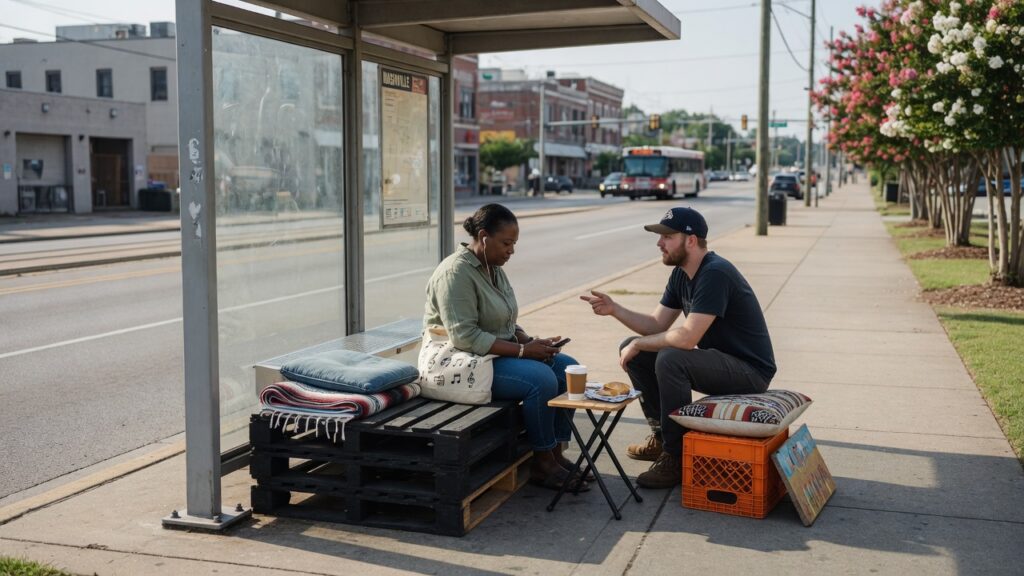
Ever feel like your morning commute is stuck in an endless software update loop that never actually installs? In Nashville, locals are taking matters into their own hands by adding seats to bus stops, turning a classic case of bureaucratic oversight into a grassroots DIY rebellion that pokes fun at broken public transit planning.
The Seatless Problem: A Loop of Oversight
Transit planners often rely on outdated data models and siloed systems that miss everyday rider needs, much like legacy codebases ignoring user feedback. This leaves stops seatless, forcing commuters to stand while waiting, which only amplifies gripes about unreliable service and poor infrastructure strategy.
DIY Fixes As Open-Source Inspiration
By building their own benches, Nashville residents are essentially forking the system like open-source contributors patching bugs the official team ignored. It’s a humorous wink at how top-down policies fail to leverage real-world data from the ground up, proving that sometimes the best infrastructure upgrades come from citizen hackers rather than endless committee meetings.
Implications For Smart Cities And Policy
This trend highlights the need for better integration of IoT sensors, crowd-sourced apps, and digital twins in transit planning to avoid such oversights. Without it, cities risk more DIY rebellions that expose gaps in cybersecurity, cloud-based management, and data-driven decision making, ultimately impacting everything from rider satisfaction to urban sustainability goals.
Real-World Impact And A Call For Better Loops
Strategically, embracing community input could transform these seatless stops into connected hubs with app notifications and adaptive lighting. Until then, locals will keep adding seats, reminding us all that sometimes the most effective tech policy is simply listening before the next planning cycle crashes again.