
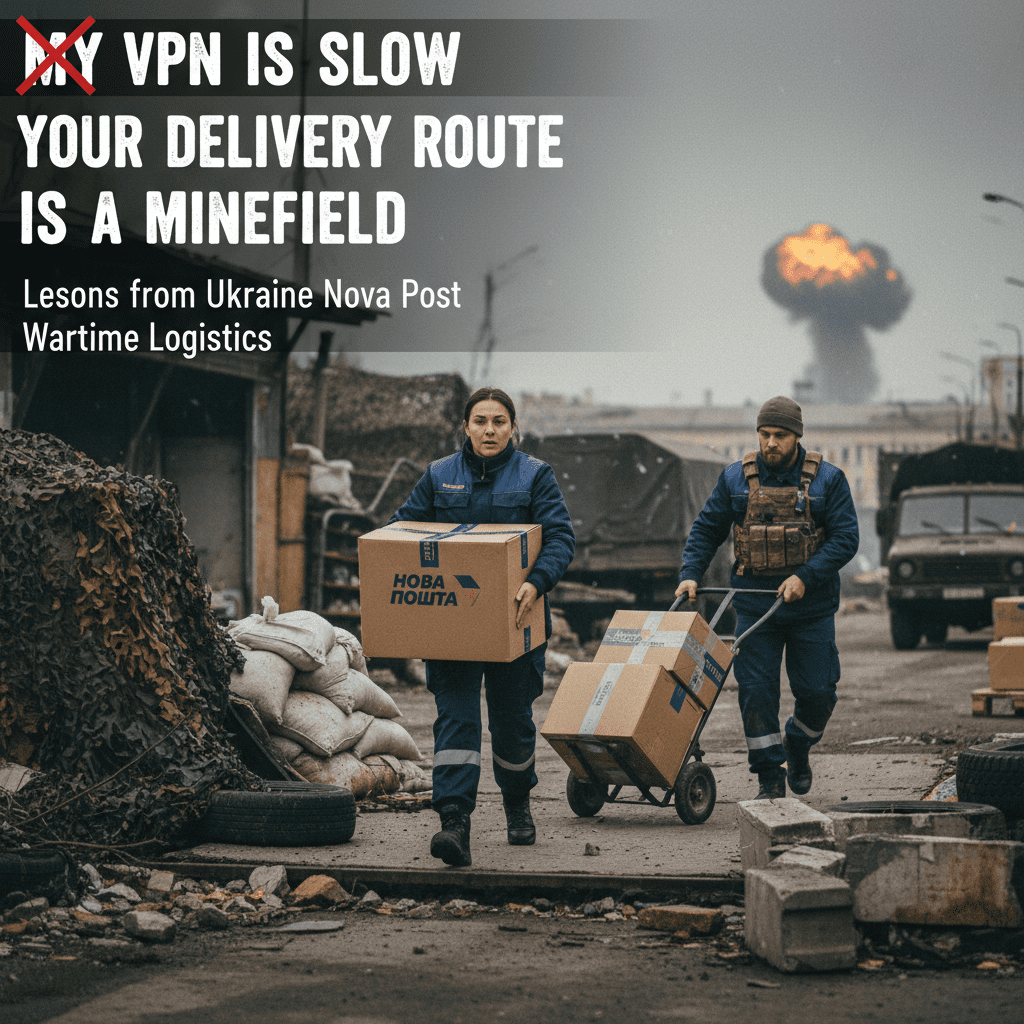
Last Tuesday, the office Wi-Fi went down for a full seven minutes. Productivity ground to a halt. Coffee was spilled in panicked keyboard-mashing. A frantic IT ticket was filed with a priority level usually reserved for server-farm fires. It was, by all accounts, a logistical nightmare. Meanwhile, in another part of the world, a postal service was dealing with a slightly different set of delivery challenges, like, you know, active war zones. This is the story of how Ukraine’s Nova Post wartime logistics makes our daily office dramas look like a gentle, well-catered nap.
The Ultimate Disaster Recovery Plan
Most companies have a “disaster recovery plan” in a dusty binder, outlining what to do if the power goes out. Nova Post’s plan had to account for infrastructure ceasing to exist overnight. Their first move wasn’t updating a status page; it was fundamentally re-engineering their entire network. While we struggle to reroute an email, they rerouted entire supply chains around obliterated bridges and occupied territories. They swapped massive central hubs for a decentralized network of mobile sorting centers in trucks and reinforced basements. It’s the ultimate expression of “agile methodology,” where the daily stand-up meeting probably includes a very literal check for roadblocks.
The Tech Stack That Actually Matters
We get excited when a software update adds a new emoji. Nova Post’s tech became a literal lifeline. Their mobile app, once a simple package tracker, transformed into a critical piece of national infrastructure. People used it to send life-saving aid to relatives, receive vital goods, and maintain a sliver of normalcy by ordering from online shops. The company even launched branches in decommissioned subway stations, which served as both post offices and bomb shelters. Suddenly, that bug in the new expense reporting software doesn’t seem so catastrophic, does it?
Redefining ‘Mission-Critical’ Delivery
In the corporate world, a “mission-critical” delivery is the CEO’s new ergonomic chair. For Nova Post, it was medicine, documents for displaced persons, and even pensions for the elderly in recently liberated towns. They did this with a fleet of armored vehicles and drivers who deserve every bravery award ever invented. Their commitment to service wasn’t just about business continuity; it was about national morale. They delivered packages, yes, but they also delivered hope, connection, and a stubborn refusal to let life grind to a halt.
So, the next time the VPN takes an extra three seconds to connect, maybe take a deep breath. Somewhere out there, a mail carrier is navigating a very different kind of network latency. The masterclass provided by Ukraine Nova Post wartime logistics isn’t just about moving boxes under duress; it’s a powerful lesson in resilience, ingenuity, and what it truly means to “deliver” when it matters most.