
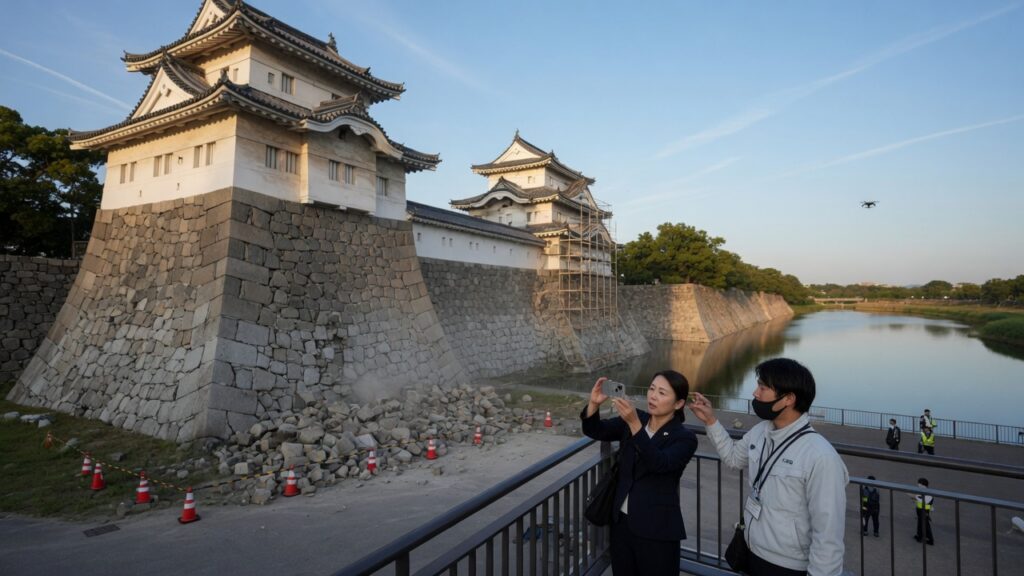
The recent 7.1 magnitude earthquake in Japan delivered targeted damage to Kumamoto Castle while sparing coastal regions from any tsunami, illustrating nature’s selective disruption much like a quirky bureaucracy where only specific systems activate amid broader chaos. This pattern of uneven impact carries direct lessons for technology infrastructure, where resilience depends on anticipating partial failures rather than uniform threats.
Selective Damage And Infrastructure Parallels
Earthquakes often affect landmarks and everyday facilities differently, exposing vulnerabilities in physical and digital networks. In this case, the quake struck historic structures but avoided triggering widespread coastal alerts, mirroring how IT systems might experience isolated outages while core operations remain intact.
Data Center Preparedness Strategies
Japan’s tech sector relies on earthquake-resistant data centers equipped with seismic sensors and redundant power supplies. Such events underscore the need for targeted monitoring tools that detect localized shaking to prevent cascading failures in cloud services and network connectivity.
Early Warning Technology And Policy Implications
Advanced seismic networks in Japan provide seconds of advance notice, enabling automated shutdowns of critical systems. Organizations can apply similar strategies to software-defined infrastructure, using real-time data feeds to isolate affected components and maintain service continuity during selective disruptions.
- Integrate IoT sensors for granular vibration detection in facilities.
- Develop failover protocols that activate only for confirmed high-impact zones.
- Update disaster recovery plans to account for non-uniform event patterns.
Real-World Impact On Tech Operations
Businesses managing data centers or digital services must prioritize adaptive infrastructure to minimize downtime from events like this Japan earthquake. By focusing resources on high-risk assets while maintaining flexibility elsewhere, companies reduce costs and enhance reliability in an era of increasing natural disruptions.