
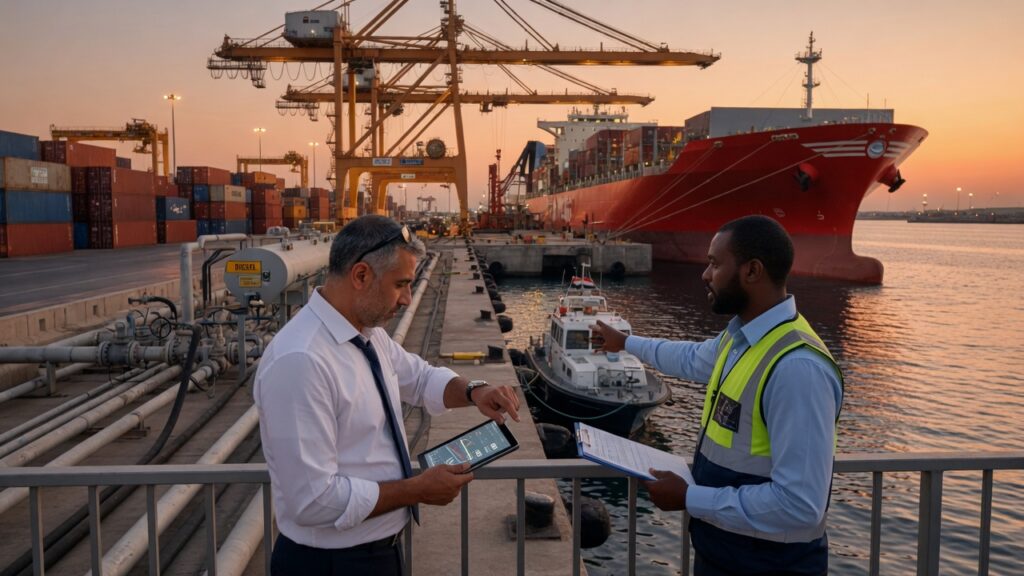
Diesel is the bloodstream of physical logistics. When it hits a record, you do not need a TED Talk to explain why groceries, construction, and warehouse ops get grumpy.
In mid-September 2026, Iran-backed Houthi forces seized Yemen’s Red Sea port city of Mokha (Mocha), then pressed control over nearby coastal points and islands that sit on the approach to the Bab el-Mandeb Strait—the gate between the Red Sea and the Gulf of Aden. CNBC, The National, and The Guardian described a rapid coastal advance (Mokha, Perim/Mayyun, later Hanish islands in subsequent reporting) that tightens leverage over a shipping lane already stressed by attacks and embargo threats against Saudi-linked traffic.
How a Yemeni port shows up on an Ohio fuel board
AAA data reported by NBC News and CNN put the U.S. national diesel average at about $6.05–$6.06 on September 11—first print above $6, above the June 2022 record of $5.82. By September 15, AAA figures cited in market coverage had diesel near $6.27 nationally, with California much higher. Crude benchmarks were hanging around or above $100 as Red Sea and broader Middle East risks stacked.
Important honesty check: diesel’s spike is multi-causal. Coverage also points to tight distillate inventories, high refinery utilization, Russia-related product disruptions, and the wider Iran-linked conflict’s effect on Gulf shipping—not a single pier in Mokha acting alone. The port seizure is an accelerant and a risk premium, not a magical price formula.
Sources:
- CNBC: Houthis seize Mokha, Red Sea shipping threat
- NBC News: diesel hits $6
- CNN Business: what $6 diesel means
- The National: Bab al-Mandeb traffic halves amid island seizures
Tech infrastructure without the cartoon
Yes, many data centers keep diesel for generators. Treating every generator test as a budget apocalypse is oversell; treating fuel as free forever is worse. The bigger channel for most IT organizations is indirect: trucking costs into hardware supply chains, delayed rack deliveries, higher colo operating fees, and customers whose own freight inflation shows up as slower projects.
If you want an operator checklist instead of a doom scroll:
- Know your generator burn rate and contract terms before the next heat wave coincides with $6 fuel.
- Ask vendors about freight surcharges on servers and networking gear; silence is not a discount.
- Map dependency on Red Sea / Suez routings for the SKUs you actually order—not a generic “Asia” blob.
- Separate crude headlines from distillate balances. Gasoline and diesel can diverge; diesel is the freight fuel.
Diesel into “everything”
Economists quoted in national coverage made the unsexy point: diesel is embedded in trucking, agriculture, and construction. When it prints records, CPI categories beyond the fuel gauge start arguing. Pair that with August’s gasoline-driven CPI pop and you get a feedback loop policymakers hate—energy shocks that threaten to stick into core via services and goods handling.
For tech ops, generator diesel is the vivid anecdote; freight is the P&L. If your hardware lands late, your project plan is fiction. Build schedule slack like you build RAID: assume a disk (or a strait) misbehaves.
Red Sea vs. Hormuz: two doors, one mood
Analysts keep reminding markets that Bab el-Mandeb and Hormuz are different doors on the same house. Houthi coastal gains stress the Red Sea door; Gulf conflict stress hits Hormuz. Saudi Petroline was part of the attempt to exit via the Red Sea when the Gulf door jammed. When both stories worsen in the same fortnight, freight and fuel markets stop pretending these are independent tickets.
Ship-traffic snapshots—such as reported halving of Bab al-Mandeb crossings on a given day—are volatile. Use them as weather reports, not eternal laws. The strategic fact is simpler: more Houthi control nearer the strait raises the option value of harassment and raises insurance and routing costs even when a given tanker still passes.
Household translation
$6 diesel is not only truckers’ pain. It is the quiet markup inside contractor quotes, municipal budgets, and the price of anything heavy. If your family budget already felt August gasoline, diesel is the sequel that shows up in everything that arrives by pallet.
Bottom line
Houthi control along Yemen’s Red Sea coast raises the probability of disrupted or detoured shipping through Bab el-Mandeb at the same moment U.S. diesel is printing records. That combination taxes every system that moves atoms—including the atoms inside your next server shipment. Plan logistics like you plan redundancy: assume the primary path gets interesting.
Steve Miller — Mason, Ohio. Former programmer, sysadmin, and IT manager. Still checks the generator dipstick.