
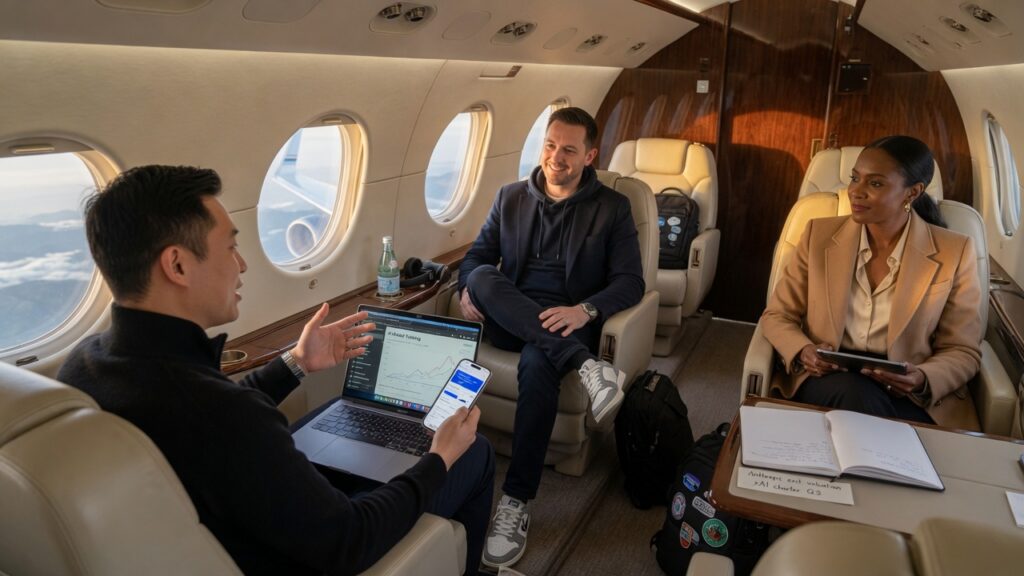
How AI Tech Bros Are Fueling the Private Jet Boom
The explosive growth of artificial intelligence has created unprecedented wealth for a small group of tech entrepreneurs often dubbed “AI tech bros.” This windfall is now driving a surge in private jet ownership and charters, reshaping luxury travel markets and raising urgent questions about sustainability and inequality.
The Wealth Wave Behind the Trend
Founders and executives at companies like OpenAI, Anthropic, xAI, and various AI startups have seen valuations soar into the tens of billions. With stock options, exits, and massive funding rounds, personal net worths have skyrocketed. Many of these individuals, previously accustomed to commercial flights or even rideshares during lean startup days, are now opting for the convenience and status of private aviation.
Industry reports show private jet bookings from tech hubs like San Francisco, Austin, and Seattle have increased by over 40% in the past two years, with AI-related travel cited as a key driver. Fractional ownership programs and jet card memberships popular among Silicon Valley elites are seeing record sign-ups.
Environmental Costs Add Up Quickly
Private jets emit significantly more carbon per passenger than commercial flights—up to 14 times more on short-haul routes. A single cross-country trip can produce as much CO2 as several months of average household emissions. As AI leaders champion technologies promising to solve climate challenges through optimization and efficiency, their personal travel habits create a glaring contradiction.
Aviation already accounts for roughly 2.5% of global emissions, and the private segment is growing faster than commercial travel. Environmental groups argue this boom undermines corporate sustainability pledges common among AI firms. Some companies offset emissions, but critics say offsets fail to address the root problem of luxury excess.
Social and Economic Ripple Effects
The trend highlights widening inequality. While AI promises broad productivity gains, its benefits concentrate among a tiny elite. Private jet infrastructure expands at airports serving wealthy enclaves, diverting resources from public systems struggling with delays and underinvestment.
Economically, the boom benefits manufacturers like Gulfstream and Bombardier, along with pilots, maintenance crews, and charter operators. Yet it also inflates costs for business travel overall and contributes to airspace congestion. Cities near AI clusters report increased noise complaints from low-altitude flights.
Why This Matters Beyond Luxury
The private jet surge serves as a microcosm of AI’s broader societal impact. It underscores tensions between rapid technological progress and responsible stewardship. As regulators eye AI safety and ethics, questions about founders’ carbon footprints and conspicuous consumption may influence public trust and policy.
Moreover, it challenges the narrative that AI will democratize opportunity. If top talent prioritizes personal convenience over collective good, it risks alienating the very workforce and communities needed for sustainable growth.
Looking Ahead
Some AI leaders are exploring sustainable aviation fuels and electric vertical takeoff vehicles, but adoption remains limited. Transparency around travel emissions could become standard, similar to diversity reporting. Ultimately, the private jet boom forces a reckoning: can the architects of our AI future align their lifestyles with the transformative potential they promote?
The answer will shape not just skies above tech hubs, but the legacy of an era defined by unprecedented innovation and its unintended consequences.