
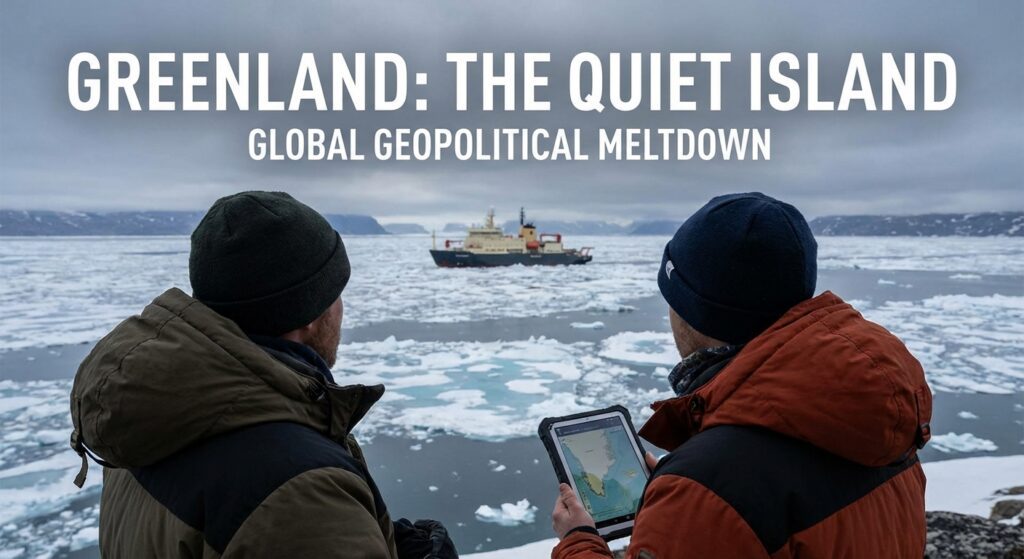
Let’s be honest, until recently, Greenland was that quiet coworker you barely noticed. It sat in the corner of the world map, massive but silent, mostly known for ice and a misleading name. Suddenly, however, every global superpower is sliding into its DMs. The United States tried to buy it, China declared itself a “near-Arctic state” (a geographic stretch akin to me calling myself a “near-astronaut”), and Russia is dusting off old military bases like it’s preparing for a high school reunion. This sudden popularity contest has turned the island into the epicenter of a slow-motion Greenland geopolitical crisis, and it’s more revealing than a corporate email sent to the wrong person.
So, Why is Everyone Swiping Right on Greenland?
It boils down to a classic case of a global software patch with unintended consequences. The bug? Climate change. The accidental feature? Opportunity. The ice is melting, which, while catastrophic for the planet, has suddenly turned the Arctic into a hot commodity. Here’s the breakdown:
- The World’s Newest Shortcut: As the ice recedes, new shipping lanes like the Northwest Passage are opening up. This is the geopolitical equivalent of finding a traffic-free route through a city that’s always gridlocked. Control the route, and you control a massive slice of global trade.
- A Treasure Chest Under the Ice: Greenland is sitting on a colossal stash of rare earth minerals. These aren’t just shiny rocks; they’re the secret sauce in everything from your smartphone to electric vehicles and advanced weaponry. With China currently holding most of the world’s supply, every other nation is desperately searching for a new dealer. Greenland just became the kid in the playground with the rarest, most valuable trading cards.
- Location, Location, Location: Look at a globe. Greenland is the ultimate strategic high ground, a massive, unsinkable aircraft carrier parked between North America and Russia. For military planners, it’s the perfect spot to set up surveillance systems, monitor submarine traffic, and generally keep an eye on the neighbors.
A Very Cold (and Awkward) War
What makes the Greenland geopolitical crisis so fascinating is that it’s not being fought with tanks, but with investment portfolios and infrastructure proposals. It’s a bureaucratic battle royale. China arrives offering to build airports. The U.S. counters by opening a consulate and offering development aid. Denmark, Greenland’s official sysadmin, is trying to manage user permissions while Greenland itself weighs the promise of economic independence against the peril of becoming a pawn in a global chess game. It’s a messy, complicated, and frankly, absurd situation where the future of global power might just be decided by who offers to build the nicest port in a place with more polar bears than people.