
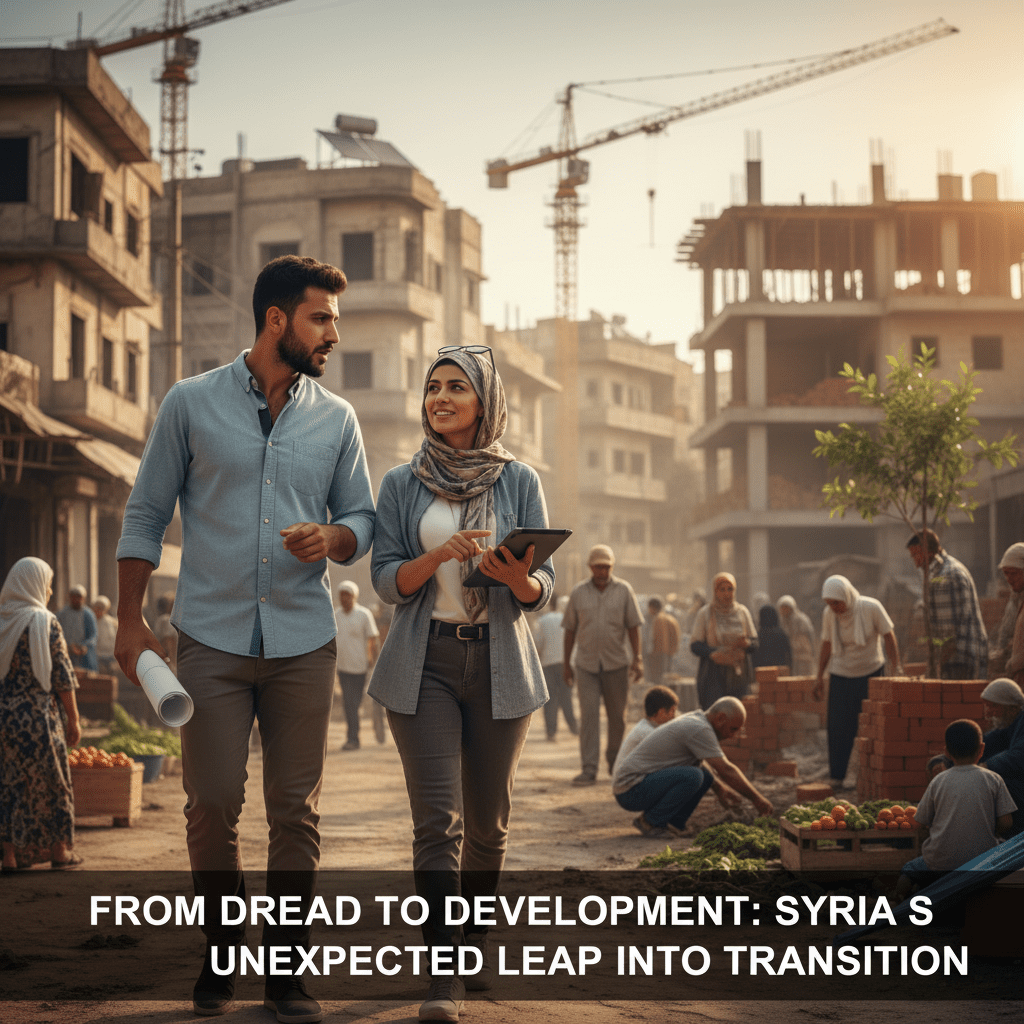
If you thought updating your phone’s OS was a nightmare, try reconfiguring a whole country! But here we are, looking at Syria’s surprising year of transition, a period that might make even the most seasoned IT experts and bureaucrats blanch. As Syria goes from ‘Assad era’ to ‘Afterwards,’ it seems it’s not just software that needs periodic updates, but entire governments too!
Managing the Unexpected Bugs of Transition
Just like when I download an update expecting my phone to get better but it somehow ends up deleting half my apps, Syria’s journey through political transition came with its share of unexpected bugs. From bureaucracy that moves slower than my grandma’s dial-up internet to suddenly optimistic economic forecasts that appear as frequently as pop-up ads, the surprises were many and baffling.
From Autocracy to ‘Is This Really Democracy?’
Let’s face it, switching from decades of dictatorship to democracy isn’t like flipping a switch or changing your relationship status on Facebook—there’s no ‘it’s complicated’ button for national governance. Yet, Syria, against all odds, is drawing a roadmap that some other nations might want to download for future use.
Lessons for the Tech Savvy and Politically Minded
If Syria’s transition teaches us anything, it’s that expecting the unexpected should be part of any transition manual. Think of it as the pop-up blocker for political reform or the antivirus for authoritarian hangovers. Whether you’re a country or just someone trying to install the latest security update on your laptop, patience, persistence, and a really good troubleshooting guide are essential.