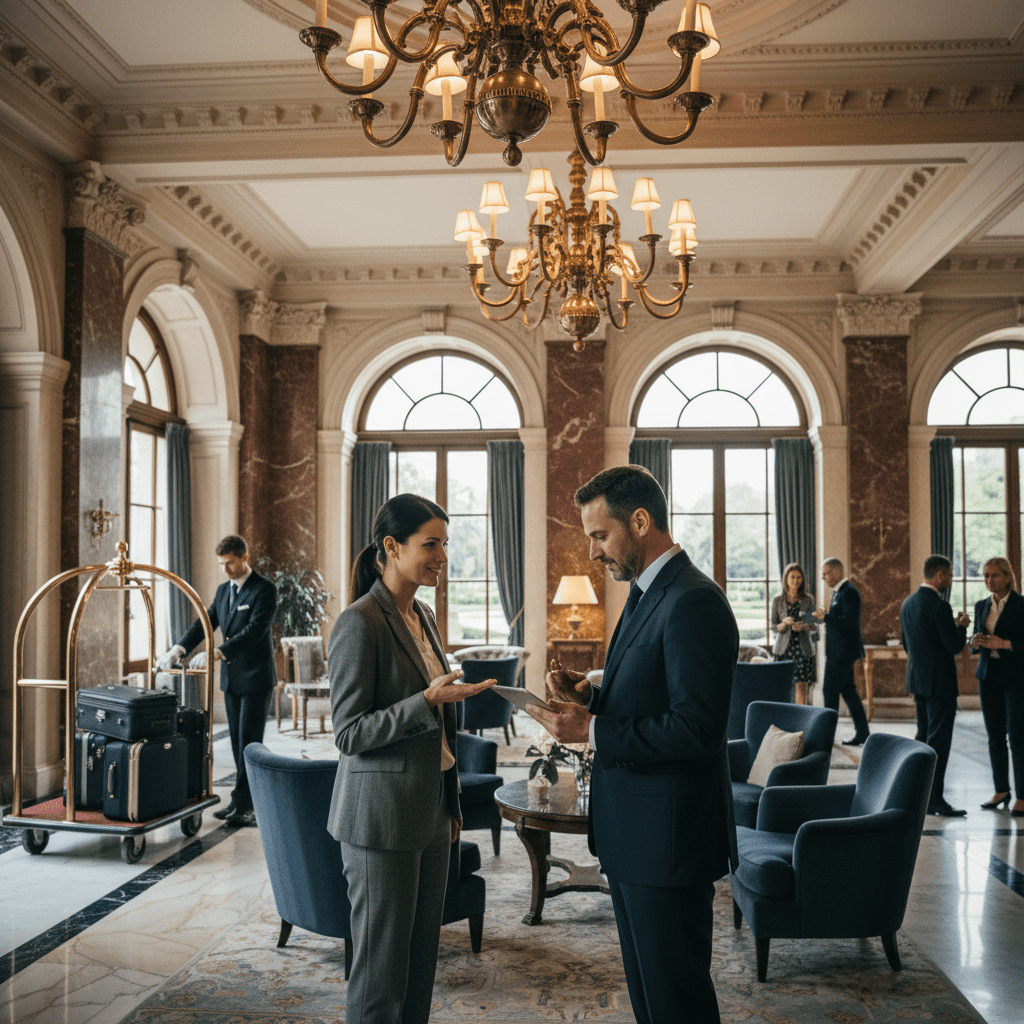
There’s a strange, beautiful absurdity to the idea of international peace negotiations. Two delegations, tasked with averting global catastrophe, are seated in a tastefully appointed hotel ballroom. The stakes are impossibly high, the tension is palpable, and just down the hall, a regional sales team is doing trust falls. How did the pinnacle of diplomacy end up sharing a continental breakfast buffet with the Midwest Dental Supply convention? It turns out, there’s a method to the madness.
The Logistics of Serenity
Choosing a location for peace talks is less about vibes and more about a brutal logistical checklist. A five-star hotel in a neutral country like Switzerland or Austria just happens to tick all the boxes better than anywhere else.
- Ironclad Neutrality: Hosting talks in a participant’s capital gives them a home-field advantage. A hotel is a commercial entity. Its only allegiance is to the person swiping the corporate card. It’s the ultimate neutral zone, where ancient rivalries are forced to respect the 11 AM checkout time.
- The All-Inclusive Package: Think about it. You need secure rooms, meeting spaces, dining facilities, and a place for everyone to sleep. A luxury hotel is a self-contained biosphere for diplomacy. It has everything you need to house, feed, and pacify warring factions, all under one heavily guarded roof.
- The Firewall of Freedom: In the modern age, the most critical piece of infrastructure is the Wi-Fi. A hotel provides a single, defensible network perimeter. The fate of the free world might just rest on a beleaguered IT manager named Klaus, who is triple-checking that the dignitary VPN is firewalled from the network being used by teenagers streaming movies in room 304.
The Psychology of the Presidential Suite
The environment absolutely shapes the negotiation. Does being in a plush, climate-controlled room make diplomats more agreeable? Or does the endless supply of tiny, expensive water bottles create a dangerous detachment from the harsh realities they’re debating? This is the “bubble effect.” When you’re isolated in a gilded cage, miles from the conflict zone, it can be easier to focus on the minutiae of a treaty. The downside is that you might forget the human cost while arguing over the placement of a comma.
Where Diplomacy Meets the Help Desk
For all the talk of high-stakes statecraft, the most relatable struggles are often the most mundane. Imagine the tension in the room when the 70-slide presentation on de-escalation corridors won’t display on the projector. An aide fumbles with cables, whispering, “Is it on the right input? Do you have the dongle?” It’s a scene straight out of any corporate meeting, except a botched presentation could lead to a border skirmish instead of a mildly disappointed VP of Sales.
And then there’s the Wi-Fi password. A string of characters so complex it looks like a government cipher, handed out on a small, elegant card. The first fifteen minutes of any session are inevitably lost to a senior diplomat mistaking an uppercase ‘O’ for a zero, quietly locking themselves out of the network and, by extension, the shared document outlining the terms of surrender.
Ultimately, these luxurious, absurdly normal settings are the backdrop for history. It’s a reminder that even the most monumental global challenges are tackled by regular people who need a decent coffee and a reliable internet connection. The path to peace, it seems, is paved with good intentions and complimentary hotel slippers.
Leave a Reply